.png)




zł121.87 tax excl.
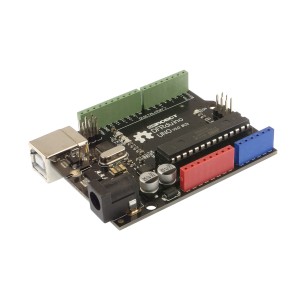
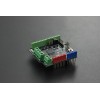
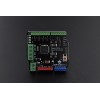
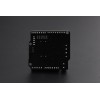
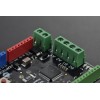
Extension module (shield) with a stepper motor driver for Arduino. It allows you to control drives operating with a voltage of up to 40 V and a current consumption of up to 2 A per coil. DFRobot DRI0035
Extension module (shield) with a stepper motor driver dedicated to Arduino boards. It allows you to control the movement of drives with a current consumption of up to 2 A per coil and an operating voltage of up to 40 V. It is based on the TMC260, which is an energy-saving system designed for bipolar stepper motors. It uses the sensorless load detection algorithm (stallGuard2) and has a built-in load dependent current control (coolStep). TMC260 can be controlled by STEP and DIR signals or via the serial interface SPI. The use of the microPlyer algorithm allows the motor to run smoothly, and the set of protections (against overheating, short circuit and overload) makes the module very durable. Full documentation and examples of use are available on the product page.
Data sheet
Manufacturer
Responsible person
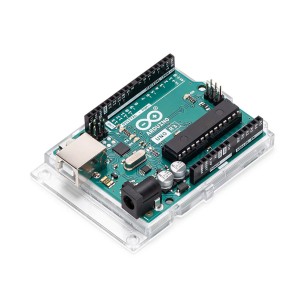
Arduino Uno Rev3 is a popular board with Atmel ATmega328 microcontroller from the AVR family, there are 14 I / O lines, 6 PWM channels and 6 analog inputs. The additional ATmega16U4 microcontroller realizes communication via the USB interface. Arduino A000066
No product available!
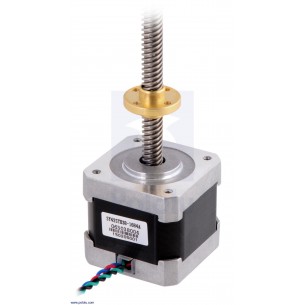
Hybrid bipolar stepper motor eith integrated 18cm (7″) threaded rod as its output shaft, turning it into a linear actuator capable of precision open-loop positioning. The motor has a 1.8° step angle (200 steps/revolution) and each phase draws 1.7A at 2.8V, allowing for a holding torque of 3.7kg-cm (51 oz-in). Pololu 2689
No product available!
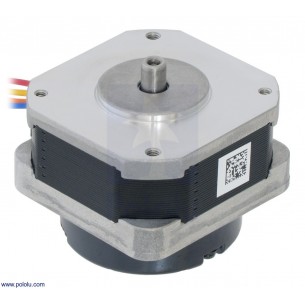
This NEMA 17 pancake bipolar stepping motor from Sanyo features an integrated encoder. The stepper motor itself has a 1.8° step angle (200 steps/revolution) and each phase draws 1 A at 5.4 V, allowing for a holding torque of 1.9 kg-cm.
No product available!
Module with a 2-channel driver for DC motors L293D designed to work with the Raspberry Pi Pico. It can work with a voltage from 6 to 12 V and a current of up to 600 mA. SB Components 21468
The module with a 4-channel L293D DC motor driver, designed to work with the Raspberry Pi. It can work with a voltage from 6 to 24 V and a current of up to 600 mA. SB Components 08001
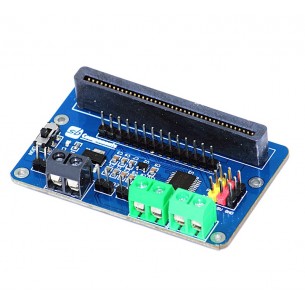
Module with a 2-channel DC motor driver TB6612FNG designed to work with micro: bit. It can also control 3 servos. SB Components 14897
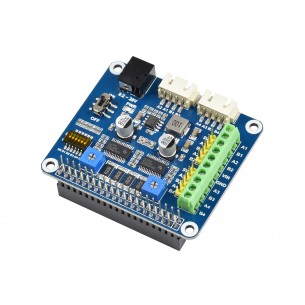
Extension module with a driver for two stepper motors based on the HR8825 system. Dedicated for Raspberry Pi minicomputers. Waveshare Stepper Motor HAT (B)
No product available!
Extension module with a driver for two stepper motors based on the DRV8825 system. Dedicated for Raspberry Pi minicomputers. Waveshare Stepper Motor HAT
No product available!
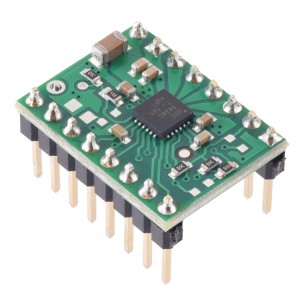
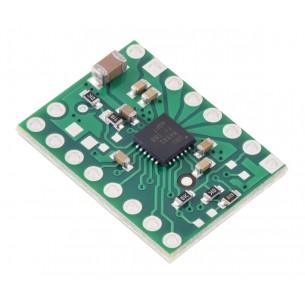
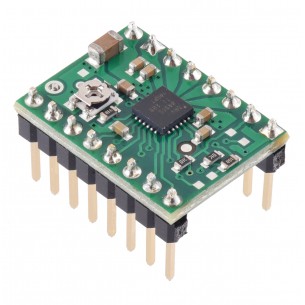
Module with a stepper motor driver based on the DRV8434A system. It allows the bipolar motor to be supplied with current up to 1.2 A per phase and with a voltage from 4.5 V to 45 V. Communication via the SPI interface. Pololu 3769
No product available!
Module with a stepper motor driver based on the DRV8434A system. It allows the bipolar motor to be supplied with current up to 1.2 A per phase and with a voltage from 4.5 V to 45 V. Communication via the SPI interface. Pololu 3768
No product available!
Module with a stepper motor driver based on the DRV8434A system. It allows the bipolar motor to be supplied with current up to 1.2 A per phase and with a voltage from 4.5 V to 45 V. Communication via the SPI interface. Pololu 3767
No product available!
Module with a stepper motor driver based on the DRV8434A system. It allows the bipolar motor to be supplied with current up to 1.2 A per phase and with a voltage from 4.5 V to 45 V. Communication via the SPI interface. Pololu 3766
No product available!
Module with a stepper motor driver based on the DRV8434A system. It allows the bipolar motor to be powered with a current of up to 1.2 A per phase and can be supplied with the voltage from 4.5 V to 45 V. Pololu 3765
No product available!
Module with a stepper motor driver based on the DRV8434A system. It allows the bipolar motor to be powered with a current of up to 1.2 A per phase and can be supplied with the voltage from 4.5 V to 45 V. Pololu 3764
No product available!
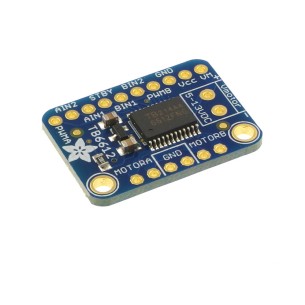
TB6612FNG dual DC motor controller module. It can be used as a stepper motor driver or solenoid driver. Adafruit 2448
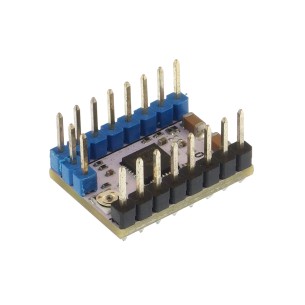
Advanced, compact stepper motor driver with TMC2209 chip that offers smooth, quiet operation, high performance, various operating modes and easy configuration, ideal for 3D printers and other applications. modTMC2209v4
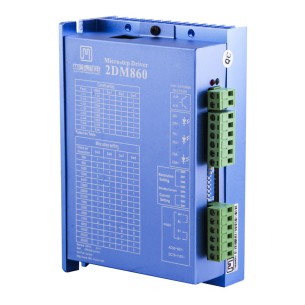
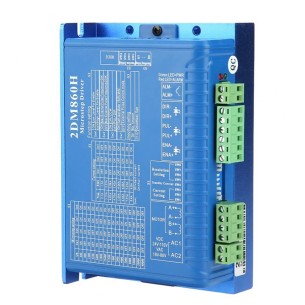
A stepper motor controller that can operate with a voltage range of 24 to 110 VDC or 18 to 80 VAC and a maximum current of up to 8.4 A. It allows micro step configuration in the range of 2 to 256. 2DM860H
A stepper motor controller that can operate with a voltage range of 24 to 110 VDC or 18 to 80 VAC and a maximum current of up to 8.4 A. It allows micro step configuration in the range of 2 to 256. 2DM860H
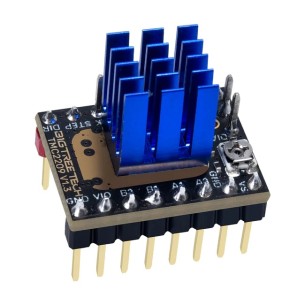
A compact stepper motor controller with the TMC2209 system with an operating voltage from 4.75 to 28 V. It offers smooth, quiet operation, high efficiency, various operating modes and easy configuration. It is controlled via the STEP/DIR interface and is an ideal solution for 3D printers and similar applications. BIGTREETECH TMC2209 V1.3
Extension module (shield) with a stepper motor driver for Arduino. It allows you to control drives operating with a voltage of up to 40 V and a current consumption of up to 2 A per coil. DFRobot DRI0035