.png)









zł83.56 tax excl.
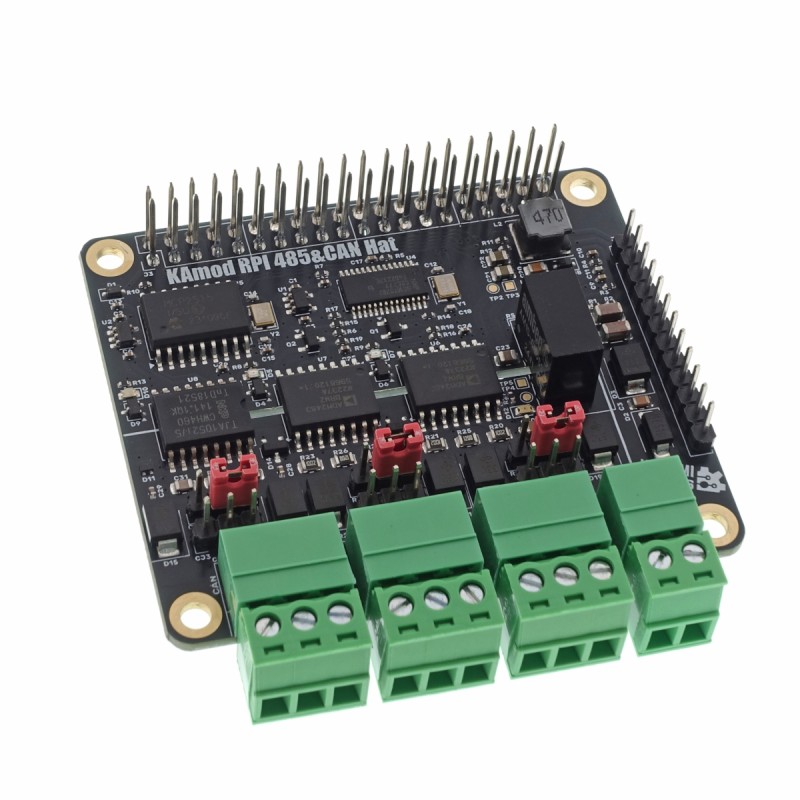
The KAmod RPI 485&CAN Hat module extends the functionality of Raspberry Pi 5 boards (and others with a 3.3 V SPI interface) with two galvanically isolated RS485 interfaces and one CAN 2.0B interface. The RS485 interfaces are based on the SC16IS752 controller, and the CAN interface on the MCP2515 system. The isolated transceivers used (ADM2483 and TJA1052) increase resistance to interference. Communication takes place via two SPI interfaces, and additional power supply options (from RPi or external 8-32 V) and a stabilized 5 V output allow for flexibility in power supply. The module can be mounted on RPi 5, also with an Active Cooler radiator, and can work with other microcontrollers. The maximum transmission speeds are 500 kbps for RS485 and 1 Mbps for CAN
KAmod RPI 485&CAN Hat allows you to easily expand Raspberry Pi 5 computers with two RS485 interfaces and one CAN 2.0B interface. The interfaces contain extensive protection circuits and are galvanically isolated from the control circuits, which guarantees operational stability and resistance to interference and failures. The module has been designed to be compatible with Raspberry Pi series boards not only in version 5. It is controlled via 2 SPI interfaces, available on the 40-pin RPi connector, and in many other boards, e.g. Arduino, STM32, etc.
Manufacturer
Responsible person
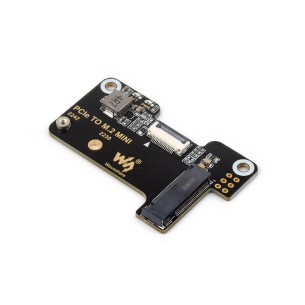
The PCIe To M.2 MINI adapter allows the Raspberry Pi 5 to be expanded with a high-speed NVMe SSD, offering high bandwidth and the ability to boot the system directly from the drive. Its compact form makes the module ideal for projects that require high computing power and fast data access within limited mounting space. It is well-suited for file systems, servers, terminals, and embedded projects using the Raspberry Pi 5.
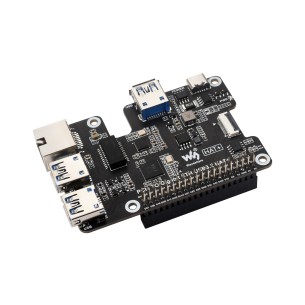
The PCIe Expansion HAT+ for Gigabit ETH USB3.2 allows the Raspberry Pi 5 to be extended with three high-speed USB 3.2 Gen1 ports and one Gigabit Ethernet connector, using the 16-pin PCIe interface. The device operates without the need for driver installation and offers full support for popular Linux systems. Thanks to additional features such as power monitoring and USB port power control, the module is ideal for advanced networking projects, home servers, and expanded workstations based on the Raspberry Pi 5.
No product available!
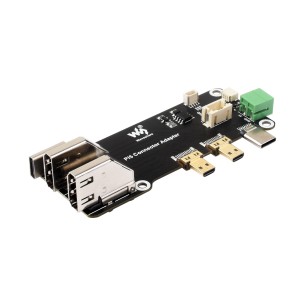
Micro HDMI to HDMI adapter with two power supply modes and dual 4K output support, designed to work with Raspberry Pi 5 and Raspberry Pi 4B, enables reliable connection of displays and UART signal transmission. It is suitable for multimedia projects, presentation systems, and embedded solutions where a compact and functional solution for video support and serial communication is required.
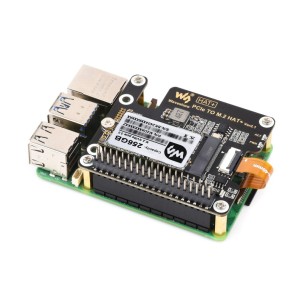
PCIe TO M.2 HAT+ Acce B adapter for Raspberry Pi 5 with a 256 GB NVMe 2242 SSD, support for M.2 2230 / 2242 drives, PCIe Gen2 / Gen3 modes, and SSD boot support. Waveshare 27523
No product available!
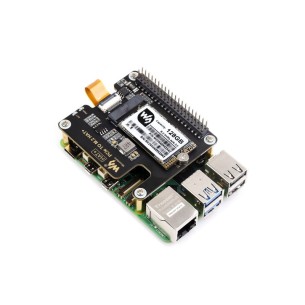
The PCIe TO M.2 HAT+ Acce A kit with a 128 GB SSD is a ready-to-use solution that expands the Raspberry Pi 5 with fast NVMe storage, providing enhanced performance and the ability to boot from the drive. With its compact design, power monitoring support, and compatibility with 2230/2242 form factors, the kit is ideal for building home servers, NAS systems, workstations, and projects requiring high data throughput.
No product available!
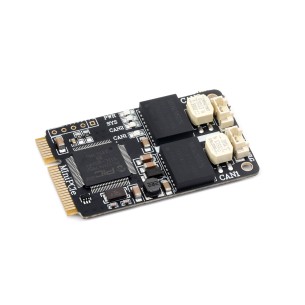
The 2-CH CAN MiniPCIe card is a versatile tool for integrating and analyzing CAN bus networks in industrial PCs, development boards, and embedded systems. With isolated channels, broad protocol compatibility, and support for multiple development platforms and operating systems, it is ideal for applications such as automation, automotive systems, CAN network testing, and software development.
No product available!
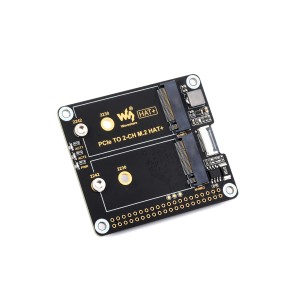
The PCIe TO 2-CH M.2 HAT+ expands the functionality of the Raspberry Pi 5 by enabling the installation of two NVMe SSDs, offering significantly improved read/write performance and the option to boot from disk. With its compact design, support for 2230/2242 form factors, and built-in power monitoring, the adapter is well-suited for server solutions, NAS projects, multimedia systems, and advanced industrial applications.
No product available!
The 2-CH CAN HAT+ expansion board adds two isolated CAN channels to the Raspberry Pi, with support for further expansion. Featuring the HAT+ standard, galvanic isolation, and surge protection, it is well-suited for industrial, automotive, and automation applications where reliable and safe serial communication is essential.
No product available!
The KAmod RPI 485&CAN Hat module extends the functionality of Raspberry Pi 5 boards (and others with a 3.3 V SPI interface) with two galvanically isolated RS485 interfaces and one CAN 2.0B interface. The RS485 interfaces are based on the SC16IS752 controller, and the CAN interface on the MCP2515 system. The isolated transceivers used (ADM2483 and TJA1052) increase resistance to interference. Communication takes place via two SPI interfaces, and additional power supply options (from RPi or external 8-32 V) and a stabilized 5 V output allow for flexibility in power supply. The module can be mounted on RPi 5, also with an Active Cooler radiator, and can work with other microcontrollers. The maximum transmission speeds are 500 kbps for RS485 and 1 Mbps for CAN
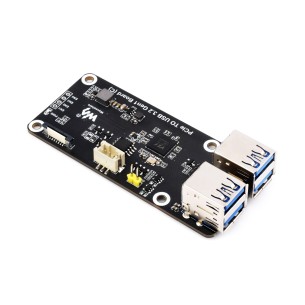
PCIe TO USB 3.2 Gen1 Board (C) is a functional expansion for the Raspberry Pi 5, enabling the connection of four high-speed USB devices with independent power management. It is ideal for applications requiring multiple ports, such as laboratories, workstations, or automated systems, where stability, performance, and full control over peripheral devices are essential.
No product available!
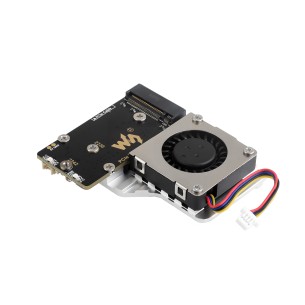
The PCIe to M.2 Board (E) adapter for Raspberry Pi 5 enables integration of high-speed NVMe M.2 drives and efficient cooling thanks to a PWM fan and heatsink. Its compact design, compatibility with 2230/2242 formats, and full integration with the Raspberry Pi 5 board make the module ideal for projects that require high disk performance and reliable operation.
No product available!
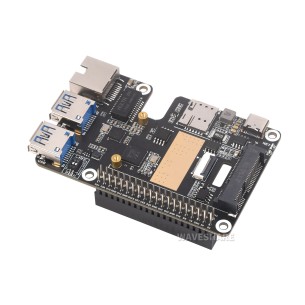
PCIe TO MiniPCIe GbE USB3.2 HAT+ is a functional expansion board for the Raspberry Pi 5, enabling integration of high-speed Ethernet, USB 3.2 ports, and the installation of an external 4G module via the MiniPCIe interface. The module supports multiple operating systems and is ready for LTE and GNSS expansion, making it an ideal solution for IoT projects, automation, and industrial communication.
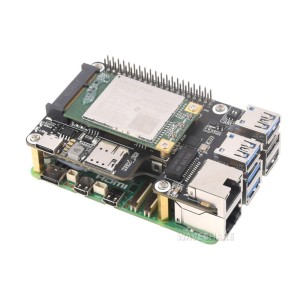
SIM7600G-H 4G GbE USB3.2 HAT+ is a comprehensive communication expansion module for the Raspberry Pi 5, offering reliable LTE mobile connectivity, high-speed Ethernet, and additional USB ports. With GNSS support, compatibility with multiple operating systems, and versatile functionality, the module is ideal for IoT applications, industrial routers, and remote monitoring and control systems.
No product available!
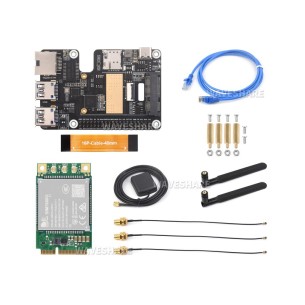
PCIe TO MiniPCIe GbE USB3.2 HAT+ expansion with EG25-G modem provides reliable LTE connectivity, high-speed data transfer via USB 3.2 ports, and efficient wired Ethernet connection. Dedicated for Raspberry Pi 5, it offers a comprehensive communication solution for industrial projects, edge routers, IoT gateways, and positioning applications.
No product available!
PoE M.2 HAT+ (B) is a practical add-on board for Raspberry Pi 5 that enables simultaneous power over Ethernet and installation of a high-performance NVMe SSD. With boot support from the SSD and additional power output terminals, this module is ideal for projects requiring fast storage and reliable power supply, such as servers, surveillance systems, or IoT gateways.
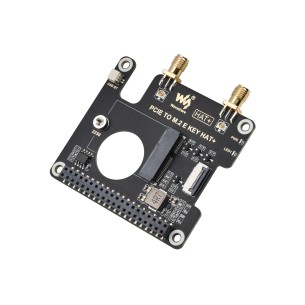
PCIe To M.2 E KEY HAT+ adapter expands the capabilities of the Raspberry Pi 5 with support for high-speed Wi-Fi/Bluetooth network cards in M.2 E Key format. It supports direct PCIe connection and Bluetooth integration via USB. Robust antenna connectors and compliance with the HAT+ standard make it an ideal solution for IoT projects, network gateways, and compact routers based on the Raspberry Pi 5.
The KAmod RPI 485&CAN Hat module extends the functionality of Raspberry Pi 5 boards (and others with a 3.3 V SPI interface) with two galvanically isolated RS485 interfaces and one CAN 2.0B interface. The RS485 interfaces are based on the SC16IS752 controller, and the CAN interface on the MCP2515 system. The isolated transceivers used (ADM2483 and TJA1052) increase resistance to interference. Communication takes place via two SPI interfaces, and additional power supply options (from RPi or external 8-32 V) and a stabilized 5 V output allow for flexibility in power supply. The module can be mounted on RPi 5, also with an Active Cooler radiator, and can work with other microcontrollers. The maximum transmission speeds are 500 kbps for RS485 and 1 Mbps for CAN