.png)




zł134.65 tax excl.
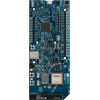
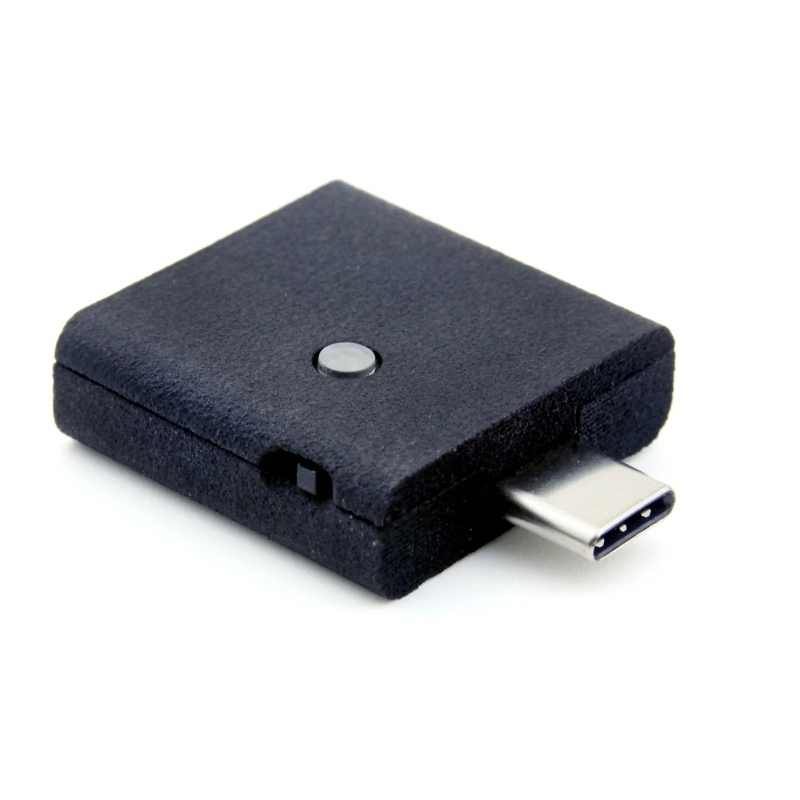
Open-source USB-C debug tool providing UART access through the SBU1 and SBU2 pins of a USB-C connector. Features three USB-C ports, selectable 1.8V/3.3V logic levels, speeds up to 3Mbps and a virtual COM port. Soldered 333367
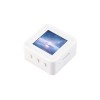
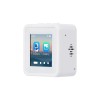
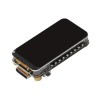
The device USB-Cereal by Soldered is an open-source debugging tool that provides access to a UART interface through the SBU lines of a USB-C connector. The solution does not require additional solder pads, debug connectors or disassembly of the target device. The board operates between the device under test and the computer: one USB-C connector is used for the target device, the second provides USB pass-through, while the third exposes the debug interface as a standard virtual COM port. USB-to-UART conversion is handled by the FTDI FT232RNQ or the alternatively fitted CP2102N.
Unlike a standard USB-to-UART converter, USB-Cereal receives serial signals from the SBU1 (TX) and SBU2 (RX) lines rather than from the USB data lines. This allows UART communication to operate independently of the target device's USB stack and can make it possible to receive messages from the earliest stages of processor startup, including the bootloader and early system initialization. The target device must expose its UART interface on the SBU pins of its USB-C connector.
A manual switch allows selection of a 1.8V or 3.3V logic level, enabling the interface to be matched to the target device. Maximum data rate is 3Mbps, while separate LEDs indicate TX and RX activity. Standard FTDI and Silicon Labs drivers provide support for Linux, macOS and Windows without requiring dedicated software. The board features three USB-C connectors with a fixed orientation, so reversible connection is not supported in this application. The design is released as open-source hardware under the Apache 2.0 license and is based on the original Google USB-Cereal project.
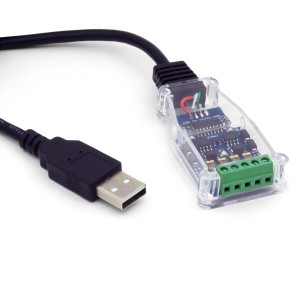
Converter dedicated to industrial applications. It provides communication between the USB interface and the RS422 and RS485 serial standard
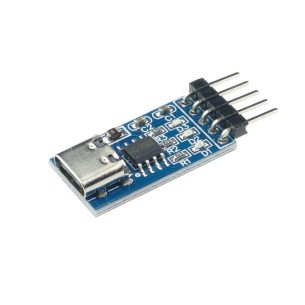
The USB-UART converter module with a USB-C connector is a versatile component that uses the CH340N chip to enable communication between the computer and devices using the UART interface, supporting 3.3V and 5V logical voltages, which makes it a universal tool for various applications. HW-234
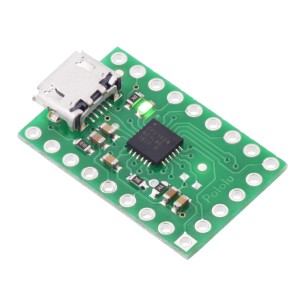
USB-TTL converter with CP2102N chip, which enables stable serial communication between computer and TTL devices, supporting baud rates up to 3 Mbps. The module operates at 3.3 V by default, tolerant of 5 V on inputs, and its compact size and standard 2.54 mm pitch make it easy to integrate into projects. Pololu 1317
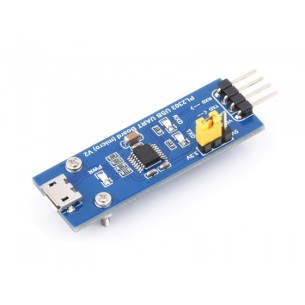
USB - UART converter based on the PL2303GS chip. Compatible with 1.8 V, 2.5 V, 3.3 V and 5 V, it is equipped with a micro USB connector. Waveshare PL2303 USB UART Board (micro) V2
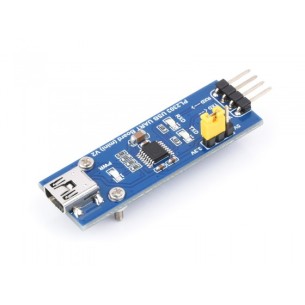
USB - UART converter based on the PL2303GS chip. Compatible with 1.8 V, 2.5 V, 3.3 V and 5 V, it is equipped with a mini USB connector. Waveshare PL2303 USB UART Board (mini) V2
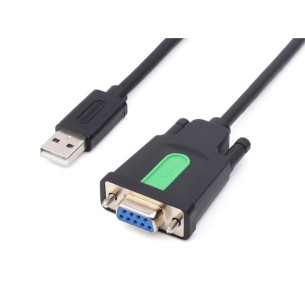
USB - RS232 adapter equipped with a USB type A connector and an RS232 connector in the DB9 female standard. It uses the original FTDI FT232RL chip, which guarantees a reliable connection between a variety of devices. Waveshare USB-TO-RS232-Female-Cable
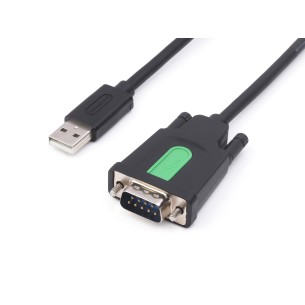
USB - RS232 adapter equipped with a USB type A connector and an RS232 connector in the DB9 male standard. It uses the original FTDI FT232RL chip, which guarantees a reliable connection between a variety of devices. Waveshare USB-TO-RS232-Male-Cable
UART debugger module designed specifically for Raspberry Pi 5. Allows easy connection to UART debug connector via SH1.0 3PIN cable, ensuring convenient and effective debugging. Waveshare Pi UART Debugger
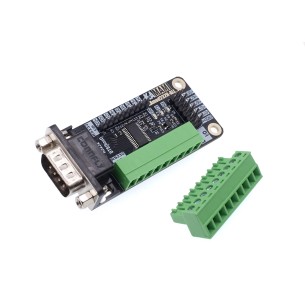
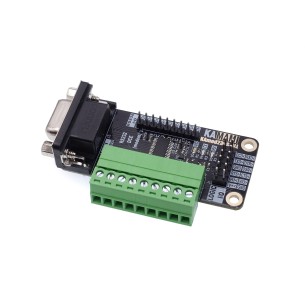
KAmod RS232H-ALL is a RS232 to TTL signal converter, supporting all RS232 interface signals, based on the MAX3243/SP3243 system, with a TTL side voltage of 3-5.5 V, a maximum transmission speed of 250 kbps, ESD protection up to 15kV HBM, a standard DB9 connector, a Phoenix MC 3.81 connector and 2.54 mm goldpin pins, with a board size of 65x30 mm (72x30 mm with a DB9 connector
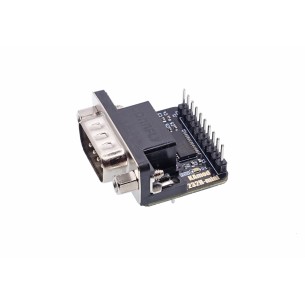
KAmod RS232H-mini is a miniature RS232 to TTL converter, operating in the voltage range of 3-5.5 V, supporting all RS232 signals, with a male DB9 connector, 2.54 mm goldpin pins, based on the MAX3243/SP3243 system, offering ESD protection up to 15 kV and a signal conversion direction corresponding to a DTE/Host device
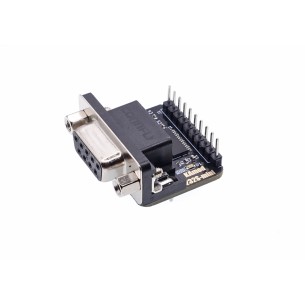
KAmod RS232S-mini is a miniature RS232 to TTL converter with a female DB9 connector, 2.54 mm goldpin pins, operating at 3-5.5 V, supporting all RS232 signals, based on the MAX3238/SP3238 chip, offering ESD protection up to 15 kV and corresponding to a DCE/Modem device
KAmod RS232S-ALL is a 3-5.5V RS232 to TTL converter supporting all RS232 signals, offering standard DB9 and Phoenix MC 3.81 connectors and 2.54mm goldpins, based on the MAX3238/SP3238 and providing ESD protection up to 15kV
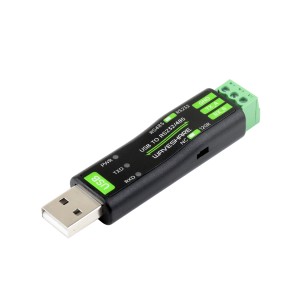
USB - RS232/RS485 converter with the original FT2132RNL chip. It uses a USB type A connector and a screw connector to connect RS232 and RS485 interfaces. Supports a wide range of operating systems: Mac, Linux, Android and Windows 11, 10, 8.1, 8, 7. Waveshare USB TO RS232/485
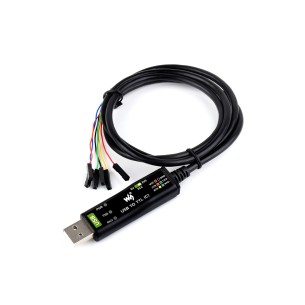
The FT232RNL USB to UART converter provides stable serial communication and debugging of industrial equipment, supporting 3.3V and 5V voltages and hardware flow control. With power indicators, protection diodes, and compatibility with multiple operating systems, it offers reliable data transfers from 300 bps to 3 Mbps, as well as additional protections against faults and electrostatic discharge. Waveshare USB TO TTL (C)
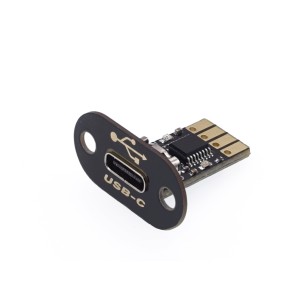
KAmod USB-UART-mini is a compact USB-C to UART converter, based on the FT230XS chip, enabling communication at speeds from 300 bps to 3 Mbps and providing the option of mounting using an additional front panel; includes LED indicators, supports signal voltages of 3.3 V, optionally 5 V, and offers support for Windows, Linux and Mac
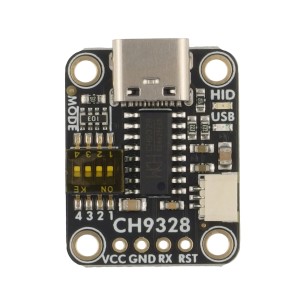
The Adafruit CH9328 UART to HID Keyboard Breakout allows for easy and fast emulation of a HID keyboard without the need for a microcontroller with native USB. The module is used in prototyping projects, automation, integration with single-board computers and in testing devices where keyboard signals are required. Thanks to support for various transmission modes and simplicity of integration, it is a practical tool for electronics engineers and embedded system programmers. Adafruit 5973
Open-source USB-C debug tool providing UART access through the SBU1 and SBU2 pins of a USB-C connector. Features three USB-C ports, selectable 1.8V/3.3V logic levels, speeds up to 3Mbps and a virtual COM port. Soldered 333367