.png)



zł51.14 tax excl.
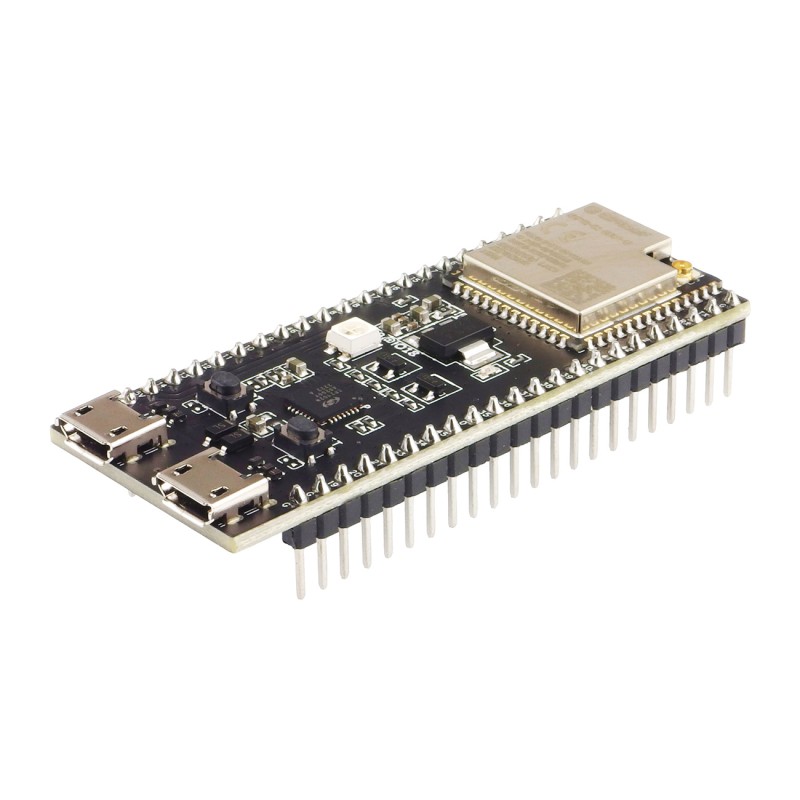
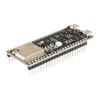
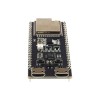
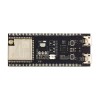
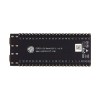
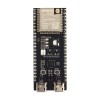
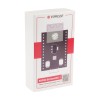
ESP32-S2-DevKitC-1U-N8R2 is an evaluation board featuring the ESP32-S2-SOLO-2U module, designed for developing wireless applications using 2.4 GHz Wi-Fi communication. The use of a U.FL connector allows for the integration of an external antenna, making it particularly useful in environments requiring extended range or signal isolation. With a wide range of available interfaces and large memory capacity, the board is ideally suited for IoT projects, building automation, remote control systems, and monitoring applications.
The ESP32-S2-DevKitC-1U-N8R2 evaluation board features the ESP32-S2-SOLO-2U module, which includes a single-core Xtensa® 32-bit LX7 microcontroller running at up to 240 MHz. The module provides 8 MB of Flash and 2 MB of PSRAM, enabling the development of complex IoT applications. The "U" version includes a U.FL connector for attaching an external antenna, offering increased design flexibility and improved signal quality in environments with significant radio attenuation. The board is equipped with micro USB ports for power and programming, BOOT and RESET buttons, and an addressable RGB LED connected to GPIO18. GPIO pins are exposed via dual header rows on both sides of the board.
Manufacturer
Responsible person
Module with WiFi Espressif ESP32-S2 WROOM. It integrates a set of peripheral devices - capacitive touch sensors, SPI, UART, I2S and I2C. SparkFun WRL-15663
Board for applications in the area of the Internet of Things (IoT). The module is based on the ESP-WROOM-32E system with 240 MHz clock, equipped with 4 MB Flash and 520 KB SRAM, as well as WiFi and Bluetooth communication. DFRobot DFR0654
Board for applications in the area of the Internet of Things (IoT). The module is based on the ESP-WROOM-32E system with 240 MHz clock, equipped with 4 MB Flash and 520 KB SRAM, as well as WiFi and Bluetooth communication. DFrobot DFR0654-F
Development board with ESP-WROOM-32 module. It allows communication within the WiFi network and the Bluetooth 4.2 (BLE) standard
Module with ATSAMD51J19 microcontroller and ESP32 WiFi system dedicated to matrix displays with HUB75 interface. Adafruit 4745
Module with WiFi Espressif ESP32-S2. It integrates two regulators, SPI Flash memory, LiPo charging circuit and RGB diode. It is equipped with a STEMMA QT connector. Adafruit 4775
Development board with WiFi ESP32-S2 module and 1.54" TFT LCD display. Equipped with a pressure, temperature and humidity sensor. Dedicated to build a home automation system. Adafruit 4985
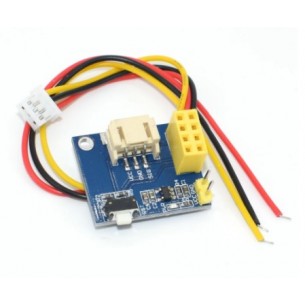
Adapter for ESP8266 modules dedicated to control addressable RGB LEDs from the WS2812 series
Powerful, generic Wi-Fi+BT+BLE MCU modules that target a wide variety of applications, ranging from low-power sensor networks to the most demanding tasks, such as voice encoding, music streaming and MP3 decoding. Espressif ESP32-WROOM-32E 32MBit (4MB)
Function module designed for MicroMod boards. It allows you to add WiFi wireless communication based on the ESP32 chip to the project. SparkFun WRL-18430
Development board with WiFi and Bluetooth ESP32 module. It has been equipped with industrial interfaces RS485 and CAN. TTGO T-CAN485 ESP32
No product available!
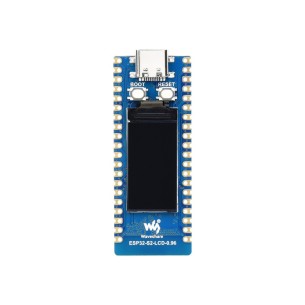
Board with WiFi Espressif ESP32-S2 module and 0.96" LCD display. It offers 4 MB Flash memory and 8 MB SRAM. Leads are compatible with HAT modules for Raspberry Pi Pico. Waveshare ESP32-S2-LCD-0.96
Board with WiFi Espressif ESP32-S2 module and 0.96" LCD display. It offers 4 MB Flash memory and 8 MB SRAM. Leads are compatible with HAT modules for Raspberry Pi Pico. Waveshare ESP32-S2-LCD-0.96-M
Board with the WiFi Espressif ESP32-S2 module. Offers 4MB Flash and 8MB SRAM. Leads are compatible with HAT modules for Raspberry Pi Pico. Waveshare 21178
Board with the WiFi ESP-12F (ESP8266) module and a 5 V relay. Equipped with an AC adapter
Board with the WiFi Espressif ESP32-S2 module. It offers 4 MB of Flash memory and 2 MB of SRAM and an RGB LED. It is equipped with a STEMMA QT connector. Adafruit 5325
ESP32-S2-DevKitC-1U-N8R2 is an evaluation board featuring the ESP32-S2-SOLO-2U module, designed for developing wireless applications using 2.4 GHz Wi-Fi communication. The use of a U.FL connector allows for the integration of an external antenna, making it particularly useful in environments requiring extended range or signal isolation. With a wide range of available interfaces and large memory capacity, the board is ideally suited for IoT projects, building automation, remote control systems, and monitoring applications.