


zł20.57 tax excl.
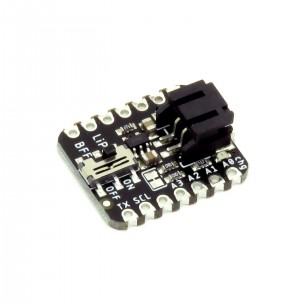
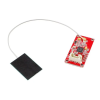
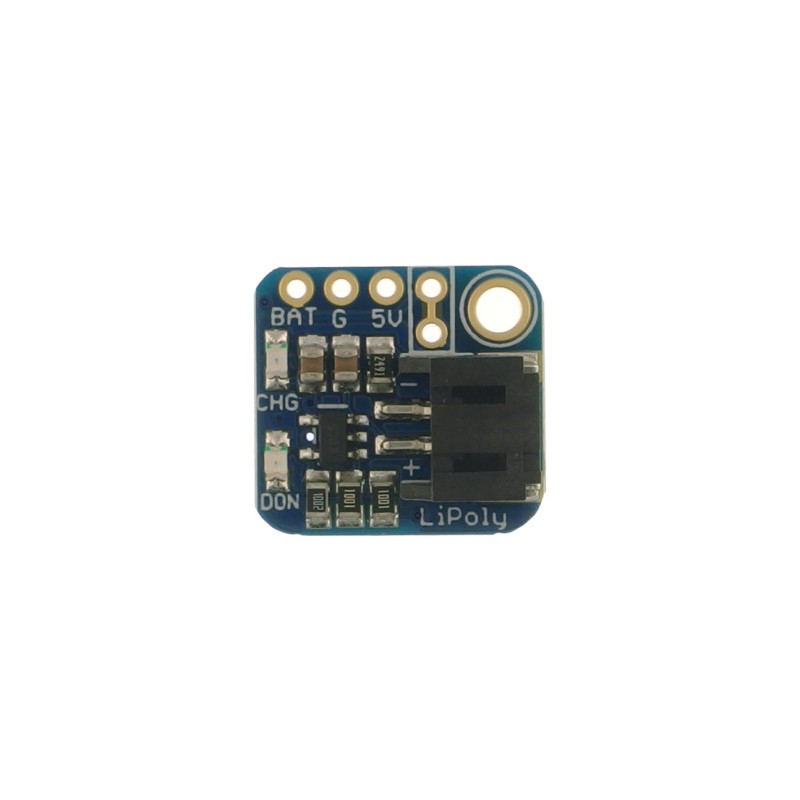
This little PCB sits on top of the Pro Trinket and allows a LiPoly/LiIon battery to plug in. When the Pro Trinket USB port is powered, the battery is recharged automatically. Adafruit 2124
If you have a Pro Trinket you probably know it's the perfect little size for a portable project. This LiPoly backpack makes it really easy to do! Instead of wiring 2 or 3 boards together to make a charging system, this little PCB sits on top of the Pro Trinket and allows a LiPoly/LiIon battery to plug in. When the Pro Trinket USB port is powered, the battery is recharged automatically. Unplug the USB port and the Pro Trinket will switch over to the rechargeable battery.
Ideally, this backpack is for use with the 3.3V Pro Trinket, so that the battery voltage (3.7V-4.2V) will get regulated down to 3.3V on the Pro Trinket board. However, many times, you can run a 5V Pro Trinket + accessories off of the ~4V from the LiPoly battery with no problem. (Technically its overclocking but we've never seen that affect the Pro Trinket itself, AVRs are happy to overclock without complaint).
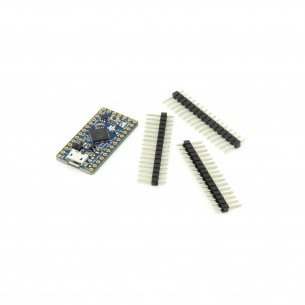
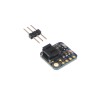
Solder the backpack on with the extra long header so that it can still plug into a breadboard, or clip the long header leads short afterwards for a slim package. There are two LEDs - one red and one green. While charging, the red LED is lit. When the battery is fully charged and ready for use, the green LED turns on. Seriously, it could not get more easy.
If you want to add an On/Off switch, we also made that really easy. The two 0.1" holes with a box around them are the battery output line. Carefully cut the trace between them with a hobby knife and replace with two wires from a switch like this slide switch, or this pushbutton one, for example.
Charging is performed in three stages: first a preconditioning charge, then a constant-current fast charge and finally a constant-voltage trickle charge to keep the battery topped-up. The charge current is 100mA by default, so it will work with any size battery and USB port. If you want you can easily change it over to 500mA mode by soldering closed the jumper on the bottom, for when you'll only be charging batteries with 500mAh size or larger.
For use with Adafruit LiPoly/LiIon batteries only! Other batteries may have different voltage, chemistry, polarity or pinout.
Batteries and Pro Trinket not included.
Manufacturer BTC Korporacja sp. z o. o. Lwowska 5 05-120 Legionowo Poland sprzedaz@kamami.pl 22 767 36 20
Responsible person BTC Korporacja sp. z o. o. Lwowska 5 05-120 Legionowo Poland sprzedaz@kamami.pl 22 767 36 20
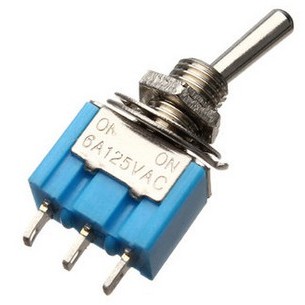
Lever switch with leads for cable assembly (outlet with "window"). The switch has one row and two ON-ON positions. It can switch voltage to 125VAC and current to 6A. MTS102
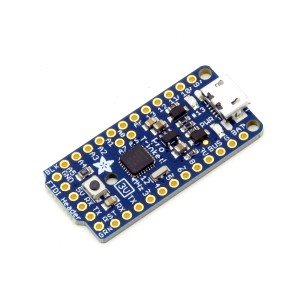
Small development kit with ATmega32u4 microcontroller. The board has 6 power, 6 analog and 17 digital pins, which makes it have similar capabilities to the Arduino UNO. Compatible with Arduino. Adafruit 3675
No product available!
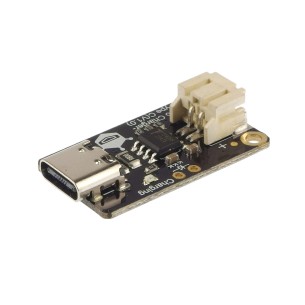
LiPo 3.7 V battery charger module with USB Type-C socket. DFRobot DFR0668
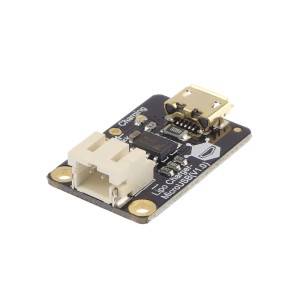
LiPo 3.7 V battery charger module with a microUSB socket. DFRobot DFR0667
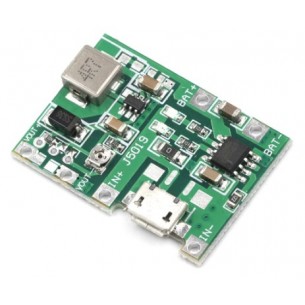
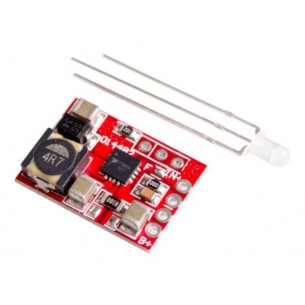
Charger module for Li-Ion batteries based on the TP4056 system. It can supply current up to 1 A. The input voltage of the module ranges from 4.5 to 8 V. It has a built-in Step Up converter
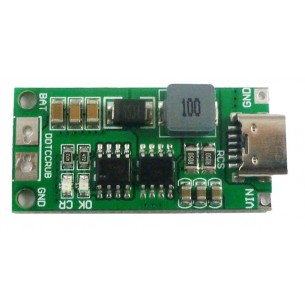
Charger module for two cells of Li-Ion batteries. It can charge with a current of up to 0.55 A with a charging voltage of 8.4 V. Powered by a USB type C connector
No product available!
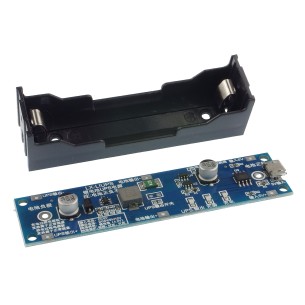
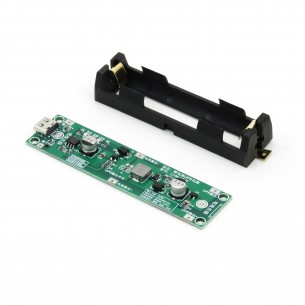
4-in-1 module designed for 18650 Li-Ion batteries. It can be used as a 5 V voltage source, charger, UPS and battery protection module
No product available!
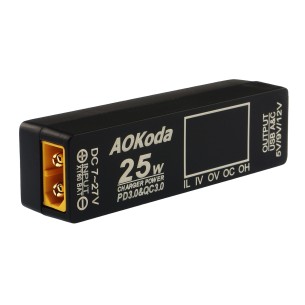
USB charger equipped with XT60 input socket. It can be powered by Lipo 2-6S batteries. AOKoda QC3.0 USB Charger
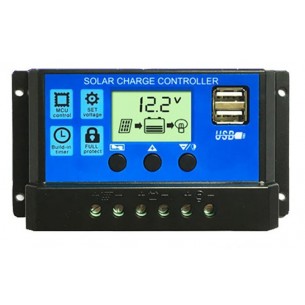
Charger with LCD display designed for solar panels. It can work with 12 V and 24 V systems, has a 30 A output and two 2.5 A USB outputs. Designed for lead-acid batteries
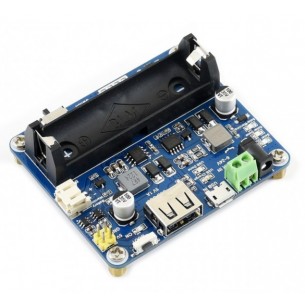
Solar energy management module designed for solar panels with a voltage from 6 V to 24 V. Waveshare Solar Power Manager (EN)
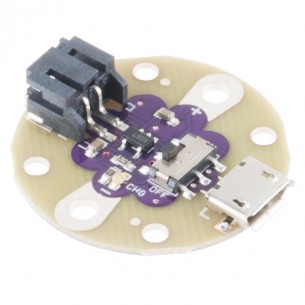
A miniature module with a LiPo battery charger with a capacity of 500 mA. SparkFun DEV-11893
No product available!
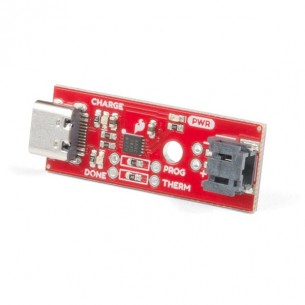
LiPo 3.7 V battery charger module with USB type C socket. SparkFun PRT-15217
LiPo and LiFePO4 battery charger module based on the TP5000 chip. It can handle batteries charged with 4.2 V and 3.6 V with the default charging current of 1 A
No product available!
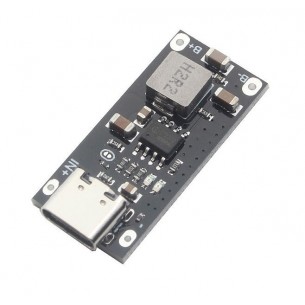
Lithium battery charger module with a maximum current of 3 A. Equipped with a USB type C connector. Dedicated to charging one Li-Ion cell
No product available!
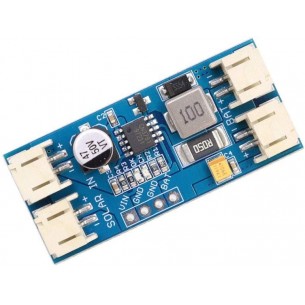
Solar energy management module designed for photovoltaic panels. It allows you to charge LiPo 1S batteries with a rated voltage of 3.7 V
No product available!
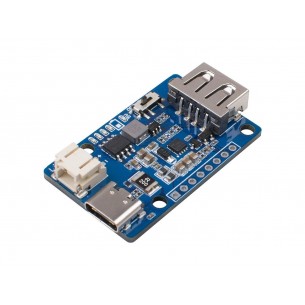
Single-purpose LiPo charger module based on the ETA9740 chip. It has an integrated power management circuit with 5V and 2.4A output. Seeed Studio 106990290
Extension module with Li-Ion and LiPo charger dedicated to QT Py boards. It allows you to charge the batteries with a current of up to 200 mA. Adafruit 5397
4-in-1 module designed for 18650 Li-Ion batteries. It can be used as a 5 V voltage source, charger, UPS and battery protection module
No product available!
This little PCB sits on top of the Pro Trinket and allows a LiPoly/LiIon battery to plug in. When the Pro Trinket USB port is powered, the battery is recharged automatically. Adafruit 2124