.png)



zł68.02 tax excl.
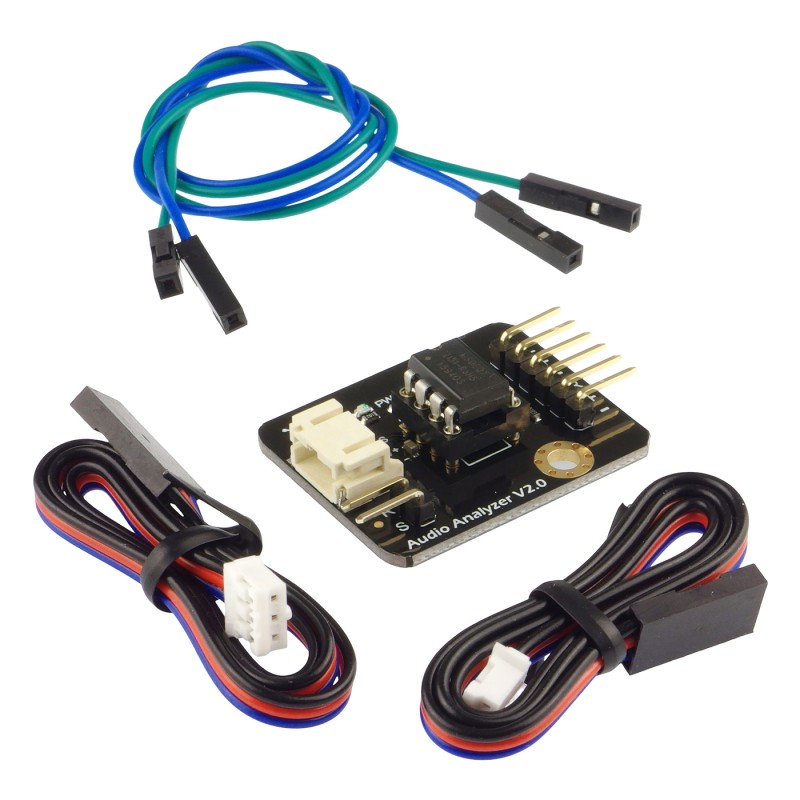
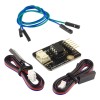
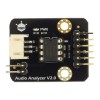
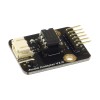
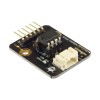
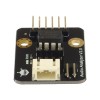
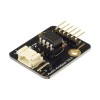
Audio Analyzer is a module with sound analyzer based on the MSGEQ7 system. It divides the sound into seven frequency bands, and then allows you to read the peak levels of each band. It allows you to measure the sound in the following frequencies: 63Hz, 160Hz, 400Hz, 1kHz, 2.5kHz, 6.25kHz and 16kHz. DFRobot DFR0126
Module with sound analyzer based on the MSGEQ7 system. It divides the sound into seven frequency bands, and then allows you to read the peak levels of each band. It allows you to measure the sound in the following frequencies: 63Hz, 160Hz, 400Hz, 1kHz, 2.5kHz, 6.25kHz and 16kHz.
The module can be used to create visualization of sound, detection of sound characteristics. The set with the module also includes connection cables.
Manufacturer
Responsible person
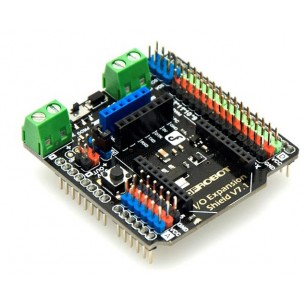
Expansion board for Arduino, allows easy connection of XBee modules, has separate outputs for I2C, SPI and UART buses. The built-in 3.3V voltage stabilizer and operating mode switch make it easier to program the Arduino when the XBee module is connected to the sockets. DFRobot DFR0265
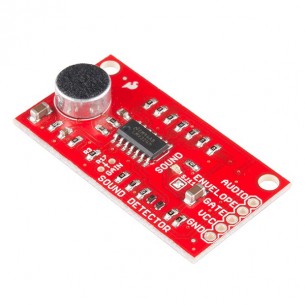
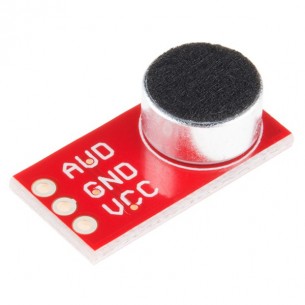
A module with an electret microphone and amplifier that will allow you to detect voice, clap, slam doors and other sounds using an analog or digital output. SparkFun SEN-12642
No product available!
KAmodMIC_ELECTRET is a module with microphone KPCM6B type. Thanks to embedded amplifier with hundredfold amplification of signal, output voltage can be measurement in microcontroller with using e.g. ADC converter.
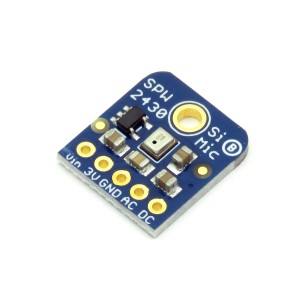
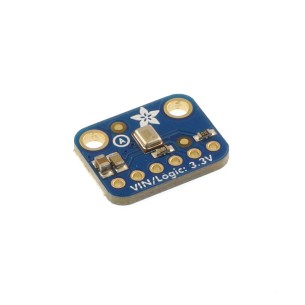
Module with MEMS microphone; model SPW2430 with built-in amplifier. The plate also has a 3.3 V voltage stabilizer needed to power the microphone. Adafruit 2716
No product available!
This small breakout board couples an Electret microphone (100Hz–10kHz) with a 60x mic preamplifier to amplify the sounds of voice, claps, door knocks or any sounds loud enough to be picked up by a microcontroller’s analog-to-digital converter. Each breakout comes fully assembled and works from 2.7V up to 5.5V. BOB-12758
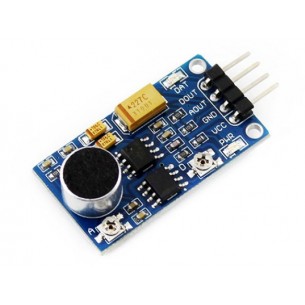
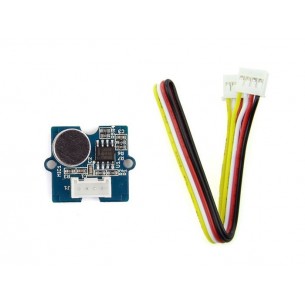
Module with a sound sensor based on an electret microphone and LM358 amplifier. The board is equipped with a Grove connector and communicates via an analog interface. Seeed Studio 101020023
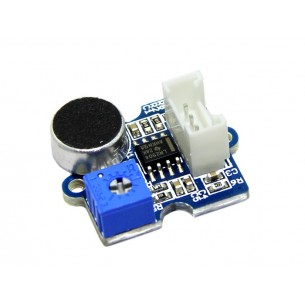
A volume sensor designed to detect loud ambient sounds. The module uses a microphone and LM2904 amplifier. The output value (analog signal) depends on the volume of the detected sound. In order to eliminate interference, the microphone signal is subjected to double filtering. Seeed studio 101020063
Module with MEMS type microphone (SPH0645LM4H-B). It allows you to receive a sound signal and send it using the I2S audio interface. Powered by 1.6 ... 3.6V voltage. Adafruit 3421
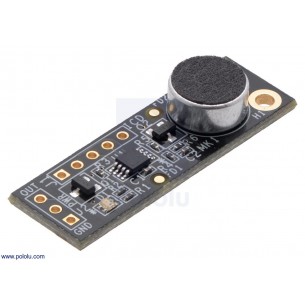
The VM-CLAP1 Hand Clap Sensor from Verbal Machines is a low-power, microprocessor-based audio sensor that can detect hand claps or finger snaps while ignoring background noises such as human speech or music. Pololu 2580
Audio Analyzer is a module with sound analyzer based on the MSGEQ7 system. It divides the sound into seven frequency bands, and then allows you to read the peak levels of each band. It allows you to measure the sound in the following frequencies: 63Hz, 160Hz, 400Hz, 1kHz, 2.5kHz, 6.25kHz and 16kHz. DFRobot DFR0126
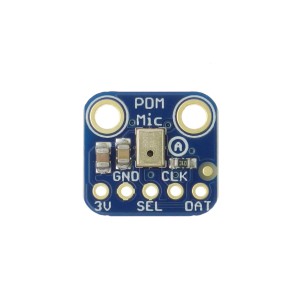
Module with PDM microphone. It allows you to receive a sound signal and send it using PDM modulation. Adafruit 3492
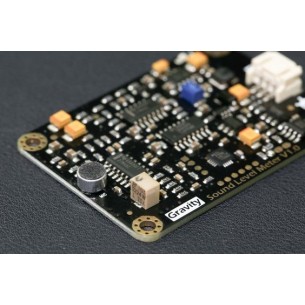
Module with an analog sound intensity sensor. It enables measurement in the range from 30 dB to 130 dB with a measurement error of ± 1.5 dB. The module returns the output voltage in the range of 0.6 to 2.6 V. DFRobot SEN0232
No product available!
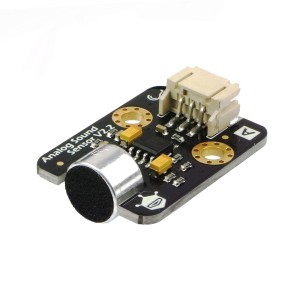
Gravity: Analog Sound Sensor is a sound sensor with Gravity analogue output. The module can be supplied with 3.3 ... 5V voltage. DFRobot DFR0034
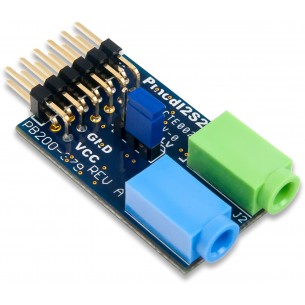
Pmod I2S2 is a module with 24-bit A / C and D / C audio converters derived from standard 3,5 mm Jack connectors. Thanks to them, it is possible to send and receive stereo audio signals using the I2S protocol. Digilent 410-379
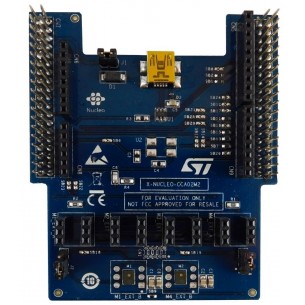
Expansion board compatible with STM32 Nucleo. Allows you to prototype solutions with digital microphones. STMicroelectronics X-NUCLEO-CCA02M2
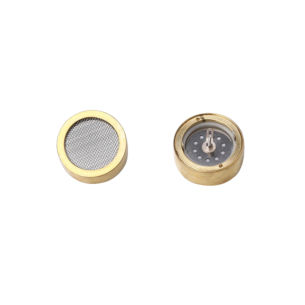
A high quality 25mm diameter aluminum cartridge capacitor. It offers excellent sensitivity and a wide frequency range, ideal for studio and recording applications.
No product available!
Audio Analyzer is a module with sound analyzer based on the MSGEQ7 system. It divides the sound into seven frequency bands, and then allows you to read the peak levels of each band. It allows you to measure the sound in the following frequencies: 63Hz, 160Hz, 400Hz, 1kHz, 2.5kHz, 6.25kHz and 16kHz. DFRobot DFR0126