.png)


zł57.24 tax excl.
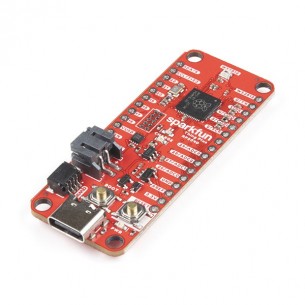
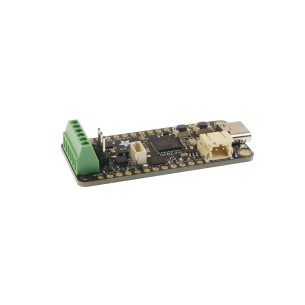
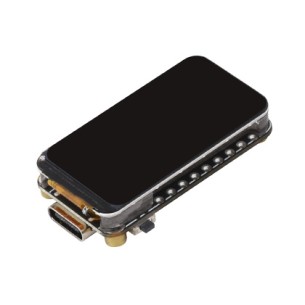
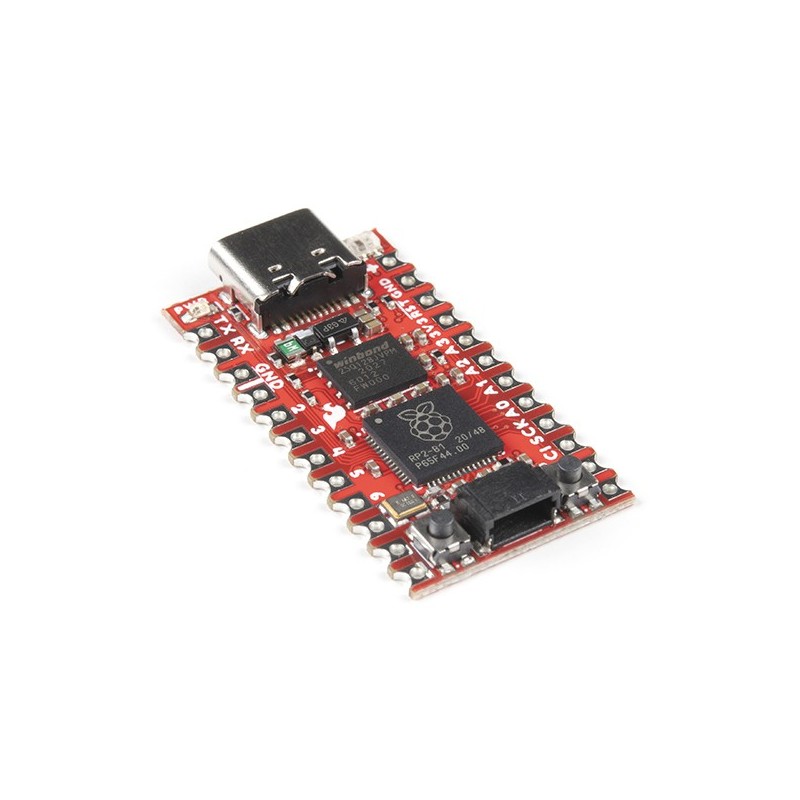
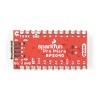
The board with the RP2040 microcontroller equipped with two ARM Cortex-M0 + cores operating at 133 MHz, 256 kB RAM. The board also has 16 MB of QSPI flash memory. The system can be programmed in C/C++ or microPython. SparkFun DEV-18288
SparkFun Pro Micro is a board equipped with the RP2040 microcontroller designed by the Raspberry Pi foundation. The system has two ARM Cortex M0 + cores operating at a frequency of 133 MHz, 256 KB of RAM and 30 GPIO ports. The microcontroller is not equipped with flash memory, but on the board there is an external memory with a capacity of 16 MB connected via the QSPI interface.
On the board, in addition to the RP2040 system and Flash memory, the user will find a 3.3 V voltage stabilizer, Boot and Reset buttons, power and RGB WS2812 LEDs, a USB type C connector for powering and programming the module, and 20 GPIO outputs with such parameters such as four 12-bit ADC inputs, 10 PWM outputs, I2C interface, SPI and two UART interfaces. The I2C bus is also available on the Qwiic connector.
The platform supports the popular MicroPython and C/C++ programming languages. Programs can be loaded to memory via the USB interface using the built-in UF2 bootloader. The guide with examples of use is available on the product page.
Data sheet
Manufacturer
Responsible person
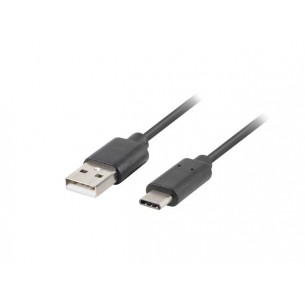
Cable with USB typ A and USB typ C connectors, cable length 1 m. LANBERG CA-USBO-10CC-0010-BK
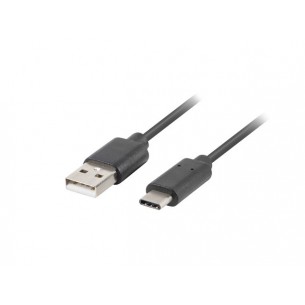
Cable with USB typ A and USB typ C connectors, cable length 1,8 m. LANBERG CA-USBO-10CC-0018-BK
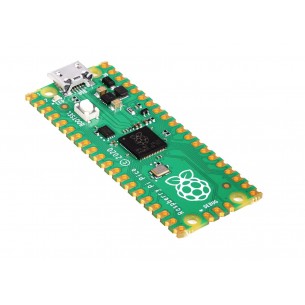
Module with the RP2040 microcontroller with two ARM Cortex-M0 + cores operating at 133 MHz, 256 kB RAM and 30 GPIO. The board also has 2 MB of external QSPI flash memory. Module can be programmed in C/C++ or microPython. Raspberry Pi Pico
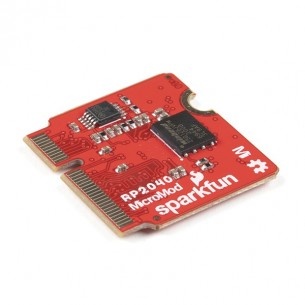
MicroMod main module with RP2040 microcontroller. Equipped with an M.2 connector, it can work with MicroMod expansion boards. SprakFun DEV-17720
The board with the RP2040 microcontroller equipped with two ARM Cortex-M0 + cores, which work at a frequency of 133 MHz, 256 kB RAM. The board also has 16 MB of QSPI flash memory. The system can be programmed in C/C++ or microPython. SparkFun DEV-17745
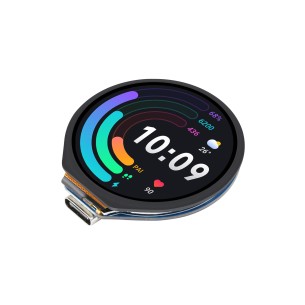
A 1.28" circular IPS LCD display module with touch panel. It has a resolution of 240x240 px and is controlled by an RP2040 microcontroller. It is equipped with an accelerometer and a gyroscope. Waveshare RP2040-Touch-LCD-1.28
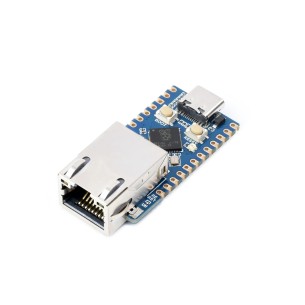
Ethernet module with RP2040 microcontroller. It has an embedded CH9120 chip with an integrated TCP/IP protocol stack. The chip can be programmed in C/C++ or MicroPython. Waveshare RP2040-ETH
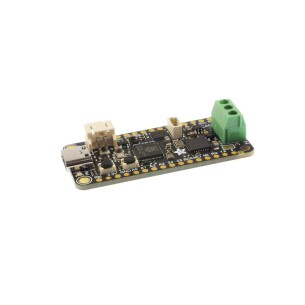
Board with RP2040 microcontroller and MCP2515 CAN controller. It has a built-in LiPo charging circuit and a STEMMA QT connector. It allows you to add communication based on the CAN bus to the project, commonly used in projects related to robotics and the automotive industry. Adafruit 5724
Board with RP2040 microcontroller and class D mono audio amplifier based on MAX98357 chip. It has a built-in LIS3DH three-axis accelerometer, an RGB NeoPixel LED, a LiPo charging circuit, and a STEMMA QT connector. Adafruit 5768
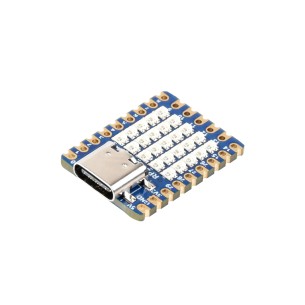
Board with the RP2040 microcontroller equipped with two ARM Cortex-M0+ cores and a 5x5 RGB LED matrix. There is also 2 MB of QSPI flash memory on the board. The circuit can be programmed in C/C++ or MicroPython. Waveshare RP2040-Matrix
No product available!
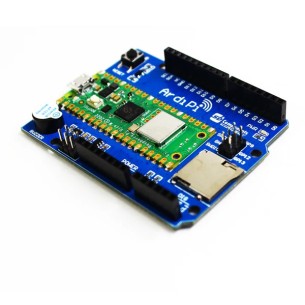
Development board equipped with the Raspberry Pi Pico W module. It is an interesting alternative to Arduino Uno boards. It has a compatible shape and pin layout, while making available the large resources offered by the RP2040 microcontroller. Can be programmed with Arduino, MicroPython and CircuitPython. SB Components 26630
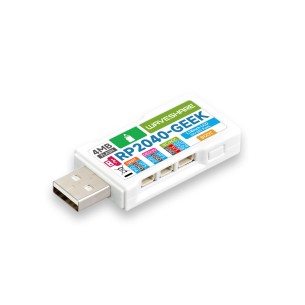
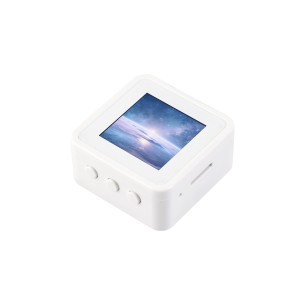
Development board based on the RP2040 microcontroller. It is equipped with a 1.14" color LCD display and a built-in debugging tool via USB interface. The board is enclosed in a plastic housing. Waveshare RP2040-GEEK
No product available!
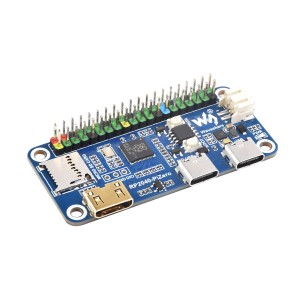
A board with an RP2040 microcontroller equipped with two ARM Cortex-M0+ cores that operate at a frequency of 133 MHz and 264 kB RAM. There is also 16 MB of QSPI Flash memory on the board. The system can be programmed in C/C++ or MicroPython. It offers a DVI connector, a micorSD card slot and a 40-pin GPIO connector. The module has a shape and connector arrangement similar to the popular Raspberry Pi Zero minicomputers. Waveshare RP2040-PiZero
No product available!
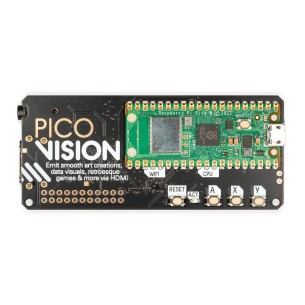
Versatile digital video module. It uses two RP2040 chips (one in the form of a Raspberry Pi Pico W board and the other as a separate RP2040 microcontroller) and is equipped with an HDMI output connector. Pimoroni PIM686
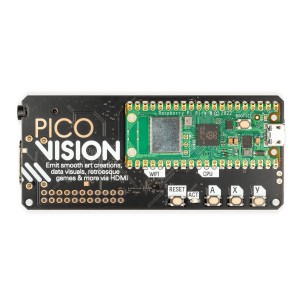
Versatile digital video module. It uses two RP2040 chips (one in the form of a Raspberry Pi Pico W board and the other as a separate RP2040 microcontroller) and is equipped with an HDMI output connector. Pimoroni PIM674
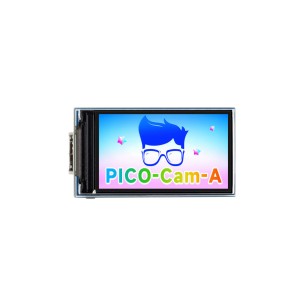
Module with a 1.14" IPS LCD display with a resolution of 240x135 px and a monochrome HM01B0 camera. Equipped with an RP2040 microcontroller. Waveshare PICO-Cam-A
No product available!
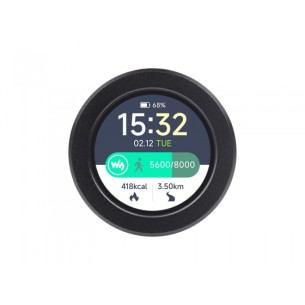
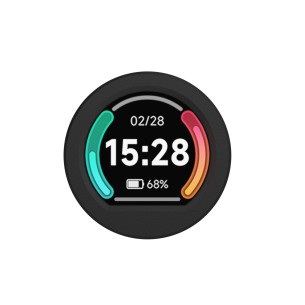
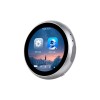
Module with a round 1.28" IPS LCD touch display with a resolution of 240x240 px and an RP2040 microcontroller. Equipped with an accelerometer and gyroscope. Enclosed in a nice metal housing. Waveshare RP2040-Touch-LCD-1.28-B
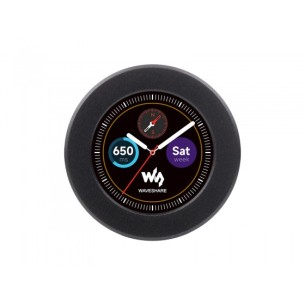
Module with a round 1.28" IPS LCD display with a resolution of 240x240 px and an RP2040 microcontroller. Equipped with an accelerometer and gyroscope. Enclosed in a nice metal housing. Waveshare RP2040-LCD-1.28-B
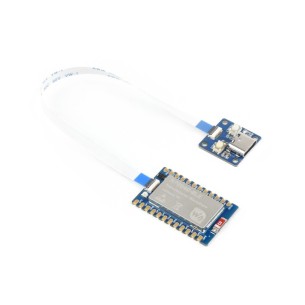
The RP2040 MCU board combines the high performance of two ARM Cortex M0+ cores clocked at up to 133 MHz, with 264 KB of SRAM, 2 MB of Flash, and integrated Bluetooth 5.1 for easy wireless communication. With simple programming, multiple GPIO interfaces, and support for C/C++, MicroPython, and Arduino, the board is ideal for IoT projects and other advanced applications. It comes with a USB Type-C adapter. Waveshare RP2040-BLE-Kit
No product available!
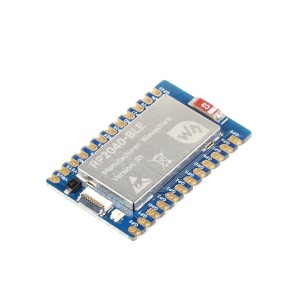
The RP2040 MCU board combines the high performance of two ARM Cortex M0+ cores clocked at up to 133 MHz, with 264 KB of SRAM, 2 MB of Flash, and integrated Bluetooth 5.1 for easy wireless communication. With simple programming, multiple GPIO interfaces, and support for C/C++, MicroPython, and Arduino, the board is ideal for IoT projects and other advanced applications. Waveshare RP2040-BLE
Module with a round 0.99" IPS LCD display with a resolution of 128x115 px and an RP2040 microcontroller. Equipped with an accelerometer and gyroscope. Enclosed in a nice metal housing. Waveshare RP2040-LCD-0.99-B
The board with the RP2040 microcontroller equipped with two ARM Cortex-M0 + cores operating at 133 MHz, 256 kB RAM. The board also has 16 MB of QSPI flash memory. The system can be programmed in C/C++ or microPython. SparkFun DEV-18288