


zł31.18 tax excl.
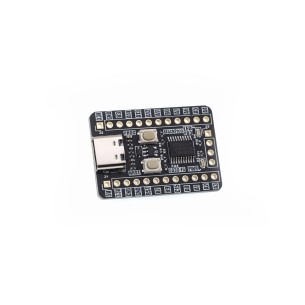
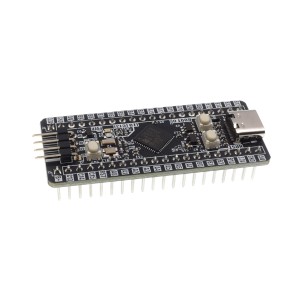
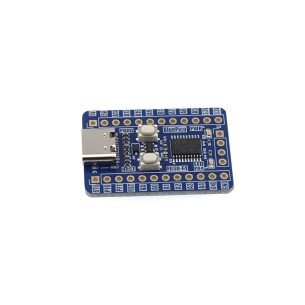
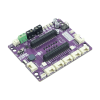
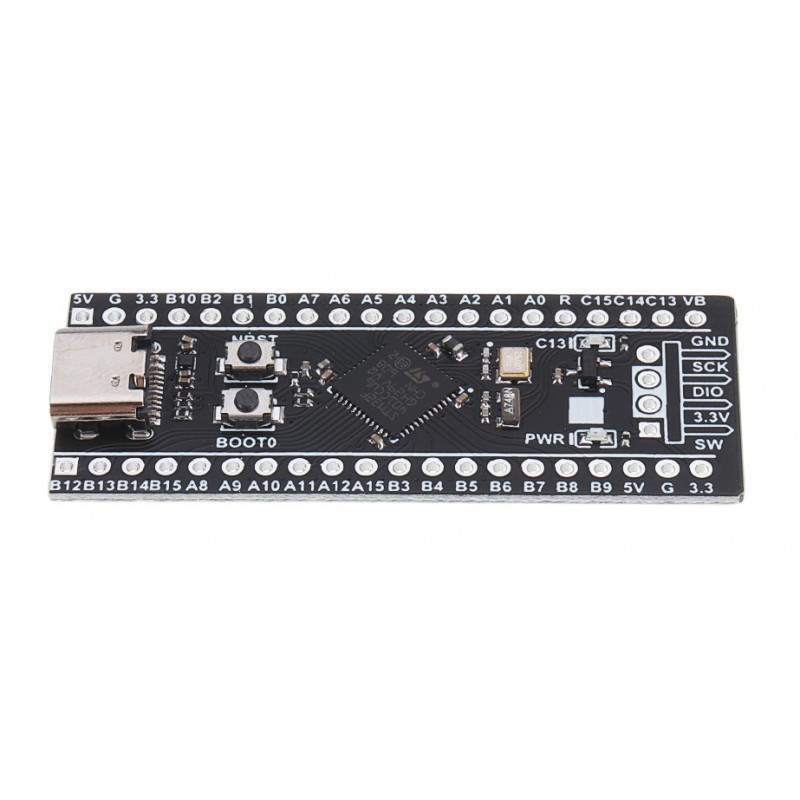
Evaluation kit equipped with STM32F411CEU6 microcontroller (ARM Cortex M4, 100MHz, 512kB Flash, 128kB RAM). It has two 20-pin connectors enabling the use of numerous microcontroller peripheral systems.
Evaluation kit equipped with STM32F411CEU6 microcontroller (ARM Cortex M4, 100MHz, 512kB Flash, 128kB RAM). It has two 20-pin connectors enabling the use of numerous microcontroller peripherals, USB Type C connector, SWD connector (for external programmer) and user diode. The set is characterized by small dimensions and allows you to quickly and cheaply start the adventure with 32-bit microcontrollers from the STM32 family.
The set has no built-in programmer. The programming process can be carried out by using an external SWD programmer or using a USB-UART converter and bootloader microcontroller pre-loaded on the factory. The operating mode is configured using BOOT button.
The set works with most popular programming platforms, including Keil, IAR and environments based on the GCC compiler, as well as the Arduino IDE environment.
Manufacturer BTC Korporacja sp. z o. o. Lwowska 5 05-120 Legionowo Poland sprzedaz@kamami.pl 22 767 36 20
Responsible person BTC Korporacja sp. z o. o. Lwowska 5 05-120 Legionowo Poland sprzedaz@kamami.pl 22 767 36 20
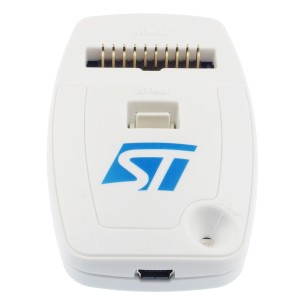
ST-LINK/V2 in-circuit debugger/programmer for STM8 and STM32 microcontrollers
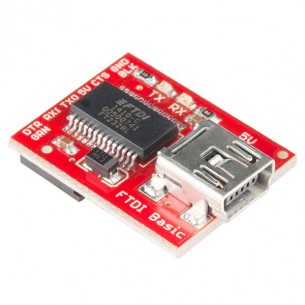
This is a basic breakout board for the FTDI FT232RL USB to serial IC. The pinout of this board matches the FTDI cable to work with official Arduino and cloned 5V Arduino boards. It can also be used for general serial applications. DEV-09716
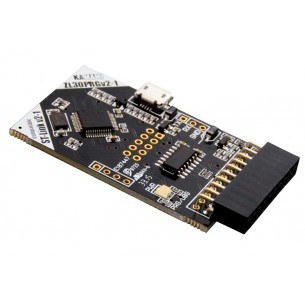
A new programmer-debugger with the USB interface. It supports the STM32 microcontrollers via SWD interface. ZL30PRGv2-1 is compatible with the STMicroelectronics ST-Link/V2-1. It also has the function of USB-UART converter, thanks to which it can successfully replace the KAmodRS module.
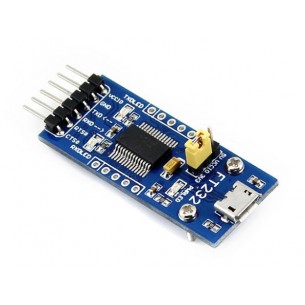
UART - USB converter based on the FT232RL chip with TX, RX, RTS and CTS lines led out to the pin connector, the remaining lines available on solder fields for pin connectors. Micro-USB socket. Voltage supply from 3.3 to 5 V. FT232 USB UART Board (micro)
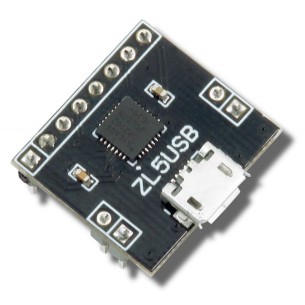
ZL5USB is a USB-UART converter module based on Silabs CP2102. The module has small sizes, microUSB connector and it can works with the 2.5...5.5V signals.
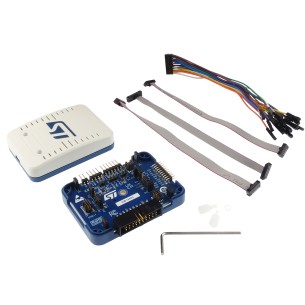
The STLINK-V3SET is a modular stand-alone debugging and programming probe for the STM8 and STM32 microcontrollers. It is composed of a main module and a complementary adapter board
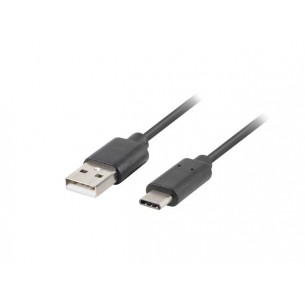
Cable with USB typ A and USB typ C connectors, cable length 1 m. LANBERG CA-USBO-10CC-0010-BK
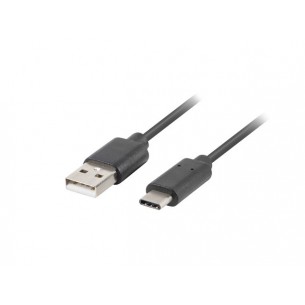
Cable with USB typ A and USB typ C connectors, cable length 1,8 m. LANBERG CA-USBO-10CC-0018-BK
The KAmod BlackPico STM32G030 board, based on the STM32G030F6P6 microcontroller, offers extended communication and signal processing capabilities in a compact form factor. Suitable for embedded, educational, and industrial projects, it enables rapid development using popular toolchains.
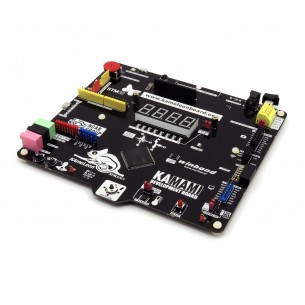
Development kit with STM32L496ZGT6 microcontroller (ARM Cortex-M4 core) with a built-in ST-Link programmer. Extensive equipment, including: MEMS 6DoF sensor, motor controller, joystick, LED display, 8 LED diodes, RGB LED, audio amplifier, Flash memory QSPI 1 MB, microphone, Arduino connector
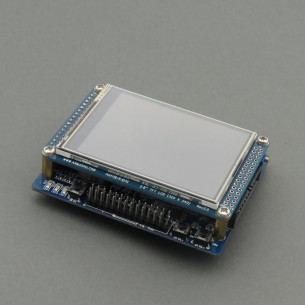
Development kit with STM32F103R8T6 microcontroller and 2.8 "TFT display with touch panel.
No product available!
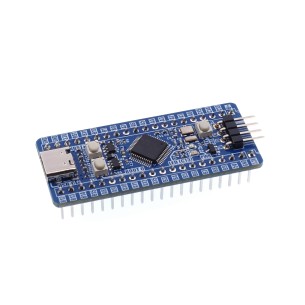
The Kamod BluePill+ evaluation board equipped with the STM32F103C8T6 microcontroller offers improvements over the original BluePill, such as a new PCB design, a USB-C connector with ESD protection, an improved power supply circuit, and the ability to program via Arduino IDE and STM32CubeIDE
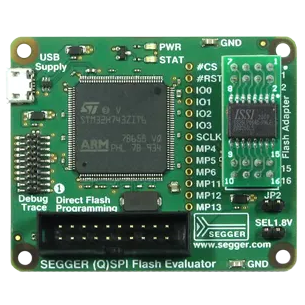
Compact evaluation board for testing NOR and NAND flash memory supported by emFile drivers. Enables fast and reliable flash programming with SEGGER tools, offering support for various packages such as SO-8, SO-16, BGA and SON. SEGGER (Q)SPI Flash Evaluator (6.40.00)
No product available!
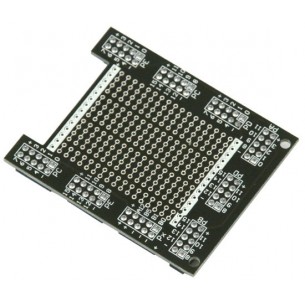
Universal board for ZL40ARM and ZL41ARM kits
The KAmod BlackPill 401 is an evaluation board with an STM32F401CCU microcontroller, featuring USB-C with ESD protection and a modified power circuit. With a pre-installed bootloader, it supports Arduino IDE, offering 32 GPIOs and versatile programming capabilities
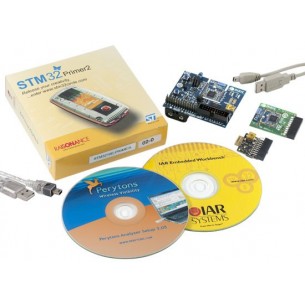
The STM32W108B-SK kit provides a complete platform for learning and developing wireless applications based on STM32W108 microcontrollers. The integration of radio modules, support for ZigBee protocols, and a rich set of development tools make it a versatile solution for designers of wireless communication and IoT systems.
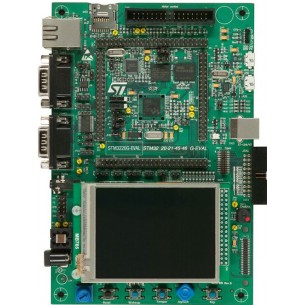
Evaluation board with STM32F207 microcontrollerStarter kit equipped with a microcontroller STM32F207IGH6 (1 MB Flash, Cortex-M3), with a built-in programmer-debugger ST-Link/V2, equipped with a 3.2" TFT LCD display and a full set of connectors.
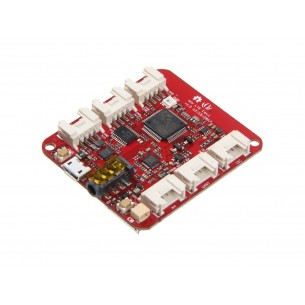
Wio development kit equipped with LTE 4G communication and a GNSS satellite navigation module. Seeed Studio 102991022
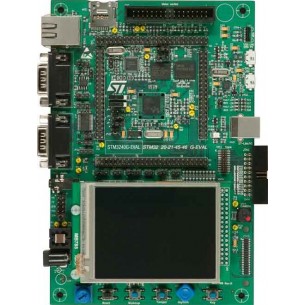
Evaluation board with STM32F407 microcontrollerStarter kit equipped with a microcontroller STM32F407IGH6 (1 MB Flash, Cortex-M4), with a built-in programmer-debugger ST-Link/V2, equipped with a 3.2" TFT LCD display and a full set of connectors.
The KAmod BluePico STM32F030 evaluation board includes the STM32F030F4P6 microcontroller and all necessary components for power supply, programming, and communication. Its compact size and versatile GPIO configuration make it suitable for educational use, prototyping, and embedded industrial applications.
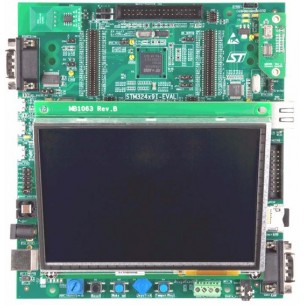
Starter kit with STM32F439NIH6 microcontroller (2 MB Flash, Cortex-M4), with built-in ST-Link/V2 programmer-debugger, 4.7" TFT LCD display and full set of connectors
No product available!
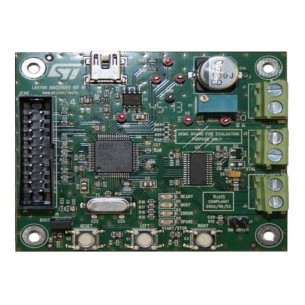
Development kit with STM32F105RBT6 microcontroller (128 KB Flash, 64 KB RAM) and L6470 stepper motor driver
No product available!
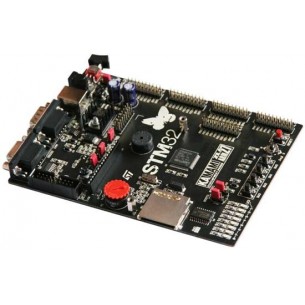
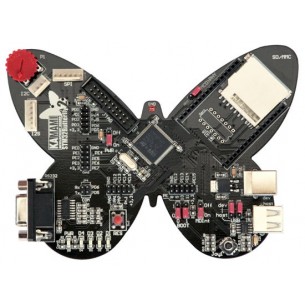
Development kit for STM32F107VCT6 microcontrollers, equipped with e.g. a joystick, 4 LEDs, USB host and device, Ethernet module connector, RS232 connector
Evaluation kit equipped with STM32F411CEU6 microcontroller (ARM Cortex M4, 100MHz, 512kB Flash, 128kB RAM). It has two 20-pin connectors enabling the use of numerous microcontroller peripheral systems.