


zł51.95 tax excl.
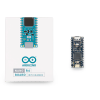
The Arduino Nano R4 is a compact board from the Nano family featuring a 32-bit Renesas RA4M1 microcontroller with a 48 MHz Arm Cortex-M4 core, delivering enhanced performance while maintaining 5 V logic compatibility and full integration with the existing Arduino ecosystem. The new version expands functionality with a CAN interface, a 12-bit DAC, an integrated operational amplifier, and a Qwiic connector for quick I²C module connectivity. Thanks to castellated pins and single-sided component assembly, the board is suitable for both rapid prototyping and production projects requiring integration into custom PCBs. Arduino ABX00143
The Arduino Nano R4 (ABX00143) expands the capabilities of the popular Nano form factor by integrating the Renesas RA4M1 microcontroller with a 32-bit Arm Cortex-M4 core clocked at 48 MHz. The MCU provides 256 kB of Flash memory, 32 kB of RAM, and 8 kB of EEPROM, offering significantly more space for code and data compared to earlier 8-bit-based designs. The board maintains 5 V logic compatibility, enabling direct use with classic Arduino shields, modules, and sensors without the need for additional level shifters.
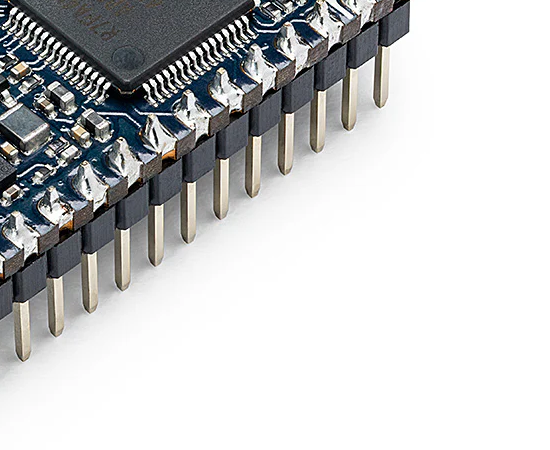
The Arduino Nano R4 with pre-soldered headers (ABX00143) offers 21 digital I/O lines, all of which can function as either inputs or outputs, as well as 8 analog inputs enabling voltage measurements in sensing and control projects. The board provides 6 PWM channels, allowing precise control of motors, LEDs, and other actuators requiring signal modulation.
The board is equipped with two I²C interfaces (5 V and 3.3 V via the Qwiic connector), one SPI interface, and two serial ports (including communication over USB), ensuring flexibility when integrating displays, converters, communication modules, and measurement systems. Additionally, pins supporting external interrupts are available, enabling real-time applications that respond to hardware events.
Power can be supplied via the USB-C port or through the VIN pin with an input range of 6–21 VDC, allowing integration both in laboratory environments and in systems powered from industrial installations. Each GPIO line can source or sink up to 8 mA of current, which should be taken into account when designing peripheral circuits.
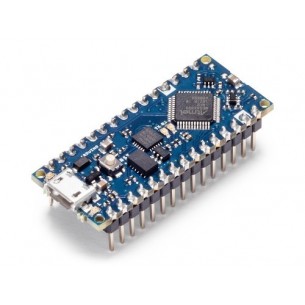
The compact dimensions of 18 × 45 mm enable installation in space-constrained devices, while the factory-soldered goldpin headers allow immediate use of the board with breadboards and adapters without additional assembly. Arduino Nano R4 maintains full software compatibility with Arduino IDE, CLI, and environments based on the UNO R4 ecosystem, simplifying migration of existing projects.
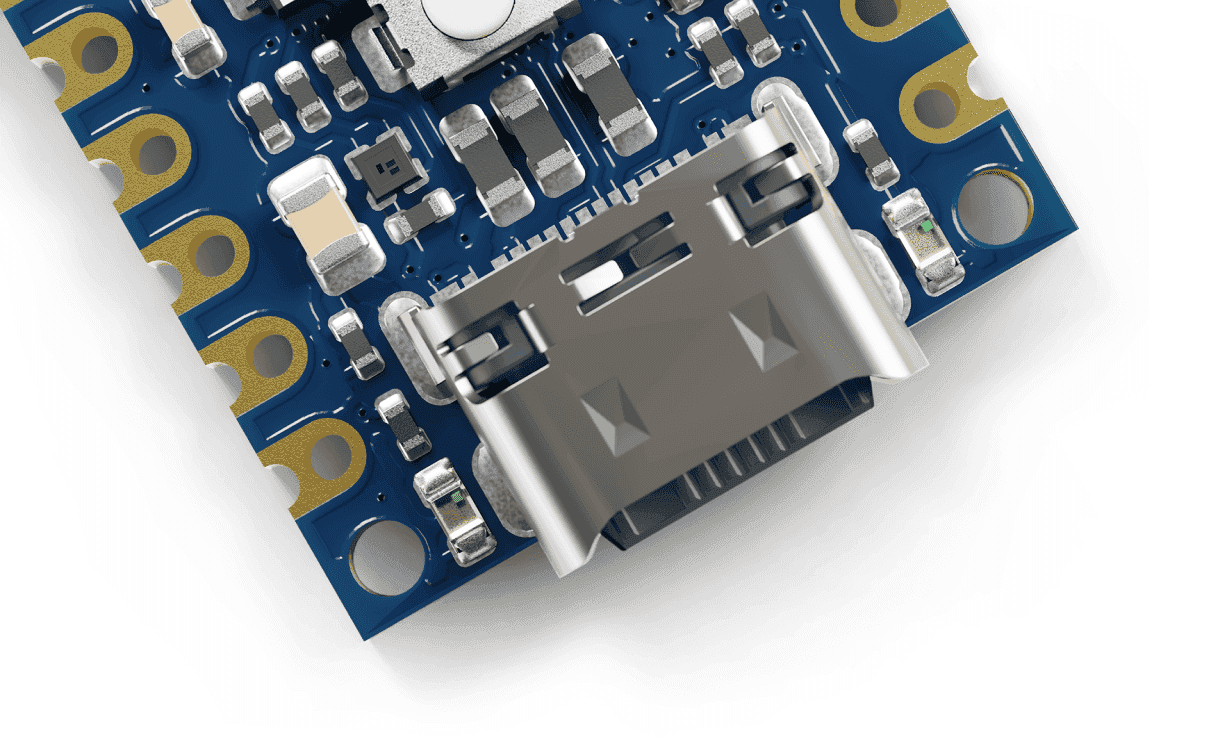
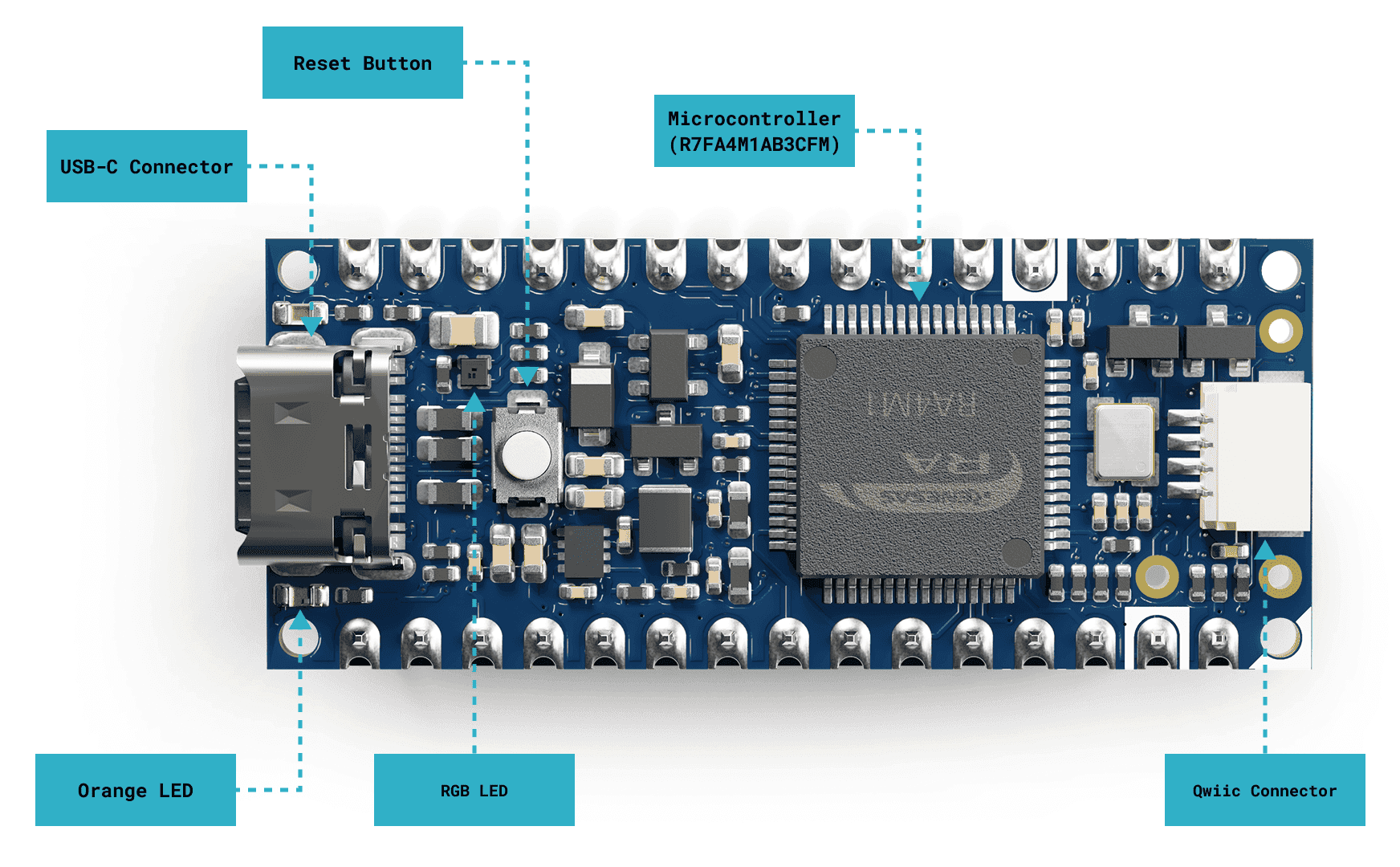
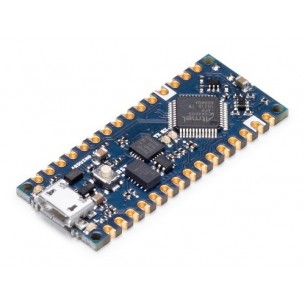
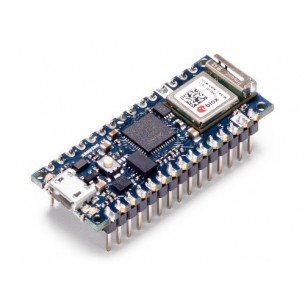
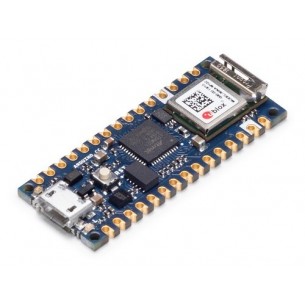
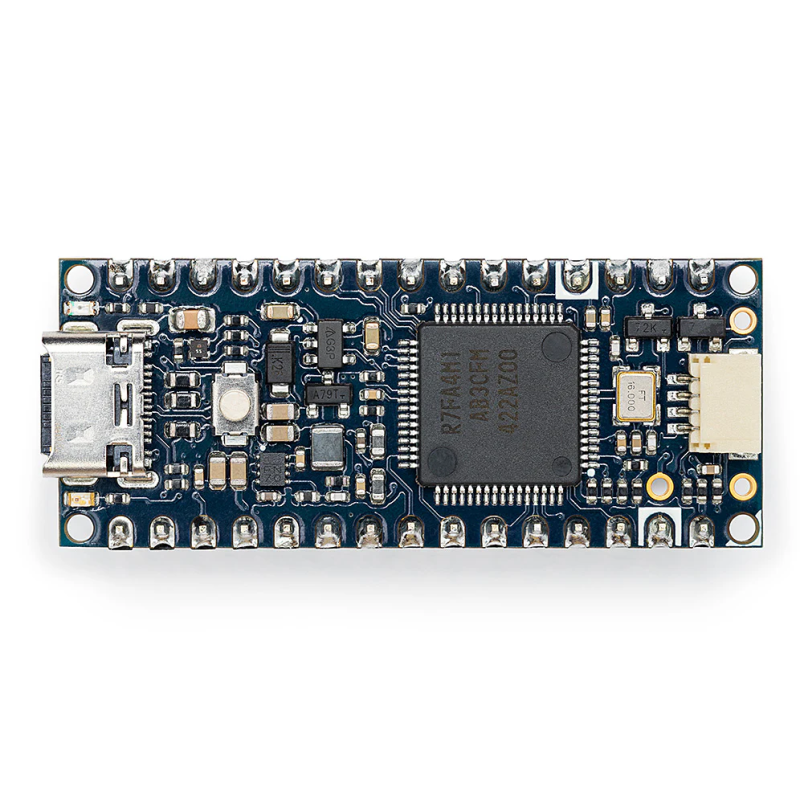
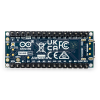
The central element of the board is the Renesas RA4M1 microcontroller (marking R7FA4M1AB3CFM visible in the photo), responsible for executing the program and handling the built-in hardware peripherals. In its immediate vicinity are the power supply circuitry, voltage stabilization components, and a resonator ensuring stable operation of the system. The compact PCB design and single-sided component placement facilitate integration into space-constrained devices.
The USB-C connector visible on the left side serves for programming and communication with a computer, enabling fast firmware uploading and data transmission. Next to it is the RESET button, which facilitates restarting the microcontroller during testing and debugging. The board features LED indicators — a classic status LED and a programmable RGB LED — allowing visual diagnostics and signaling of system operating states.
On the right side, there is a Qwiic connector for convenient connection of I²C modules operating at 3.3 V logic levels, without the need to solder wires. The dual-row, factory-soldered goldpin headers provide full access to the microcontroller’s pins and enable immediate use of the board with breadboards, adapters, and prototype constructions.
Arduino Nano R4 offers a built-in CAN bus controller, enabling integration with industrial and automotive systems (an external transceiver is required). This expands the board’s range of applications to automation, mobile robotics, and real-time communication systems based on bus topology. Additionally, the board includes a 12-bit digital-to-analog converter (DAC), allowing the generation of analog signals without external components, simplifying the design of control systems and audio applications.
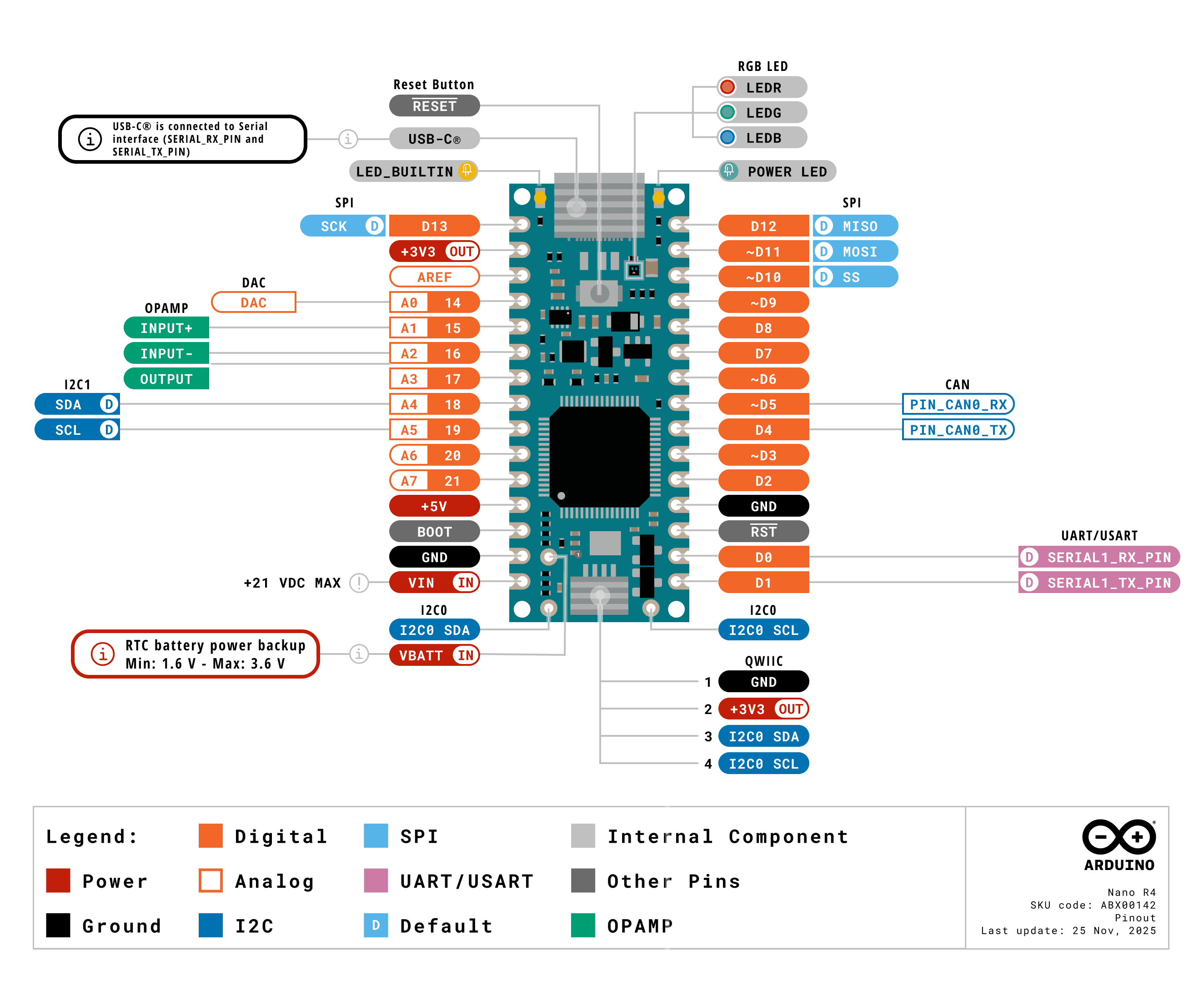
The board is also equipped with a built-in operational amplifier (OPAMP), which enables basic signal conditioning functions — such as amplification, filtering, or buffering — without the need for additional analog components. Complementing this functionality is a hardware real-time clock (RTC) with battery backup support, useful in systems that log data with timestamps. The microcontroller also supports HID mode, allowing emulation of devices such as a keyboard or mouse, which is applicable in user interfaces, dedicated controllers, and interactive projects.
Data sheet
Manufacturer BTC Korporacja sp. z o. o. Lwowska 5 05-120 Legionowo Poland sprzedaz@kamami.pl 22 767 36 20
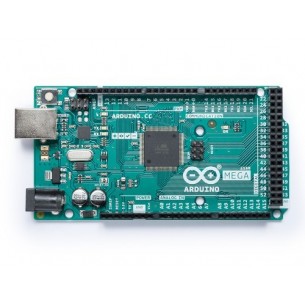
A set with ATmega2560 microcontroller (256 kB Flash, 8 kB RAM, 4 kB EEPROM) clocked at 16 MHz. The user has, among others: 54 I / O lines, 14 PWM channels, 16 analog inputs. Arduino A000067
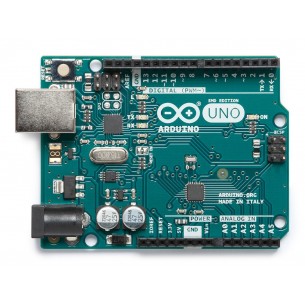
The Arduino Uno SMD R3 is a microcontroller board based on the ATmega328. It has 14 digital input/output pins (of which 6 can be used as PWM outputs), 6 analog inputs, a 16 MHz crystal oscillator, a USB connection, a power jack, an ICSP header, and a reset button. It contains everything needed to support the microcontroller. Arduino A000073
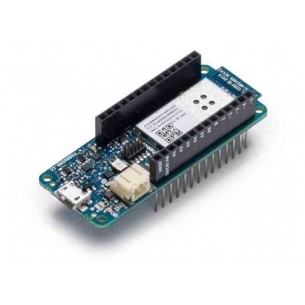
Arduino MKR1000 Wifi with Headers
Development board with SAMD21 microcontroller (ARM Cortex® M0+), 22 I/O lines, 12 PWM channels, micro-USB. The module has a built-in SD connector with dedicated SPI (SPI1) interfaces that allow you to play music files. Arduino MKR Zero ABX00012
No product available!
Development board with SAMD21 microcontroller (ARM Cortex® M0+), 8 I/O lines, 12 PWM channels, micro-USB. The board is equipped with an ESP32 module enabling the implementation of communication via WiFi. Arduino MKR WiFi 1010 ABX00023
No product available!
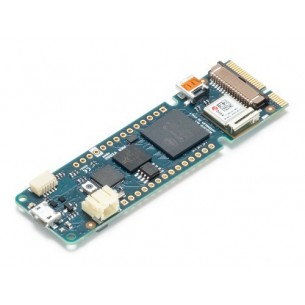
Development board with SAMD21 microcontroller and FPGA system. Equipped with micro HDMI and MIPI connectors, QSPI memory, WiFi and BLE module. Arduino MKR Vidor 4000 ABX00022
No product available!
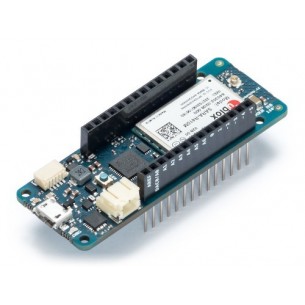
Development board with SAMD21 microcontroller (ARM Cortex® M0+), 22 I / O lines, 12 PWM, UART interfaces, I2C, SPI. The board is equipped with the UBLOX SARA-R410M-02B module enabling the implementation of communication in NB IoT networks. Arduino MKR NB 1500 ABX00019
Board with the ATmega4809 microcontroller from the AVR family and the u-blox W102 WiFi module. There are 14 I/O lines, 5 PWM channels, 6 analog inputs and the IMU LSM6DS3TR system at your disposal. Arduino ABX00021
Module with the ATMega4809 microcontroller from the AVR family (48 KB Flash, 6 KB SRAM, 256 B EEPROM). The module has two 15-pin connectors equipped with GPIO, SPI, I2C, PWM, USART, DAC and ADC. Arduino ABX00028
No product available!
Module with the ATMega4809 microcontroller from the AVR family (48 KB Flash, 6 KB SRAM, 256 B EEPROM). The module has two 15-pin connectors equipped with GPIO, SPI, I2C, PWM, USART, DAC and ADC. Module with headers. Arduino ABX00033
No product available!
Board with nRF52840 microcontroller with Cortex M4F core (64 MHz, 1 MB Flash, 256 kB RAM). Equipped with BT 5.0 and IMU LSM9DS1 module. Module with headers. Arduino ABX00034
Board with SAMD21 microcontroller with CortexM0 + core (48 MHz, 256 KB Flash, 32 KB RAM). Equipped with WiFi and BT module (based on ESP32) and IMU LSM6DS3 unit. Ideal for applications in the IoT area. Module with headers. Arduino ABX00032
No product available!
Board with SAMD21 microcontroller with Cortex M0+ core (48 MHz, 256 KB Flash, 32 KB RAM). Equipped with WiFi and BT module (based on ESP32) and IMU LSM6DS3 unit. Ideal for applications in the IoT area. Arduino ABX00027
Module with dual-core STM32H747XI microcontroller with CortexM7+M4 core equipped with 2 MB flash memory, 1 kB RAM and clock speeds up to 480 MHz. The board has a built-in WiFi module and Bluetooth 5.1 (Murata 1DX). Arduino ABX00042
No product available!
Arduino development board with RP2040 microcontroller. Equipped with WiFi and Bluetooth module, 6-axis IMU system with accelerometer and gyroscope, MEMS microphone, RGB LED diode and cryptographic system. Arduino ABX00052
The Arduino Nano R4 is a compact board from the Nano family featuring a 32-bit Renesas RA4M1 microcontroller with a 48 MHz Arm Cortex-M4 core, delivering enhanced performance while maintaining 5 V logic compatibility and full integration with the existing Arduino ecosystem. The new version expands functionality with a CAN interface, a 12-bit DAC, an integrated operational amplifier, and a Qwiic connector for quick I²C module connectivity. Thanks to castellated pins and single-sided component assembly, the board is suitable for both rapid prototyping and production projects requiring integration into custom PCBs. Arduino ABX00143