.png)




zł43.67 tax excl.
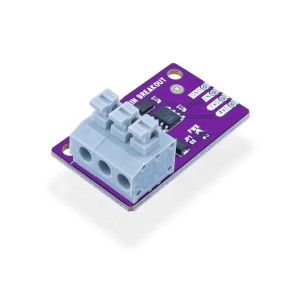
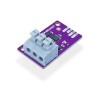
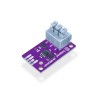
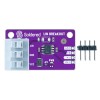
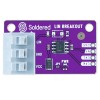
LIN transceiver module based on the NCV7329 IC for connecting a microcontroller to a single-wire LIN bus in a MASTER configuration. It supports data rates from 1 to 20kbps, up to 16 devices on a single network, and Normal, Standby, and Sleep operating modes. TXD, RXD, and EN pins provide data transmission and operating mode control. Soldered 333026
The device LIN Transceiver NCV7329 MASTER Breakout by Soldered uses the NCV7329 transceiver from onsemi for communication between a microcontroller and a single-wire LIN (Local Interconnect Network) bus. The MASTER version is designed for the master side of a LIN network, which initiates frames and manages the communication schedule. The board can be used in automotive electronics, automation systems, and other devices employing LIN communication.
The NCV7329 provides the physical communication layer between the digital signals of a microcontroller and the LIN bus line. The TXD pin carries data from the microcontroller to the transceiver, while RXD provides data received from the bus. The supported data rate ranges from 1 to 20kbps. The manufacturer specifies support for up to 16 devices on a single network and a maximum bus length of 40m.
The transceiver supports Normal, Standby, and Sleep operating modes. The EN input controls the operating state, while low-power modes reduce current consumption during periods of inactivity. The NCV7329 also provides slope control for reduced EMI, thermal shutdown, undervoltage protection, and protection against transients on the bus line.
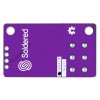
The hardware documentation specifies the VCC input voltage as typically 5–18V. Available pins include VCC, GND, LIN, EN, TXD, and RXD. The module complies with ISO 17987-4 and SAE J2602. Dimensions are 21.3 × 22.6 × 12.3mm, while the 3.2mm mounting holes are designed for M3 screws.
LIN transceiver module based on the NCV7329 IC for connecting a microcontroller as a slave node to a single-wire LIN bus. It supports data rates from 1 to 20kbps and Normal, Standby, and Sleep operating modes. TXD, RXD, and EN pins provide data transmission and operating mode control. Soldered 333027
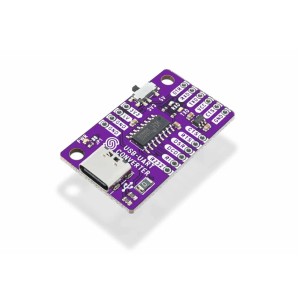
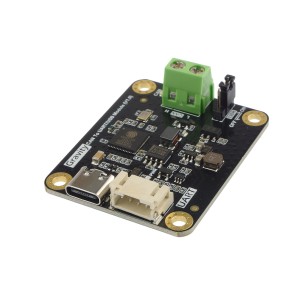
USB-UART converter based on the CH340 IC with a USB-C connector for communication between a computer and devices equipped with a UART serial interface. A switch selects 3.3V or 5V on the VCC pin, while PWR, RXD, and TXD LEDs indicate power and data activity. Hardware flow control pins provide additional serial communication options. Soldered 333028
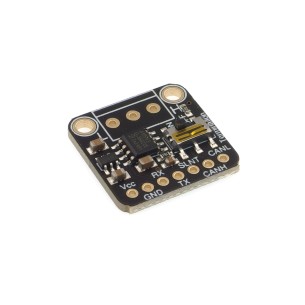
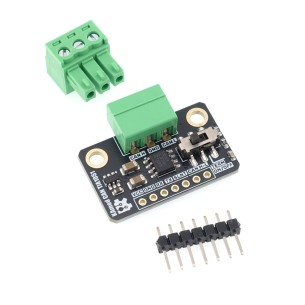
CAN transceiver module based on the TJA1051T/3 chip. Allows you to connect a board with native CAN support (the transceiver will convert 3V signals into differential CAN signals) to a network of devices. Adafruit 5708
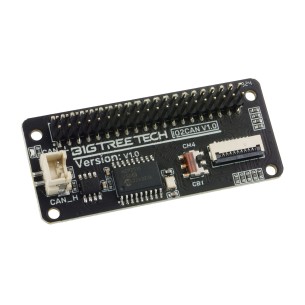
Expansion module designed for Raspberry Pi or BIGTREETECH CB1. It allows you to add a CAN interface and use minicomputers for control in industrial or automotive applications. BIGTREETECH IO2CAN V1.0
Communication module with CAN-UART converter and USB 1.0 interface. It supports CAN 2.0 protocol and supports SLCAN. It is operated using AT commands. DFRobot TEL0150
Converter with a built-in microcontroller (MCU) and a CAN transceiver system. It can work with devices with an operating voltage of 3.3 V via goldpin connectors with a pitch of 2.54 mm. The converter facilitates the design and prototyping of devices based on the CAN bus. Waveshare WS-TTL-CAN
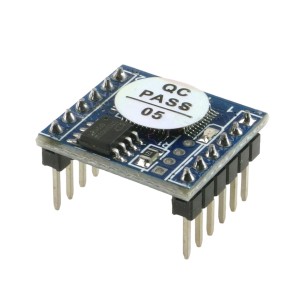
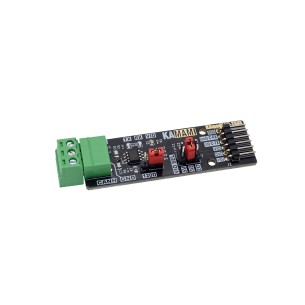
KAmod CAN-TXRX is a CAN bus transceiver with the MCP2542FD system, compatible with the CAN 2.0 and CAN FD standards, enabling sending and reading data with the serial interface voltage level adjustable in the range of 1.7...5 V, equipped with protections and LEDs signaling action
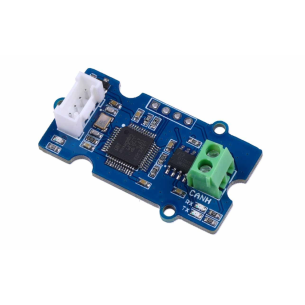
The module is based on the GD32E103 microcontroller, supporting CAN FD at up to 5 Mbps, making it ideal for automotive and automation applications. With AT command support, Grove connector and compatibility with XIAO RP2040 boards, the module offers easy integration in IoT projects such as monitoring or automation. Seeed Studio 114992978
CANable V2.0 PRO is a USB-C to CAN adapter with galvanic isolation. It supports CAN 2.0 and CAN FD, ensuring reliable communication and broad compatibility. MKS CANable V2.0 PRO
Expansion board for XIAO, enabling easy CAN Bus communication by integrating MCP2515 and SN65HVD230. Ideal for applications in vehicles, industrial control systems and robotics, it provides reliable data exchange and easy integration into the XIAO ecosystem. Seeed Studio 105100001
The CAN interface module KAmod with the SN65HVD230 chip enables direct communication with the CAN bus in systems powered by 3.3 V. Compatible with PCA82C250 chips, equipped with ESD protection and functions eliminating interference, it will perform well in industrial, automotive, and IoT projects.
No product available!
CAN bus transceiver module based on the NXP TJA1051T/3 chip, designed to work with microcontrollers and CAN controllers using RX and TX signals. Supports data transmission at speeds up to 1 Mbps and a supply voltage of 3 V to 5 V thanks to the built-in step-up converter. Equipped with a switchable 120 Ω termination resistor, an SLNT input for activating Silent mode, and connectors for CAN bus communication. The 32 x 19 mm board is designed for automation systems, robotics, and communication between electronic devices. KAmod CAN TJA1051
A converter enabling communication between a computer and a CAN 2.0A bus at transmission speeds from 5 kbps to 1 Mbps. Based on an STM32 microcontroller, the device offers two operating modes: PCAN, compatible with diagnostic tools, and Transparent Mode, enabling communication via a virtual serial port. The adapter is compatible with Windows, Linux, and Android systems, as well as embedded platforms such as Raspberry Pi. Seeed Studio 100030768
No product available!
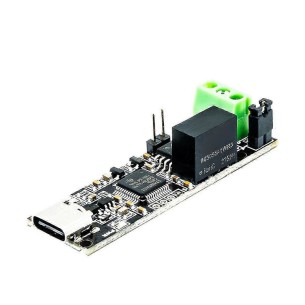
This converter allows for easy connection of a computer to devices using the CAN bus via USB-C. Equipped with a GD32 microcontroller and a WCH CH340 chip, it ensures stable communication at speeds up to 921,600 bps. The adapter supports plug-and-play and allows for device control, diagnostics, and OTA firmware updates using dedicated software. Seeed Studio 100012096
A compact interface that enables communication between a computer and DM43 series motors via the CAN bus. The device operates as a USB-CAN bridge, offering simple plug-and-play setup and support for MIT mode, allowing for precise motion control and easy diagnostics. It supports CAN speeds from 5 kbps to 1 Mbps and has a 64 KB data buffer for stable transmission. Seeed Studio 100011896
A communication interface enabling computer connection to robotic drives via CAN and FDCAN buses. It offers very high throughput of up to 5 Mbps and plug-and-play functionality, allowing for quick system startup and diagnostics without complex configuration. The device enables real-time visualization of operating parameters such as position, speed, and temperature, and also supports firmware updates and calibration. Seeed Studio 100010153
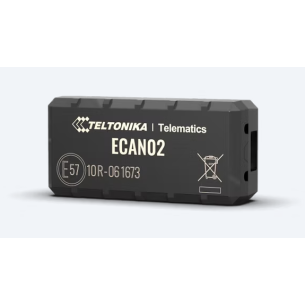
A contactless CAN adapter that allows you to read data from the vehicle\'s bus without interfering with the electrical system. Thanks to wire-through reading technology, it ensures safe installation and eliminates the risk of warranty voiding. The device automatically adjusts signal parameters and supports a wide range of CAN speeds, ensuring stable operation in a variety of vehicles. Its compact, durable housing and low power consumption make the adapter ideal for fleet monitoring systems. Teltonika ECAN02
No product available!
The converter enables reception and transmission of SENT (SAE J2716 / ISO 21097) signals from automotive sensors via a USB-C interface. It supports automatic detection of transmission parameters, operates as a Virtual COM Port, and uses the open SLCAN protocol. SENT (SAE J2716) USB Converter
LIN transceiver module based on the NCV7329 IC for connecting a microcontroller to a single-wire LIN bus in a MASTER configuration. It supports data rates from 1 to 20kbps, up to 16 devices on a single network, and Normal, Standby, and Sleep operating modes. TXD, RXD, and EN pins provide data transmission and operating mode control. Soldered 333026