.png)



zł58.70 tax excl.
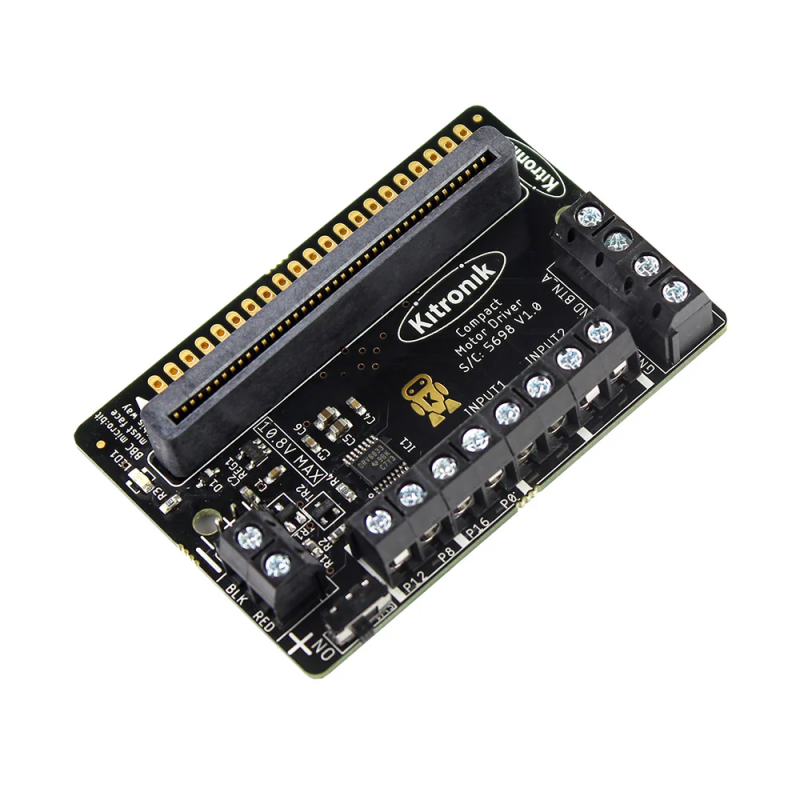
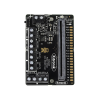
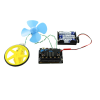
This board allows for simultaneous control of two motors with full direction and stopping control, ideal for robotic buggies and educational vehicles. It features built-in short circuit, overload, and overheat protection, as well as a stabilized 3V output to power the micro:bit. The Edge Connector and additional pins allow for easy connection of sensors, switches, and accessories, expanding the project's functionality. Programming is supported by dedicated MakeCode blocks and support for the Kitronik 5698 Python.
Kitronik Compact Motor Driver is a versatile board that adds motor control capabilities to projects based on the BBC micro:bit. It allows simultaneous control of two motors with full directional control (forward, reverse) and stop, making it an ideal choice for projects such as robotic buggies or other vehicles. The board includes built-in protection against short-circuits, overload, and overheating, ensuring stable and safe operation. When used with stepper motors, half-step mode is supported (micro-stepping is not).
The integrated Edge Connector enables quick and direct connection to the micro:bit, while additional breakout pins provide access to buttons A and B and other pins. This allows extra switches, sensors, or other accessories to be connected, expanding the system’s functionality. The board also provides two additional input/output pins, which can operate in both digital and analog modes. Power is supplied via the screw terminal block or servo connector, while the built-in on/off switch and status LED simplify operation. Importantly, the board generates a regulated 3V output to power the micro:bit directly, removing the need for a separate power supply.
The manufacturer has also provided dedicated MakeCode blocks, making programming quick and intuitive. Advanced users can also take advantage of Python support. Thanks to its compact size, ease of use, and rich functionality, this board is suitable for many educational and hobby projects, giving full control over drive systems in robotics.
Data sheet
Manufacturer
Responsible person
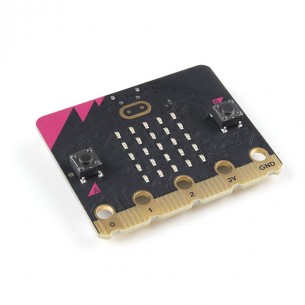
Educational micro:bit module with 32-bit ARM Cortex-M4 microcontroller. Manufactured to interest the youngest in computer engineering. SparkFun DEV-17287
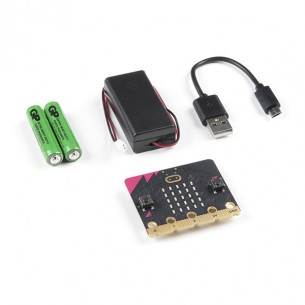
Starter kit with micro:bit v2. In addition to the micro:bit v2 board, the set includes a microUSB-USB cable, a battery basket and two AAA batteries. SparkFun DEV-17288
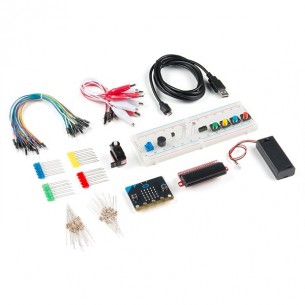
Starter kit with micro:bit v2. The set includes the most necessary elements needed to implement micro:bit projects: LEDs, buttons, potentiometer, servo, prototype board and a set of cables. SparkFun KIT-17362
No product available!
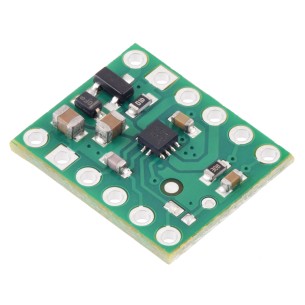
MP6550 DC motor controller module. It can work with motors supplied with voltage from 1.8 to 22 V and current consumption up to 1.7 A. Pololu 4733
A single-channel DC motor driver with an I2C interface. It is powered from 4.5 V to 48 V and can deliver up to 2.2 A of current. A board with soldered connectors. Pololu 5060
No product available!
A single-channel DC motor driver with an I2C interface. It is powered from 4.5 V to 48 V and can deliver up to 2.2 A of current. A board with connectors for mounting. Pololu 5061
No product available!
A single-channel DC motor controller with a UART TTL interface. It is powered from 4.5 V to 48 V and can deliver up to 2.2 A of current. Board with soldered connectors. Pololu 5062
No product available!
A single-channel DC motor controller with a UART TTL interface. It is powered from 4.5 V to 48 V and can deliver up to 2.2 A of current. Board with connectors for assembly. Pololu 5063
No product available!
A two-channel DC motor controller with a UART TTL interface. It is powered from 1.8 V to 22 V and can deliver up to 1.6 A per motor. Board with connectors for assembly. Pololu 5081
A two-channel DC motor controller with a UART TTL interface. It is powered from 1.8 V to 22 V and can deliver up to 1.6 A per motor. Board with connectors. Pololu 5080
A two-channel DC motor controller with a I2C interface. It is powered from 1.8 V to 22 V and can deliver up to 1.6 A per motor. Board with connectors for assembly. Pololu 5079
A two-channel DC motor controller with an I2C interface. It is powered from 1.8 V to 22 V and can deliver up to 1.6 A per motor. Board with soldered connectors. Pololu 5078
A single-channel DC motor controller with a UART TTL interface. It is powered from 1.8 V to 22 V and can deliver up to 1.8 A of current. Board with connectors for assembly. Pololu 5077
A single-channel DC motor controller with a UART TTL interface. It is powered from 1.8 V to 22 V and can deliver up to 1.8 A of current. Board with soldered connectors. Pololu 5076
A single-channel DC motor controller with an I2C interface. It is powered from 1.8 V to 22 V and can deliver up to 1.8 A of current. Board with connectors for assembly. Pololu 5075
A single-channel DC motor controller with an I2C interface. It is powered from 1.8 V to 22 V and can deliver up to 1.8 A of current. Board with soldered connectors. Pololu 5074
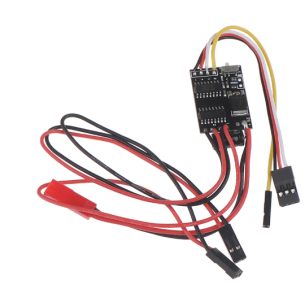
2-channel brush motor controller module with PWM signal mixing function. It allows you to control two DC motors with a current consumption of up to 5 A per channel
No product available!
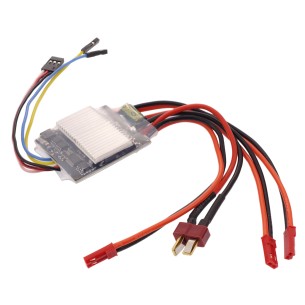
3-channel brush motor controller module with PWM signal mixing function. It allows you to control three DC motors with a current consumption of up to 15 A per channel
3-channel brush motor controller module with PWM signal mixing function. It allows you to control three DC motors with a current consumption of up to 3 A per channel
This board allows for simultaneous control of two motors with full direction and stopping control, ideal for robotic buggies and educational vehicles. It features built-in short circuit, overload, and overheat protection, as well as a stabilized 3V output to power the micro:bit. The Edge Connector and additional pins allow for easy connection of sensors, switches, and accessories, expanding the project's functionality. Programming is supported by dedicated MakeCode blocks and support for the Kitronik 5698 Python.