.png)





zł211.84 tax excl.
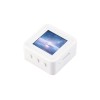
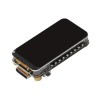
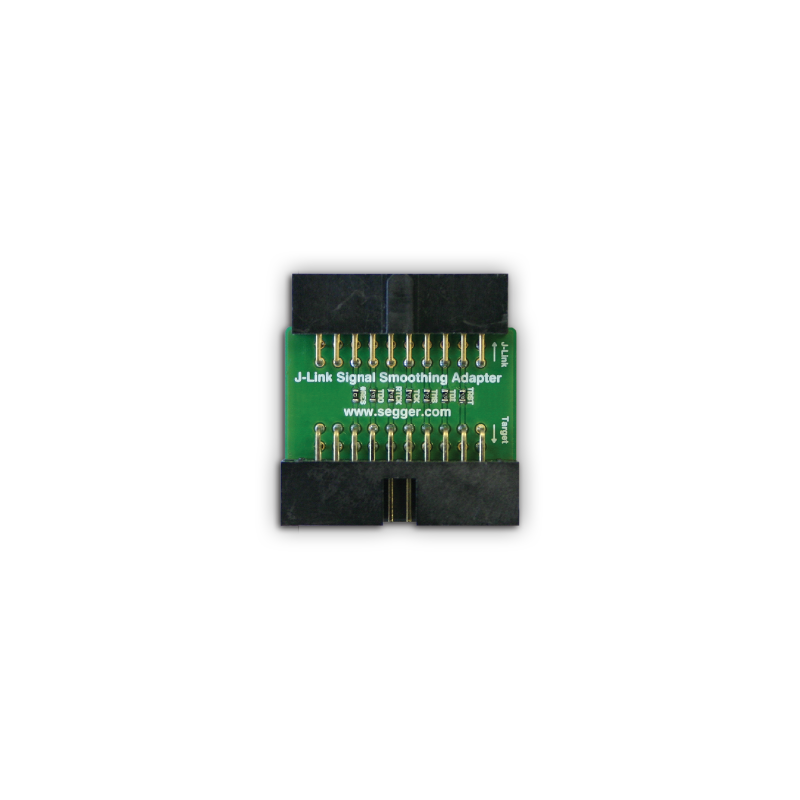
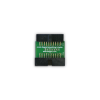
The Segger J-Link Signal Smoothing Adapter (8/06/12) is designed to improve signal integrity between the J-Link debug probe and the target debug device. It allows JTAG signals to be suppressed by adjustable series resistors, preventing excessive gain and jitter.
The Segger J-Link Signal Smoothing Adapter (8/06/12) is an innovative solution for improving signal quality in debugging systems. It can be inserted between the J-Link debug probe or flasher programmer and the target debug device to deal with signal integrity issues. In some configurations, depending on the capacitance of the target load, JTAG signals may be affected by excessive amplitude and jitter. For these situations, adjustable series resistors (set to 47R by default) are available to suppress critical rise/fall times, leading to a significant improvement in signal integrity. This adapter is a must-have tool for debugging professionals who want to maintain the highest signal quality in harsh environments.
Manufacturer
Responsible person
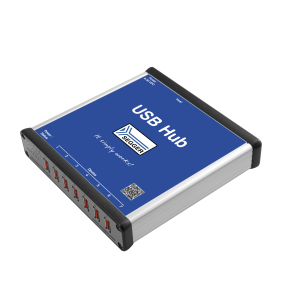
The SEGGER USB Hub is a seven-port, industrial-grade USB hub that provides power to Flasher Compact devices and connects them to the Flasher Hub. Segger USB Hub (5/01/10)
No product available!
The Segger J-Link USB Isolator (8.07.02) provides isolation up to 3 kV DC and supports USB Full-Speed transmission with a maximum output current of 200 mA. The device is equipped with short-circuit protection and LED indicators for power status and overload.
No product available!
A module that enables precise switching of Flasher signals in production environments, preventing interference between test devices connected to the same lines. By controlling relays via VTSUPPLY, it ensures stable and reliable operation in testing and programming processes. Segger Relay Adapter (8.06.41)
No product available!
Adapter that enables JTAG connection between devices such as J-Link, J-Trace or Flasher and Jacinto7 systems from TI, offering access to JTAG/SWD and Trace connectors with TPIU tracking function. Thanks to high quality of workmanship and versatility, the adapter provides a stable connection, supporting debugging, testing and diagnostic processes in embedded systems. Segger MIPI-60 Adapter (8.06.42)
No product available!
An adapter that allows you to connect a 20-pin 0.1" connector to a 10-pin connector, allowing you to easily connect J-Link or Flasher programmers to your PCB using through-wires. It is ideal for prototyping, testing new designs and working with ST Discovery boards, offering flexibility, speed and time savings when making design changes.Segger Flying Wire Adapter (06.08.27)
No product available!
Adapter that enables JTAG connection between Flasher programmer and target hardware with Power Architecture or PowerPC microcontrollers. Converts 20-pin 0.1\'\' connector to 14-pin JTAG, ensuring compatibility, stability and secure connection. Segger PPC 14-Pin Adapter (06.08.07)
No product available!
A 1:1 adapter that allows you to connect a standard 20-pin connector to its 2mm pitch counterpart without any additional configuration. For some models, such as the J-Link PRO, pins 14, 16, 18 and 20 may not be connected to ground, so it is recommended to leave them unconnected on the target hardware. Segger 2mm Adapter (06/08/11)
No product available!
Xilinx adapter that connects to Xilinx\'s 14-pin, 2mm JTAG connector, providing debugging of MCU cores such as the Arm Cortex-A9 on Xilinx Zynq FPGAs. With its compact design and high signal quality, it is a reliable tool for engineers working with FPGA platforms. Segger Xilinx Adapter (06/08/19)
No product available!
The adapter is designed to support a wide range of RL78 microprocessor cores manufactured by Renesas, such as the RL78/D1A, RL78/F12, RL78/F13, RL78/F14, RL78/F15, and the RL78/G and RL78/I series. The adapter enables quick and easy connection to target devices, providing full flash programming functionality, making it a versatile tool for industrial and embedded applications. Segger RL78 Adapter (06/08/20)
No product available!
An adapter that allows the J-Link device to connect to Microchip microprocessors that use an RJ11 debug connector, converting the standard 20-pin .1" connector to a 6-pin RJ11 connector. With this tool, users can take full advantage of 2-wire JTAG debugging capabilities, including process tracing, memory analysis, and real-time device control, and the 21 cm RJ11 cable provides convenience in connecting to the target system. Segger Microchip 2-Wire JTAG TDI Adapter (06/08/23)
No product available!
Adapter enabling easy connection of a Microchip AVR microcontroller device with the SEGGER Flasher programming system, supporting 6-pin and 10-pin connectors and providing fast connection via SPI protocol. With the function of powering the target hardware (3.3V or 5V) and direct power supply via VTREF connection, the adapter is flexible, easy to use and ideal for programming and debugging AVR microcontrollers in embedded systems, providing reliable communication and high precision. Segger AVR SPI Adapter (8.06.25)
No product available!
A compact adapter that provides direct pin compatibility, allowing easy replacement of standard IDC cable without changing the pinout. It is designed to work with devices such as the J-Link PLUS Compact, J-Link BASE Compact and Flasher Compact, enabling flexible and efficient debugging and programming configurations in embedded systems. Segger Right Angle (RAFF) Adapter (8.06.32)
No product available!
Adapter enabling connection of OCDS DAP interface to systems based on Infineon Aurix™ TC2xx, TC3xx, TC4xx and C167 microcontrollers. Converts standard 20-pin SEGGER connector to 10-pin 0.05\'\' Samtec FTSH, providing stable and reliable communication in debugging and programming processes. Segger Infineon Aurix DAP-10 Adapter (8.06.38)
No product available!
Adapter enabling connection of Flasher PRO programmers and other Flasher models to devices with a 10-pin Renesas connector. It is compatible with M16C, M32C, R8C and R32C microcontrollers, providing stable communication and easy integration with older and modern programming systems. Segger Renesas M16C Family 10-Pin Adapter (8.06.40)
No product available!
Adapter enabling connection of J-Link and Flasher debugging devices with a 20-pin 0.1" connector to a 14-pin 0.05" connector compliant with the ST standard. Segger STDC 14 Adapter (8.06.39)
No product available!
A device that provides electrical isolation between the J-Trace emulator and the ARM board, which protects against electrical interference, especially in systems where the development tools and the application do not share the same ground. It provides 1 kV DC isolation, supports trace frequencies up to 75 MHz, and is compatible with J-Trace V2 and later versions, with a minimum power consumption of 25 µA. Segger J-Trace Isolator (07/08/10)
The Segger J-Link Signal Smoothing Adapter (8/06/12) is designed to improve signal integrity between the J-Link debug probe and the target debug device. It allows JTAG signals to be suppressed by adjustable series resistors, preventing excessive gain and jitter.