


zł294.67 tax excl.
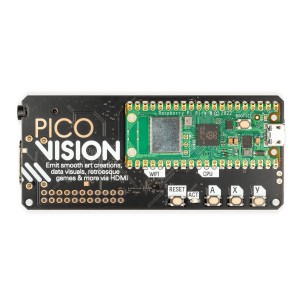
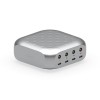
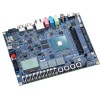
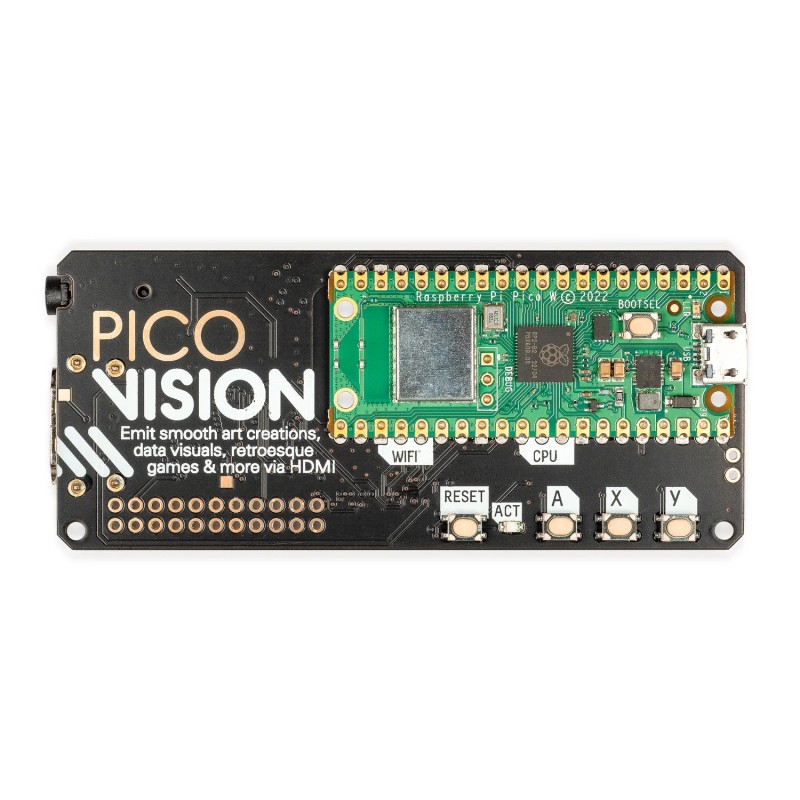
Versatile digital video module. It uses two RP2040 chips (one in the form of a Raspberry Pi Pico W board and the other as a separate RP2040 microcontroller) and is equipped with an HDMI output connector. Pimoroni PIM686
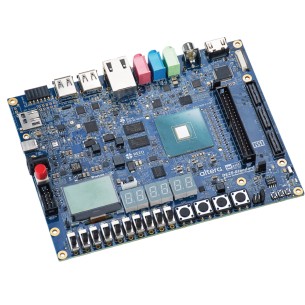
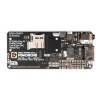
PicoVision is a versatile digital video module. It uses two RP2040 chips (one in the form of a Raspberry Pi Pico W board and the other as a separate RP2040 microcontroller) and is equipped with an HDMI output connector, which opens up a world of audio-visual projects.
The RP2040 microcontroller works as a graphics processor and takes care of the process of rendering smooth, high-resolution animations on a TV or monitor via HDMI output. The central unit (CPU), which serves as the Raspberry Pi Pico W board, executes code and establishes connections with other devices via USB, Wi-Fi and Bluetooth. Two PSRAM memories act as image buffers. The CPU writes to one while the GPU reads from the other, ensuring constant image refreshment.
Thanks to the HDMI output, you can use various types of screens, from TVs and monitors to powerful projectors or even small screens to create unique projects. PicoVision also has an audio interface that allows you to generate high-quality sounds and sound effects. It uses a MicroSD card to store image and audio data, providing enough space. In addition, the board has a Qwiic/Stemma QT connector, useful for connecting additional sensors via the I2C interface. Creating a user interface is made easier by a set of buttons.
PicoVision can be programmed in both C++ and MicroPython. Whatever your programming preferences, you have access to PicoVision's graphics libraries that let you manipulate shapes, text, and images. Discover exciting new vector graphics and font possibilities with PicoVector and give your creativity free rein with PicoSynth, producing stunning sounds and melodies. Whether you're a seasoned creator or a novice enthusiast, this digital video module opens the door to a limitless world of audio-visual innovation.
Data sheet
Manufacturer BTC Korporacja sp. z o. o. Lwowska 5 05-120 Legionowo Poland sprzedaz@kamami.pl 22 767 36 20
Responsible person BTC Korporacja sp. z o. o. Lwowska 5 05-120 Legionowo Poland sprzedaz@kamami.pl 22 767 36 20
Versatile digital video module. It uses two RP2040 chips (one in the form of a Raspberry Pi Pico W board and the other as a separate RP2040 microcontroller) and is equipped with an HDMI output connector. Pimoroni PIM674
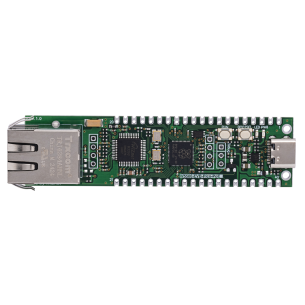
This RP2040-based evaluation board features an embedded W5500 Ethernet controller, providing hardware-based TCP/IP support without burdening the microcontroller. Its compact design, PoE support, and Raspberry Pi Pico-compatible interfaces make it ideal for IoT, automation, and networking projects. WIZnet W5500-EVB-Pico-POE
No product available!
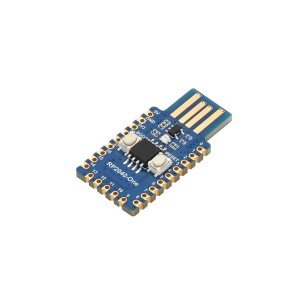
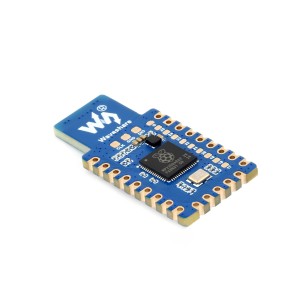
Board with the RP2040 microcontroller in the form of a USB dongle. Equipped with edge connectors, RGB LED, boot and reset button. Waveshare RP2040-One
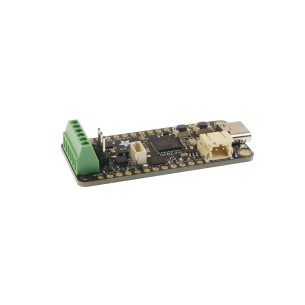
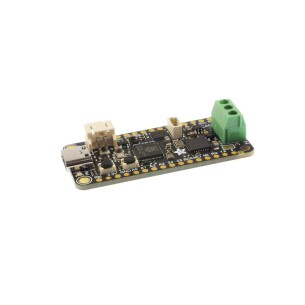
Board with RP2040 microcontroller and class D mono audio amplifier based on MAX98357 chip. It has a built-in LIS3DH three-axis accelerometer, an RGB NeoPixel LED, a LiPo charging circuit, and a STEMMA QT connector. Adafruit 5768
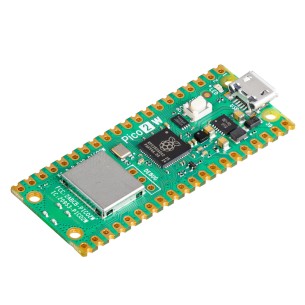
Raspberry Pi Pico 2W, based on the RP2350 microcontroller and has a built-in WiFi and Bluetooth communication module. Pi Pico 2W offers significantly increased performance and functionality thanks to the use of Cortex M33 and RISC-V cores, doubled SRAM memory and advanced security features, including Arm TrustZone. It is hardware and software compatible with previous models, making it an attractive choice for enthusiasts and professionals in the field of embedded systems
Waveshare RP2350-One is a compact development board featuring the RP2350A microcontroller with dual-core architecture: Arm Cortex-M33 and RISC-V. It offers a rich set of peripherals and 4 MB of Flash memory. With a direct USB Type-A connector, support for C/C++ and MicroPython, and SMT mounting capability, it is ideal for modern embedded applications, automation, and technical education.
Board with RP2040 microcontroller and MCP2515 CAN controller. It has a built-in LiPo charging circuit and a STEMMA QT connector. It allows you to add communication based on the CAN bus to the project, commonly used in projects related to robotics and the automotive industry. Adafruit 5724
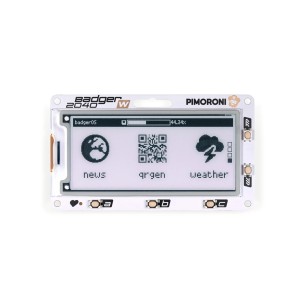
Module with a 2.9" ePaper display and a Raspberry Pi Pico W board equipped with WiFi communication. It has a built-in Qwiic/Stemma QT connector with an I2C interface, buttons and a battery connector. Perfect as a display for a weather station. Pimoroni PIM669
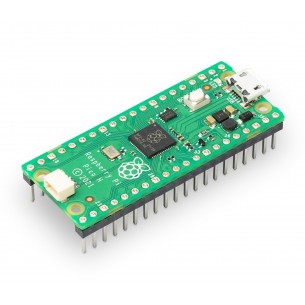
Module with the RP2040 microcontroller with two ARM Cortex-M0 + cores operating at 133 MHz, 256 kB RAM and 30 GPIO. The board also has 2 MB of external QSPI flash memory. Module can be programmed in C/C++ or microPython. Version with soldered connectors. Raspberry Pi SC0917
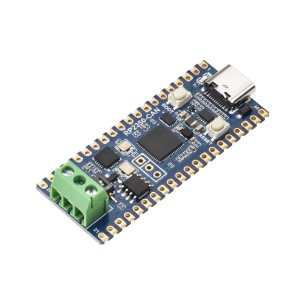
Waveshare RP2350-CAN is a compact development board with CAN bus support, featuring the RP2350A microcontroller with a dual Arm/RISC-V architecture. It is used in communication systems, industrial automation, and as an educational platform, offering full compatibility with Raspberry Pi Pico.
Compact development board based on the Raspberry Pi RP2350 microcontroller, equipped with two cores (ARM Cortex-M33 and Hazard3 RISC-V), 520KB RAM and 2MB Flash, ideal for IoT, smart home and wearable projects. With 11 IO pins, battery charging support, C/C++/MicroPython/Arduino programming and SMT support, it is perfect for rapid prototyping and mass production. DFRobot DFR1188
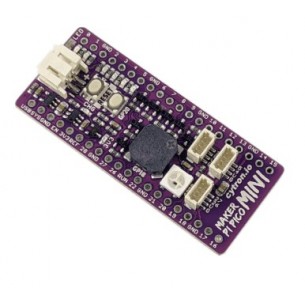
Base board with soldered Raspberry Pi Pico module. Equipped with numerous connectors, buzzer, buttons and LEDs. Cytron MAKER-PI-PICO-MINI
The RP2040 microcontroller board features two ARM Cortex-M0+ cores running at 133 MHz, 264 kB of RAM. The board also features 2 MB of QSPI flash memory and an FPC connector. It comes with a USB adapter. Waveshare RP2040-Tiny-Kit
RP2350-LCD-1.47-B is a compact development board with the RP2350A microcontroller and a 1.47" color LCD, designed for rapid prototyping of embedded projects. With support for dual CPU architectures, 16 MB of Flash memory, and a variety of interfaces (USB, TF, RGB LED), it is suitable for educational purposes, demo projects, wearables, and interactive systems. Support for popular development environments and expandability via goldpin headers further enhance its versatility.
Pimoroni Tiny 2350 PIM766 in the Headered version is a compact development board with the RP2350A, 4 MB of flash memory and a USB-C connector, created for miniature projects. Thanks to the integrated pins, support for MicroPython and the Qw/ST port, it works well in prototyping portable devices and wearables.
Miniature KAmod RP2040 module with Raspberry RP2040 microcontroller and 16 MB flash memory provides high computing performance in a compact format. Suitable for educational, hobbyist, and prototyping applications of devices with USB, I2C, SPI, and UART communication.
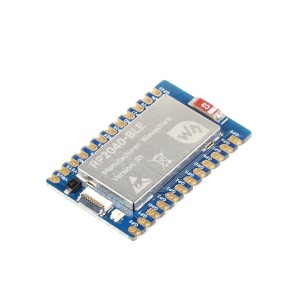
The RP2040 MCU board combines the high performance of two ARM Cortex M0+ cores clocked at up to 133 MHz, with 264 KB of SRAM, 2 MB of Flash, and integrated Bluetooth 5.1 for easy wireless communication. With simple programming, multiple GPIO interfaces, and support for C/C++, MicroPython, and Arduino, the board is ideal for IoT projects and other advanced applications. Waveshare RP2040-BLE
Versatile digital video module. It uses two RP2040 chips (one in the form of a Raspberry Pi Pico W board and the other as a separate RP2040 microcontroller) and is equipped with an HDMI output connector. Pimoroni PIM686