
.png)












zł35.09 tax excl.
Development board based on the RP2350A microcontroller featuring a unique dual-core, dual-architecture design (Arm Cortex-M33 + Hazard3 RISC-V), an onboard 6-axis sensor, and an 8×8 RGB LED matrix for IoT, robotics, and interactive systems. Waveshare RP2350-Matrix
The Waveshare 32225 RP2350-Matrix is a microcontroller development board based on the Raspberry Pi RP2350A, which combines a dual-core Arm Cortex-M33 processor and a dual-core Hazard3 RISC-V processor. This architecture provides flexibility in choosing the computing core and broad programming capabilities, with an operating frequency of up to 150 MHz.
The board integrates a 6-axis IMU sensor (three-axis accelerometer and three-axis gyroscope), enabling motion detection and orientation tracking. In addition, the module includes an 8×8 RGB LED matrix, allowing visual effects and status indication without additional external components.
The board provides a set of 25 multifunction GPIO pins for connecting peripherals such as sensors, motors, converters, and displays. Communication and programming are handled via a USB Type-C connector. Supported development environments include C/C++, Arduino IDE, and MicroPython. Programming can be performed using a drag-and-drop method over USB, similar to other Raspberry Pi Pico-class products.
The module is used in IoT projects, robotics, motion-monitoring systems, electronic games, and applications that require both sensor data processing and visual output.

[1]. RP2350A: Dual-core, dual-architecture design with a maximum operating frequency of up to 150 MHz
[2]. 16MB Flash: Integrated 16 MB Flash memory
[3]. QMI8658: QST 6-axis sensor (3-axis accelerometer, 3-axis gyroscope)
[4]. Dout pin: Used for extending the RGB matrix
[5]. RESET button
[6]. USB Type-C connector: For programming; USB 1.1 with device and host support
[7]. BOOT button: Press during reset to enter download mode
[8]. ME6217C33M5G: Low-dropout voltage regulator with a maximum output current of 800 mA
[9]. RGB LED matrix: 8 × 8
Pin definition

Data sheet
Manufacturer
Responsible person
The board with the RP2040 microcontroller equipped with two ARM Cortex-M0+ cores, which work at a frequency of 133 MHz, 256 kB RAM. The board also has 8 MB of QSPI flash memory. The system can be programmed in C/C++ or MicroPython. Adafruit 4884
Mini board with the RP2040 microcontroller equipped with two ARM Cortex-M0 + cores, which work at a frequency of 133 MHz and 264 kB RAM. The board also has 8 MB of QSPI flash memory. The system can be programmed in C/C++ or MicroPython. Pimoroni PIM558
The first microcontroller designed by the Raspberry Pi foundation, equipped with two ARM Cortex M0 + cores clocked at 133 MHz, 264 KB of RAM and 30 ports with I2C, SPI, UART and USB interfaces. External flash memory can be connected via the QSPI interface. The system can be programmed in C / C ++ or microPython. Raspberry Pi SC0908
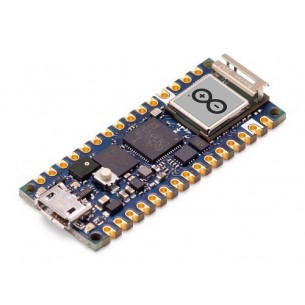
Arduino development board with RP2040 microcontroller. Equipped with WiFi and Bluetooth module, 6-axis IMU system with accelerometer and gyroscope, MEMS microphone, RGB LED diode and cryptographic system. Arduino ABX00052
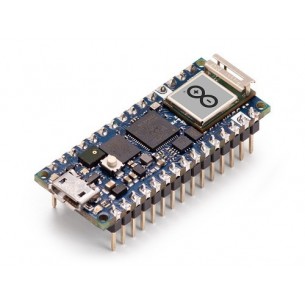
Arduino development board with RP2040 microcontroller. Equipped with WiFi and Bluetooth module, 6-axis IMU system with accelerometer and gyroscope, MEMS microphone, RGB LED diode and cryptographic system. Arduino ABX00053
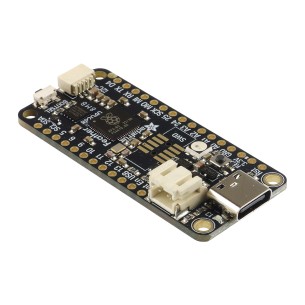
The board with the RP2040 microcontroller equipped with two ARM Cortex-M0+ cores, which work at a frequency of 133 MHz, 264 kB RAM. The board also has 8 MB of QSPI flash memory. The circuit can be programmed in C/C++, CircuitPython or MicroPython. Adafruit 4900
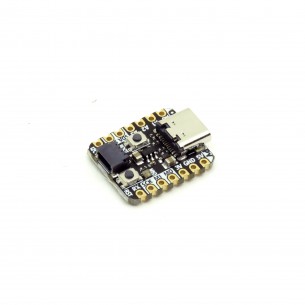
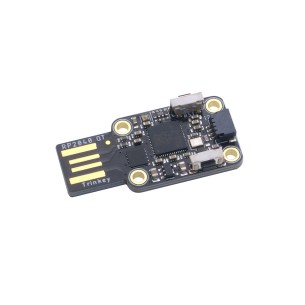
The board with the RP2040 microcontroller in the form of a USB dongle. Equipped with Stemma QT connector, RGB NeoPixel diode, boot and reset button. Adafruit 5056
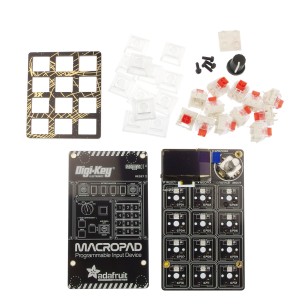
Mechanical keyboard module with LED backlight, encoder and display. Based on the RP2040 microcontroller. Adafruit 5128
No product available!
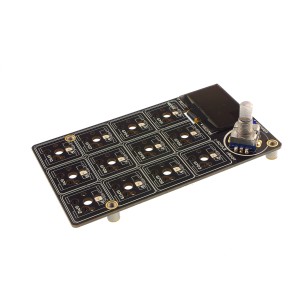
Mechanical keyboard module with LED backlight, encoder and display. Based on the RP2040 microcontroller. Adafruit 5100
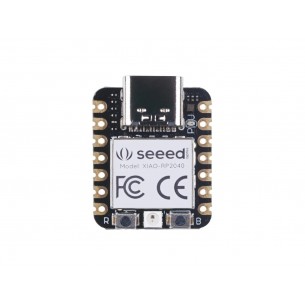
The board with the RP2040 microcontroller equipped with two ARM Cortex-M0 + cores, which work at a frequency of 133 MHz, 264 kB RAM. The board also has 2 MB of QSPI flash memory. The system can be programmed in C/C++ or MicroPython. Seeed Studio 102010428
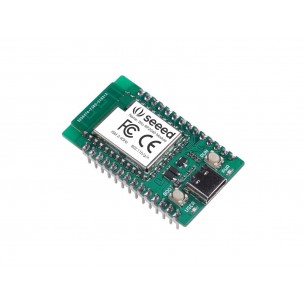
The board with the RP2040 microcontroller equipped with two ARM Cortex-M0 + cores, which operate at a frequency of 133 MHz and 264 kB RAM. The additional ESP8285 system allows communication in the WiFi network. Seeed Studio 102991555
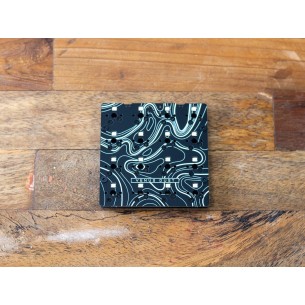
A module for building a mechanical keyboard with 16 buttons and backlight. Based on the RP2040 chip, it has sockets compatible with Cherry-MX switches. Pimoroni PIM567
No product available!
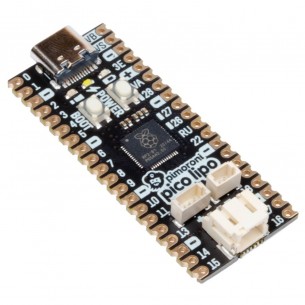
The board with the RP2040 microcontroller equipped with two ARM Cortex-M0+ cores, which work at a frequency of 133 MHz, 264 kB RAM. The board also has 4 MB of QSPI flash memory. The system can be programmed in C/C++ or MicroPython. Pimoroni PIM578
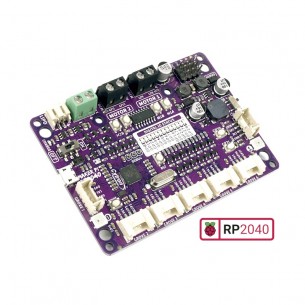
Development board with RP2040 microcontroller. Equipped with a driver for DC motors, servos and Grove connectors. Dedicated to the construction of robots. Cytron MAKER-PI-RP2040
The board with the RP2040 microcontroller equipped with two ARM Cortex-M0 + cores operating at 133 MHz, 256 kB RAM. The board also has 16 MB of QSPI flash memory. The system can be programmed in C/C++ or microPython. SparkFun DEV-18288
The board with the RP2040 microcontroller equipped with two ARM Cortex-M0 + cores operating at a frequency of 133 MHz, 264 kB RAM. There is as much as 16 MB of QSPI flash memory on the board. The system can be programmed in C / C ++ or microPython. Soldered connectors. KApico RP2040
Development board based on the RP2350A microcontroller featuring a unique dual-core, dual-architecture design (Arm Cortex-M33 + Hazard3 RISC-V), an onboard 6-axis sensor, and an 8×8 RGB LED matrix for IoT, robotics, and interactive systems. Waveshare RP2350-Matrix