.png)



zł92.27 tax excl.
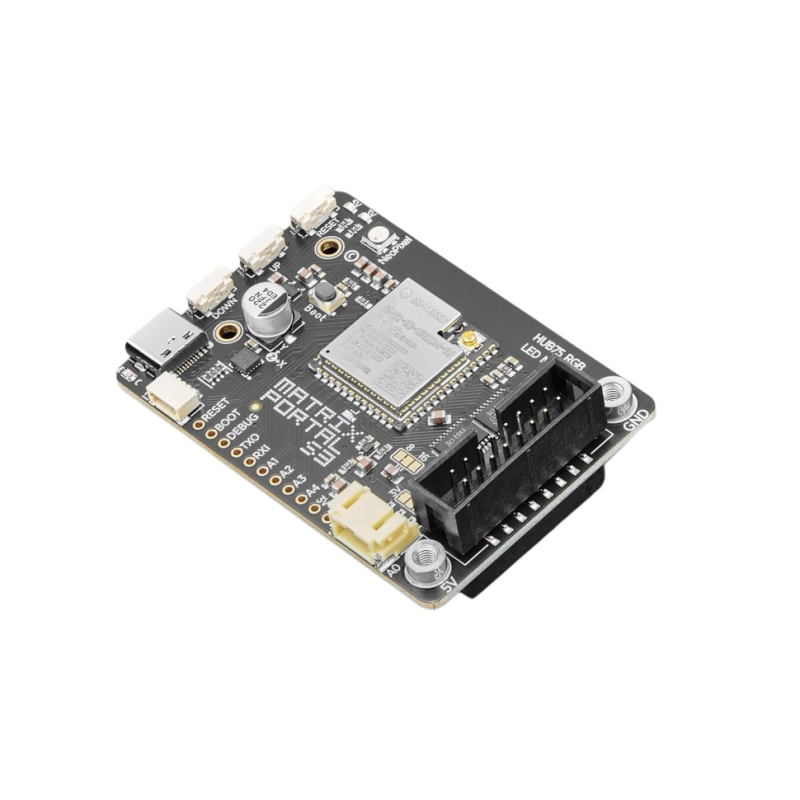
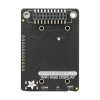
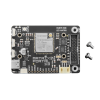
A control module designed to drive HUB75 RGB LED matrices ranging in size from 16x32 to 64x64 pixels, enabling the construction of information boards, clocks, and IoT displays. The device is based on an ESP32-S3 microcontroller with 8MB of Flash and 2MB of PSRAM, along with built-in Wi-Fi and Bluetooth Low Energy connectivity. The module features a USB-C connector for programming and power, a STEMMA QT (I2C) interface for connecting sensors, and an LIS3DH accelerometer for detecting orientation and motion. The platform supports Arduino and CircuitPython environments. Adafruit 6475
Matrix Portal S3 is an advanced controller module designed for building LED displays based on popular RGB HUB75 matrices. The device allows users to quickly create impressive information panels, clocks, IoT dashboards, or animated lighting installations without complicated wiring. The platform supports LED matrices ranging from 16×32 to 64×64 pixels and also allows multiple panels to be combined into larger displays.
At the core of the module is the powerful Espressif ESP32-S3, equipped with 8 MB Flash memory and 2 MB PSRAM, providing significant computing power and space for graphics, animations, and application data. The module includes built-in Wi-Fi and Bluetooth Low Energy connectivity, enabling integration with network services and IoT platforms. Programming is supported in Arduino and CircuitPython, making it easy to develop display control applications. The integrated Protomatter library enables efficient control of LED matrices using the hardware capabilities of the ESP32-S3.
The board features a USB Type-C connector used for programming and power, as well as a STEMMA QT (I2C) connector that allows easy connection of sensors and expansion modules. An additional 3-pin JST port enables quick connection of JST-PH wired components, including analog signals. The board also integrates a LIS3DH accelerometer, which can detect orientation, motion, or vibration, enabling interactive projects that respond to movement or device position.
The device provides exposed GPIO pins that allow additional peripherals to be connected via interfaces such as PWM, SPI, I2S, and UART. Built-in user buttons, status LEDs, and a NeoPixel indicator simplify debugging and user interface handling. The hardware layout ensures that the 2×10 connector perfectly matches HUB75 ports, reducing the risk of incorrect cable connections. Additionally, a standard 2×8 IDC connector compatible with typical LED panel cables is available.
The module also includes a u.FL antenna connector, allowing the use of an external Wi-Fi antenna. This makes it suitable for installations inside metal enclosures or outdoor setups where improved wireless signal quality is required. Thanks to the dual-core processor architecture, one core can handle network communication while the other controls the display or executes user code. The platform is ideal for projects such as internet-connected information boards, IoT data displays, artistic lighting installations, monitoring systems, and real-time data visualization.
Manufacturer
Responsible person
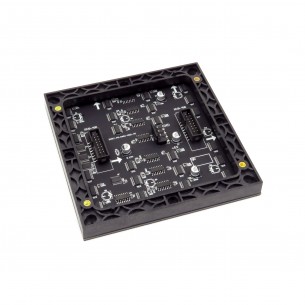
RGB LED matrix display with a resolution of 64 x 64 (4096 LED). Adafruit 5362
RGB LED matrix display with a resolution of 64x64 (4096 LED). It has cutouts at an angle of 45° to build an LED cube. Adafruit 5407
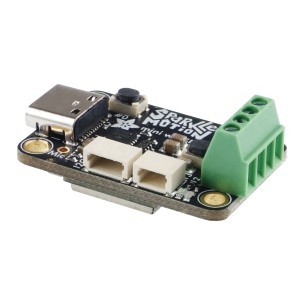
A compact ESP32-based LED driver with WiFi and Bluetooth support, designed to work with WLED software. It allows you to control RGB lighting and animations, offers two 5V logic outputs, and a built-in I2S microphone that responds to sound. Power is provided via USB Type-C (5V/4A) with an automatic fuse, ensuring stable operation, and the Stemma QT I2C connector allows for easy connection of additional modules. Adafruit 6314
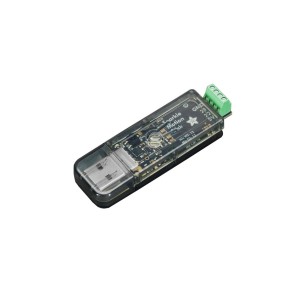
Ready-to-use LED controller with ESP32 and enclosure, compatible with WLED. Wi-Fi support, 5V outputs, microphone, IR, NeoPixel, and screw terminals. Adafruit 6333
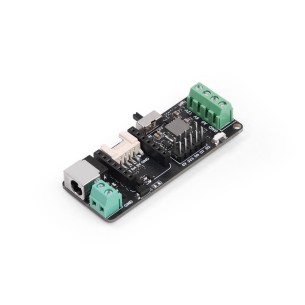
Compact 5V and 12V LED strip controller, supporting popular addressable models such as WS2812, WS2813 and WS2815. Compatibility with Seeed Studio XIAO boards and support for WLED and ESPHome applications allows easy integration with smart lighting and smart home systems. Thanks to the Grove interface and built-in security, the module is ideal for DIY projects, home automation and interactive lighting installations. Seeed Studio 105100021
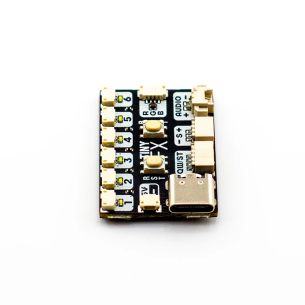
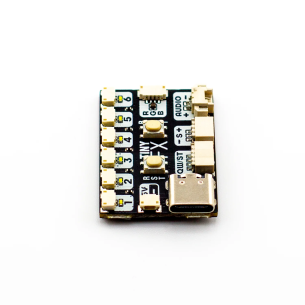
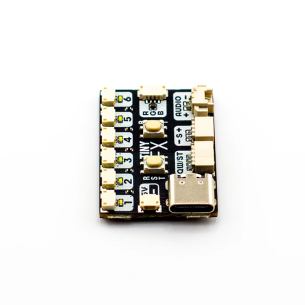
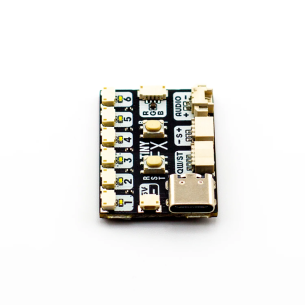
LED and audio controller designed for lighting effects in LEGO® compatible models, dioramas and decorations. It offers six mono channels, one RGB channel, audio amplifier, sensor inputs and a Qw/ST connector – all without the need for soldering. It enables the creation of advanced animations, lighting effects and synchronized audio in a compact form factor. Pimoroni PIM719
No product available!
LED and audio controller designed for lighting effects in LEGO® compatible models, dioramas and decorations. It offers six mono channels, one RGB channel, audio amplifier, sensor inputs and a Qw/ST connector – all without the need for soldering. It enables the creation of advanced animations, lighting effects and synchronized audio in a compact form factor. Pimoroni PIM718
LED controller with built-in RM2 module, offering Wi-Fi, Bluetooth, and up to 3A power via USB-C. Supports remote lighting control, integration with automation systems, and expansion via Qw/ST connector. Ready to use out of the box, ideal for decorations, lighting installations, and artistic projects. Includes RGB LED strip. Pimoroni PIM758
LED driver with built-in RM2 module, offering Wi-Fi, Bluetooth and power supply up to 3A via USB-C. Supports remote lighting control, integration with automation systems and extensions via Qw/ST connector. Ready to use out of the box, ideal for decoration, light installations and artistic projects. Pimoroni PIM729
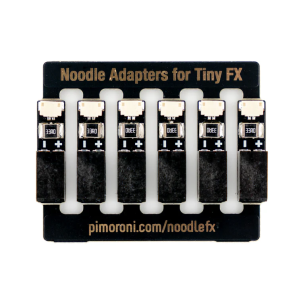
LED adapters that allow easy control of LEDs (dimming, flickering, pulsing) in Tiny FX based projects. They feature AVX 9276 connectors and built-in 33Ω resistors, eliminating the need for soldering and external components. Compact and durable, they are great for models, LEGO® scenes and light decorations. Pimoroni PIM751
A compact, wireless light and sound effects controller based on the RP2040 microcontroller with a Raspberry Pi RM2 Wi-Fi and Bluetooth module. It allows you to control mono and RGB LEDs, create lighting animations, and play sound effects thanks to the built-in I2S audio amplifier. It supports sensors and modules via Qw/ST and JST-SH connectors, and effects can be triggered by motion, sound, or remotely over a network. The plug-and-play kit includes a full set of accessories (LED, speaker, PIR sensor, and power supply). Pimoroni PIM753
A compact, wireless light and sound effects controller based on the RP2040 microcontroller with a Raspberry Pi RM2 Wi-Fi and Bluetooth module. It allows you to control mono and RGB LEDs, create lighting animations, and play sound effects thanks to the built-in I2S audio amplifier. It supports sensors and modules via Qw/ST and JST-SH connectors, and effects can be triggered by motion, sound, or remotely over the network. Pimoroni PIM728
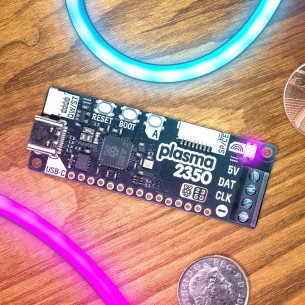
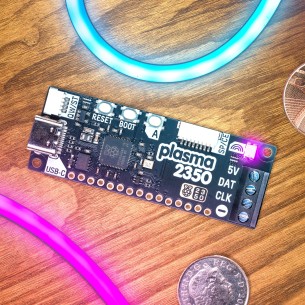
Addressable LED strip controller based on the RP2350A microcontroller with dual Arm Cortex-M33 cores up to 150 MHz. It supports popular WS2812/Neopixel and APA102/Dotstar LEDs and allows for powering and programming via USB-C with current up to 3A. It features screw-type LED connectors, a built-in RGB LED, user-friendly buttons, and a Qw/ST connector for connecting I2C sensors. The kit includes a Star Wire LED strip and a USB-C cable. Pimoroni PIM743
No product available!
Addressable LED strip controller based on the RP2350A microcontroller with dual Arm Cortex-M33 cores up to 150 MHz. It supports popular WS2812/Neopixel and APA102/Dotstar LEDs and allows for powering and programming via USB-C with current up to 3 A. It features screw-type LED connectors, a built-in RGB LED, user buttons, and a Qw/ST connector for connecting I2C sensors. Pimoroni PIM723
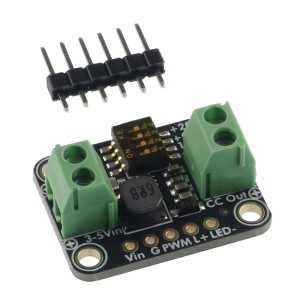
A compact converter designed to drive LEDs in series and parallel circuits. The device generates voltages up to 40V and currents up to 400mA from a 3-5V supply, with the output current adjustable via mini DIP switches. The board features a built-in 1.2A switch, overvoltage protection, and PWM LED dimming. Adafruit 6354
This module controls addressable LED strips in the Pimoroni Yukon system, featuring a stable 5V/5A output and a voltage level converter for proper communication with RGB LEDs. It allows for easy connection of strips via screw terminals and works with popular standards such as WS2812, SK6812, APA102, and Dotstar. The module can even control two WS2812 strips simultaneously, offering high performance and flexibility. Pimoroni PIM694
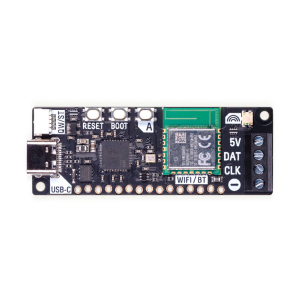
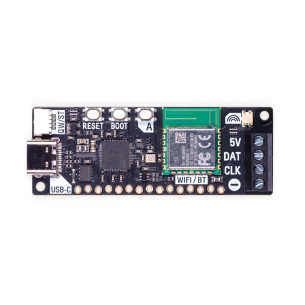
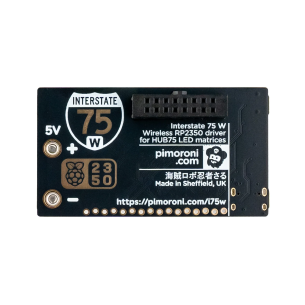
The HUB75 is a compact controller for controlling LED panels, designed for information boards and advertising displays. Equipped with an RP2350 microcontroller with WiFi and Bluetooth connectivity, it enables smooth display of animations and data downloaded from the internet. USB-C power allows for simultaneous powering of the board and connected LED arrays, while screw-type connectors ensure stable operation even with larger panels. Pimoroni PIM727
No product available!
An expansion board for XIAO modules that allows you to control seven output channels for slim, 3V COB LED strips. The board offers three high-current channels for main lighting and four low-current channels for fade-in and fade-out effects. Power can be supplied by a 3.7V Li-Po battery or a 5V/2A USB adapter, and a Grove I2C connector allows for sensor integration and intelligent light control. Seeed Studio 100079172
A control module designed to drive HUB75 RGB LED matrices ranging in size from 16x32 to 64x64 pixels, enabling the construction of information boards, clocks, and IoT displays. The device is based on an ESP32-S3 microcontroller with 8MB of Flash and 2MB of PSRAM, along with built-in Wi-Fi and Bluetooth Low Energy connectivity. The module features a USB-C connector for programming and power, a STEMMA QT (I2C) interface for connecting sensors, and an LIS3DH accelerometer for detecting orientation and motion. The platform supports Arduino and CircuitPython environments. Adafruit 6475