.png)





zł11.33 tax excl.
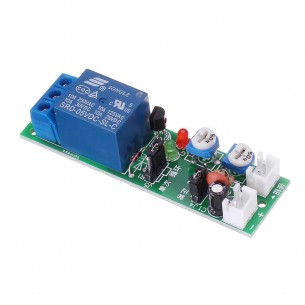
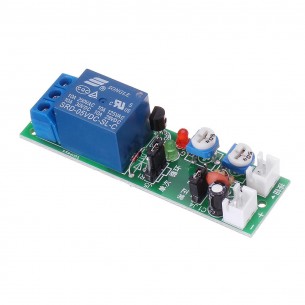
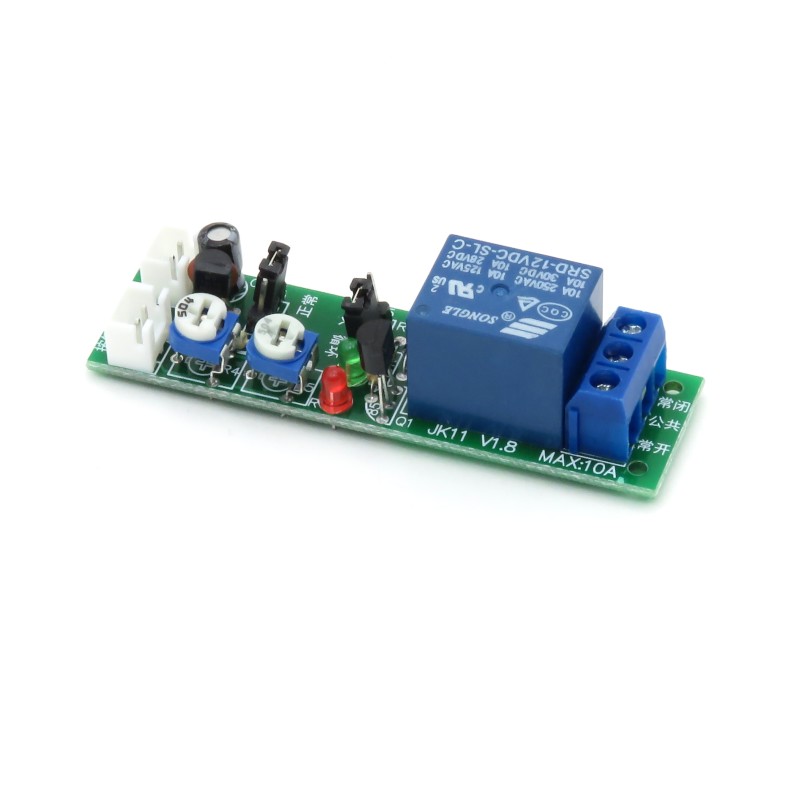
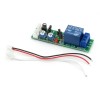
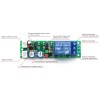
Module with a 12 V relay and a timer. It allows you to turn the device on and off cyclically at a specified time using potentiometers. It can also operate in single trigger mode, which allows the device to be turned on after a signal has been applied for a specified period of time. The operating time can be adjusted from 1 s to 100 s or from 1 s to 15 min
Module with a 12 V relay and a timer. It allows for cyclic switching on (T1) and switching off (T2) of the device at a specified time using potentiometers. It can also operate in single-trigger mode, which allows the device to be turned on after a signal is given for a specified period of time (T1). The operating time can be adjusted from 1 s to 100 s or from 1 s to 15 min. The relay has two output circuits: NC - normally closed and NO - normally open.
Data sheet
Manufacturer
Responsible person
Module with 5V relay and timer. It allows the implementation of delayed switching on or off of the circuit with adjustable time in the range from 1 s to 100 s and from 1 s to 15 min.
Module with 24V relay and timer. It allows the implementation of delayed switching on or off of the circuit with adjustable time in the range from 1 s to 100 s and from 1 s to 15 min.
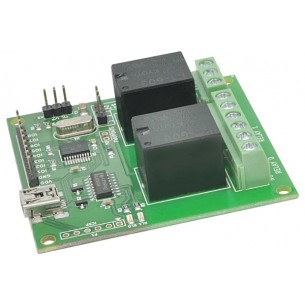
Module with 2 relays with a maximum switching current of 7 A. It communicates via the USB interface. Numato Lab RL20001
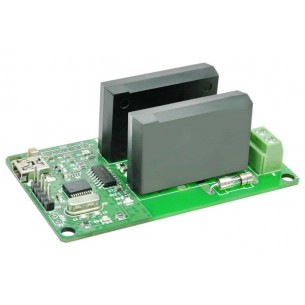
Module with 2 SSR relays with a load of up to 3 A. The board communicates via the USB interface. Numato Lab SSR20001-DC
No product available!
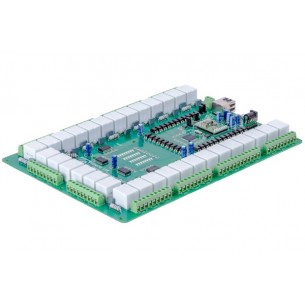
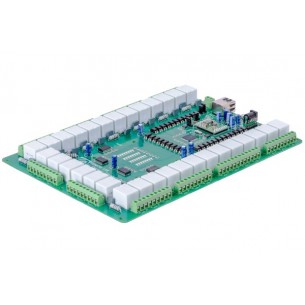
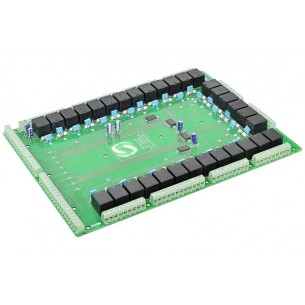
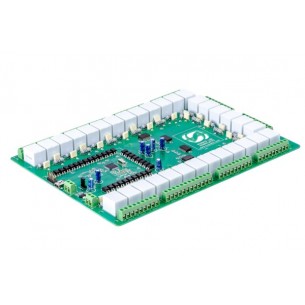
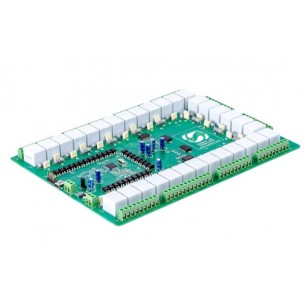
Module with 32 12 V relays with a load of up to 7 A. The board communicates via the Ethernet interface. Numato Lab 32ETHRL001
No product available!
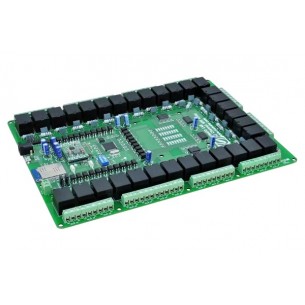
Module with 32 24 V relays with a load of up to 7 A. The board communicates via the Ethernet interface. Numato Lab 32ETHRL001-24
No product available!
Module with 32 relays 12 V with a maximum switching current of 7 A. Numato Lab RL320003
No product available!
Module with 32 12 V relays with a maximum switching current of 7 A. It communicates via the USB interface. Numato Lab RL320001
Module with 32 24 V relays with a maximum switching current of 7 A. It communicates via the USB interface. Numato Lab RL320001-24
No product available!
Module with 32 relays and 8 analog inputs. Communicates via the WiFi wireless interface. Numato Lab WFRL320001
No product available!
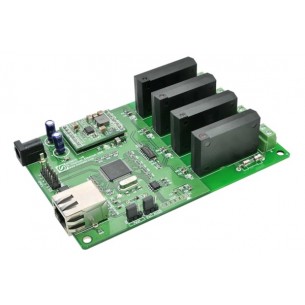
Module with 4 SSR relays with a load of up to 3 A. The board communicates via the Ethernet interface. Numato Lab 4ETHSSR001-AC
No product available!
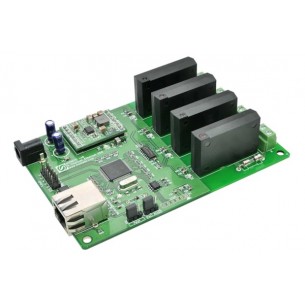
Module with 4 SSR relays with a load of up to 3 A. The board communicates via the Ethernet interface. Numato Lab 4ETHSSR001-DC
No product available!
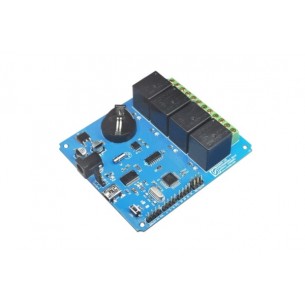
Module with 4 relays with a maximum switching current of 7 A. Equipped with the ATmega328P microcontroller, it can be programmed in the Arduino IDE. Numato Lab PRLY002
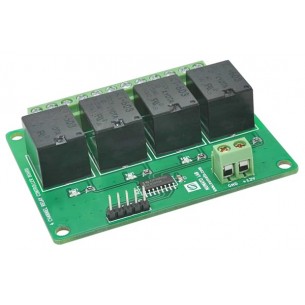
Module with 4 relays 12 V with a maximum switching current of 7 A. Numato Lab RL40002
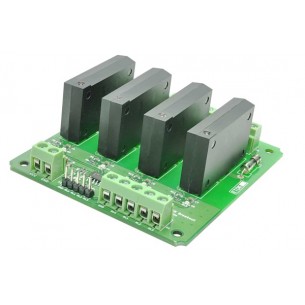
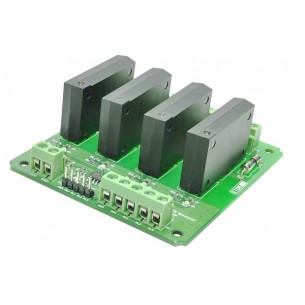
Module with 4 SSR relays with a load of up to 3 A. The board is equipped with the ULN2003 system and communicates via a digital interface. Numato Lab SSRC40001-DC
No product available!
Module with 4 SSR relays with a load of up to 3 A. The board is equipped with the ULN2003 system and communicates via a digital interface. Numato Lab SSRC40001-AC
No product available!
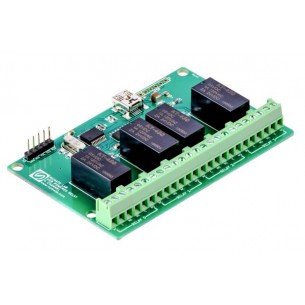
Module with 4 5 V relays with a maximum switching current of 2 A. It communicates via the USB interface and does not require an additional power supply. Numato Lab USBPOWRL004
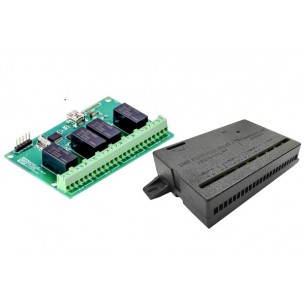
Module with 4 5 V relays with a maximum switching current of 2 A. It communicates via the USB interface and does not require an additional power supply. Enclosure included. Numato Lab USBPOWRL004E
No product available!
Module with a 12 V relay and a timer. It allows you to turn the device on and off cyclically at a specified time using potentiometers. It can also operate in single trigger mode, which allows the device to be turned on after a signal has been applied for a specified period of time. The operating time can be adjusted from 1 s to 100 s or from 1 s to 15 min