


zł140.64 tax excl.
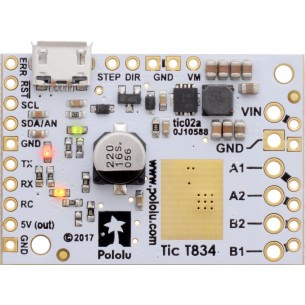
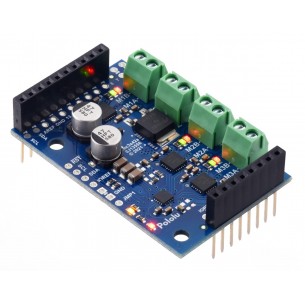
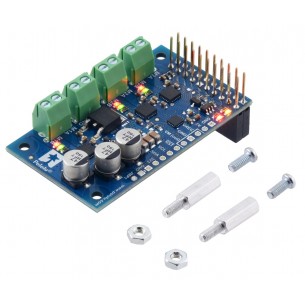
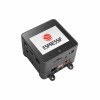
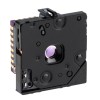
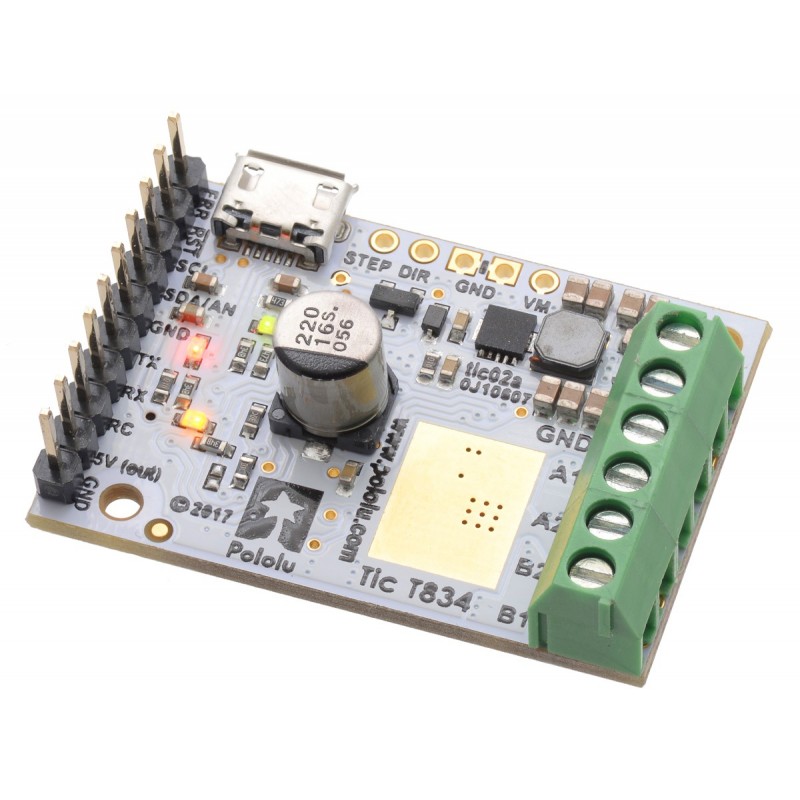
The Tic T834 USB Multi-Interface Stepper Motor Controller makes basic control of a stepper motor easy, with quick configuration over USB using our free software. The controller supports six control interfaces: USB, TTL serial, I²C, analog voltage (potentiometer), quadrature encoder, and hobby radio control (RC).
The Tic family of stepper motor controllers makes it easy to add basic control of a bipolar stepper motor to a variety of projects. These versatile, general-purpose modules support six different control interfaces–USB for direct connection to a computer, TTL serial and I²C for use with a microcontroller, RC hobby servo pulses for use in an RC system, analog voltages for use with a potentiometer or analog joystick, and quadrature encoder for use with a rotary encoder dial–and offer many settings that can be configured using our free configuration utility (for Windows, Linux, and macOS). This software simplifies initial setup of the device and allows for in-system testing and monitoring of the controller via USB (a micro-B USB cable is required to connect the Tic to a computer).
The Tic family currently has two members: the Tic T825, which operates from 8.5 V to 45 V, and the Tic T834, which operates from 2.5 V to 10.8 V. Both can deliver up to 1.5 A continuous per phase without a heat sink or forced air flow.
The Tic T834 is based on the DRV8834 IC from Texas Instruments. It can operate from 2.5 V to 10.8 V and can deliver up to approximately 1.5 A continuous per phase without a heat sink or forced air flow (the peak current per phase is 2 A). This version is sold with connectors soldered so no soldering is necessary to use it.
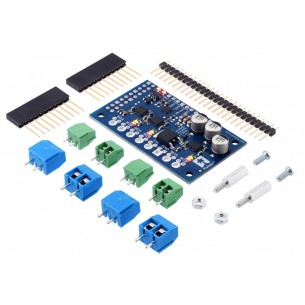
Dimensions:A version is also available with header pins and terminal blocks included but not soldered.
| Size: | 1.50″ × 1.05″ × 0.42″1 |
|---|---|
| Weight: | 5.1 g1 |
| Model: | Tic T834 |
|---|---|
| Motor driver: | DRV8834 |
| Control interface: | USB; non-inverted TTL serial; I²C; RC servo pulses; analog voltage; quadrature encoder |
| Minimum operating voltage: | 2.5 V |
| Maximum operating voltage: | 10.8 V |
| Continuous current per phase: | 1.5 A2 |
| Maximum current per phase: | 2 A3 |
| Maximum step rate: | 50000 PPS |
| Microstep resolutions: | full, 1/2, 1/4, 1/8, 1/16, and 1/32 |
| Reverse voltage protection?: | Y |
| Header pins soldered: | Y |
| PCB dev codes: | tic02a |
|---|---|
| Other PCB markings: | 0J10607 |
Data sheet
Manufacturer BTC Korporacja sp. z o. o. Lwowska 5 05-120 Legionowo Poland sprzedaz@kamami.pl 22 767 36 20
Responsible person BTC Korporacja sp. z o. o. Lwowska 5 05-120 Legionowo Poland sprzedaz@kamami.pl 22 767 36 20
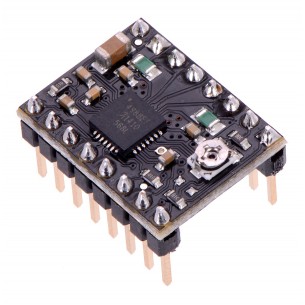
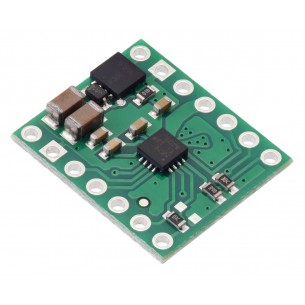
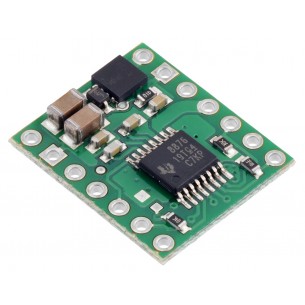
A4988 Stepper Motor Driver Carrier with male header pins installed, so no soldering is required to use it with an appropriate 16-pin socket or solderless breadboard. Pololu 2981
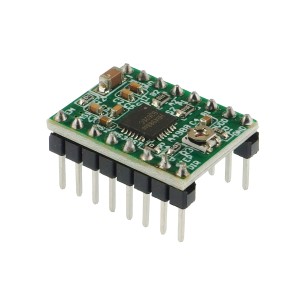
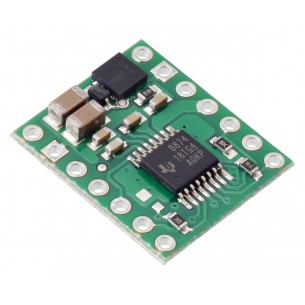
The stepper motor driver with Allegro A4988 (A4988 Stepper Motor Driver Carrier) allows you to supply a bipolar current of up to 2A per phase. The system can be supplied with voltage up to 35V, in the set there is a heat sink. It is compatible with Polol 1182
The Tic T834 USB Multi-Interface Stepper Motor Controller makes basic control of a stepper motor easy, with quick configuration over USB using our free software. The controller supports six control interfaces: USB, TTL serial, I²C, analog voltage (potentiometer), quadrature encoder, and hobby radio control (RC).
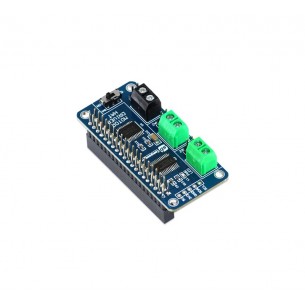
Module with a 2-channel driver for DC motors TB6612FNG designed to work with the Raspberry Pi. It can work with voltages from 6 to 12 V and currents up to 3 A. SB Components 21468
The module with a 4-channel L293D DC motor driver, designed to work with the Raspberry Pi. It can work with a voltage from 6 to 24 V and a current of up to 600 mA. SB Components 08001
Module with a 2-channel DC motor driver TB6612FNG designed to work with micro: bit. It can also control 3 servos. SB Components 14897
DC motor driver that allows you to control the movement of three drives using the I2C interface. The set includes only the board without connectors. Pololu 5032
No product available!
DC motor driver that allows you to control the movement of three drives using the I2C interface. Plate with connectors for assembly. Pololu 5031
No product available!
DC motor driver that allows you to control the movement of three drives using the I2C interface. Board with soldered connectors. Pololu 5030
No product available!
Module with DC motor driver DRV8876. It can work with motors supplied with the voltage from 4.5 to 37 V and current consumption up to 1.1 A. Pololu 4037
Module with DC motor driver DRV8876. It can work with motors supplied with the voltage from 4.5 to 37 V and the current consumption up to 1.3 A. Pololu 4036
Module with DC motor driver DRV8874. It can work with motors supplied with the voltage from 4.5 to 37 V and current consumption up to 2.1 A. Pololu 4035
DC motor driver that allows you to control the movement of three drives using the I2C interface. Board with soldered connectors. Pololu 5033
DC motor driver that allows you to control the movement of three drives using the I2C interface. Connectors for self-assembly. Pololu 5034
DC motor driver that allows you to control the movement of three drives using the I2C interface. Pololu 5035
A module with a two-channel DC motor driver based on the TB6612FNG system. Designed for Wemos D1 Mini
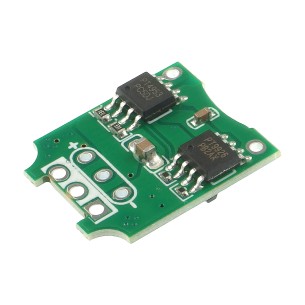
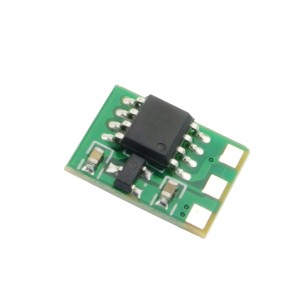
The bidirectional ESC controller enables precise control of brushed DC motors within a voltage range equivalent to 1S–2S Li-Ion/Li-Po packs. Its small size and compatibility with classic RC signals facilitate applications in compact mobile designs and robotic projects with limited mounting space
No product available!
The ESC RC controller module is designed for brush motors with a supply voltage from 3.5 to 6 V and a capacity of 1 A
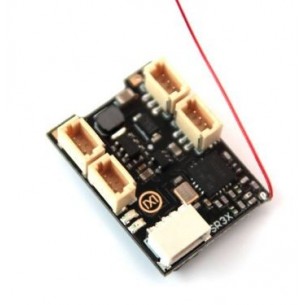
ESC RC controller module with FlySky receiver designed for two brush motors with a supply voltage from 2.5 to 5 V and a current consumption of 2 A
No product available!
The Tic T834 USB Multi-Interface Stepper Motor Controller makes basic control of a stepper motor easy, with quick configuration over USB using our free software. The controller supports six control interfaces: USB, TTL serial, I²C, analog voltage (potentiometer), quadrature encoder, and hobby radio control (RC).