.png)




zł90.57 tax excl.
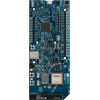
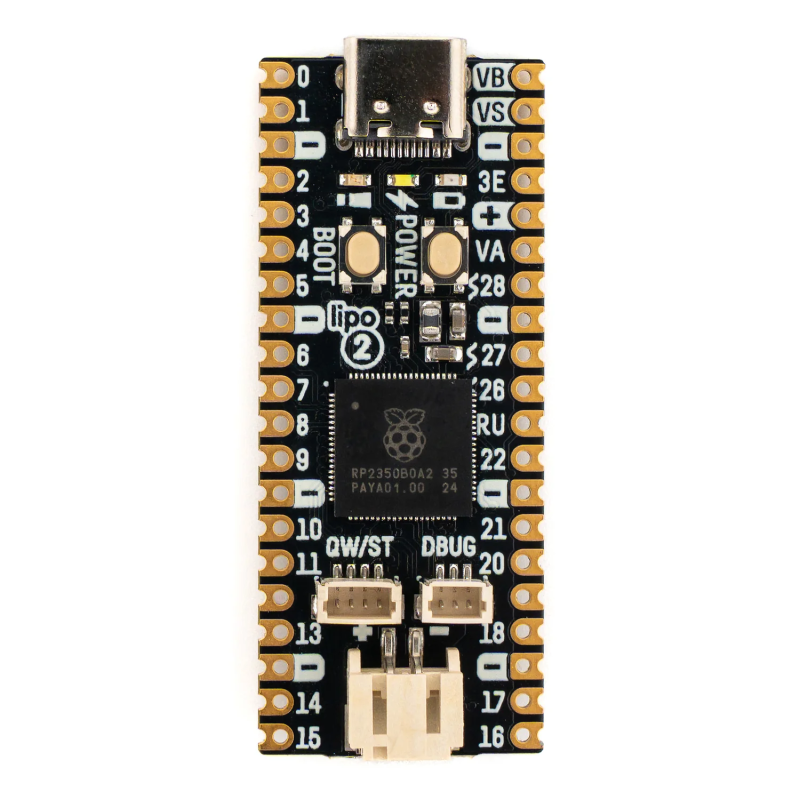
Pimoroni Pico LiPo 2 PIM775 is an advanced development board with the RP2350B, 16 MB of flash memory and 8 MB of PSRAM, created with battery-powered projects in mind. Thanks to the Qw/ST, SP/CE and JST connectors and the built-in LiPo charging system, it enables quick prototyping of mobile devices and remote IoT systems.
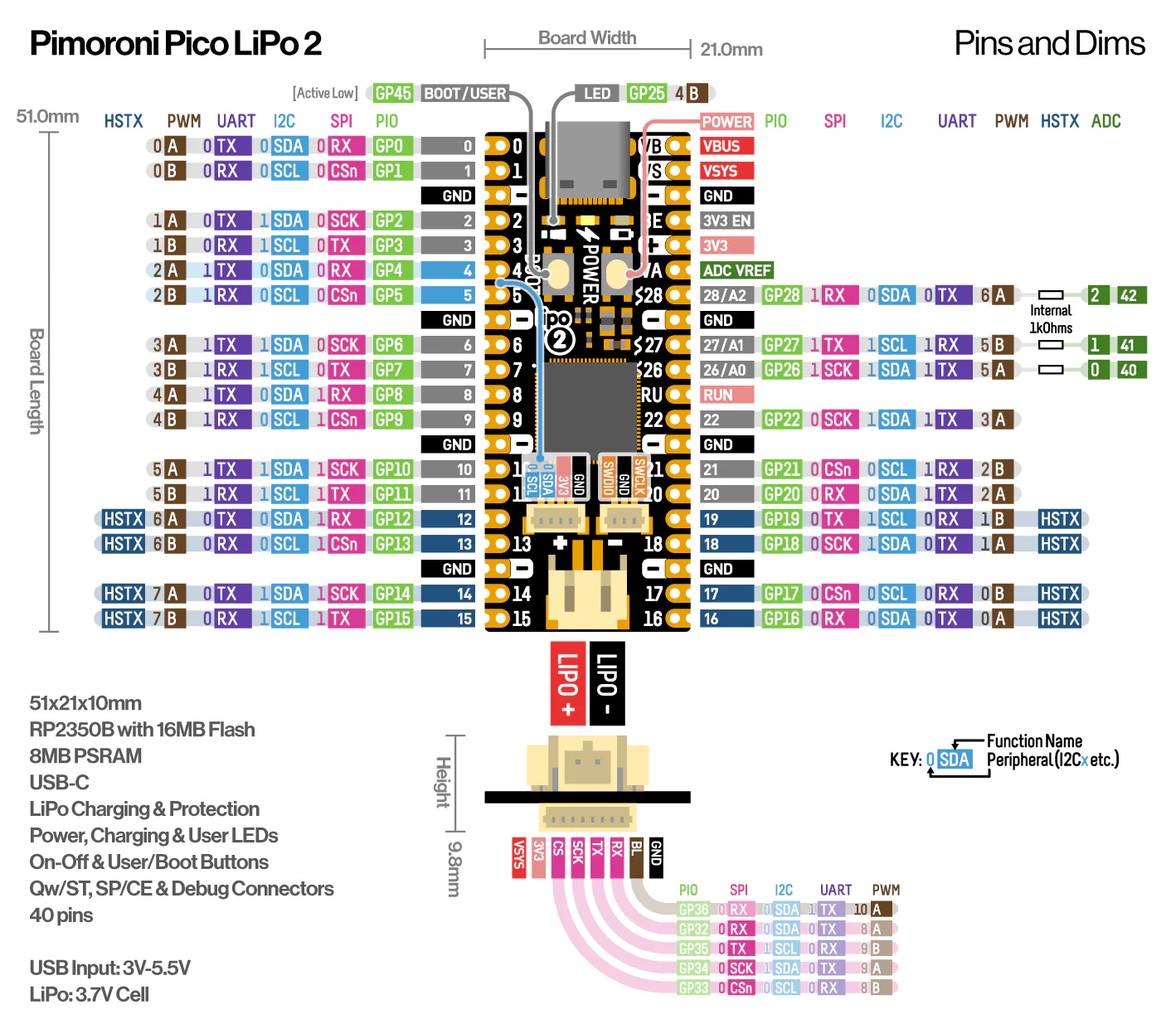
An advanced development board with the RP2350B microcontroller, 16 MB of QSPI flash memory and 8 MB of PSRAM, designed for projects requiring larger resources and integrated battery power management. The board is equipped with an MCP73831 LiPo/Li-Ion charger with a charging current of 215 mA, an XB6096I2S battery protection circuit and a JST PH 2-pin connector for direct battery connection. LEDs indicate power and charging status, and the POWER and BOOT buttons enable power control and serve user functions.
The board provides Qw/ST connectors for I2C devices, an SP/CE connector for SPI/USART communication and a 3-pin JST-SH debugging connector for SWD programming. Programming and power supply are provided via USB-C. Additional conveniences include clear pin labels and compatibility with Raspberry Pi Pico add-on boards.
Data sheet
Manufacturer
Responsible person
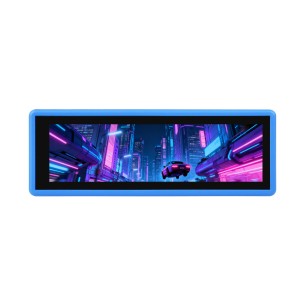
Development board based on the RP2350B microcontroller, featuring a 3.49-inch IPS capacitive touch display with 172 x 640 resolution, supporting ARM Cortex-M33 and RISC-V architectures, with audio interfaces, TF card slot, and a wide range of peripherals, with an 18650 lithium battery included. Waveshare RP2350-Touch-LCD-3.49
No product available!
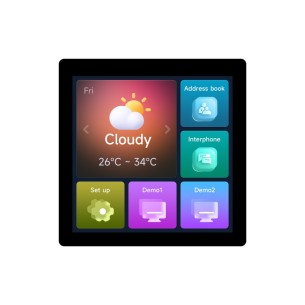
Development board based on the RP2350B microcontroller with a 4-inch IPS display (480 × 480 px) and a 5-point capacitive touch panel, featuring CAN, RS485, I2C interfaces, RTC, a 6-axis IMU, and a TF card slot. Designed for modern HMI interfaces and multi-touch control systems. Waveshare RP2350-Touch-LCD-4
No product available!
Development board based on the RP2350B microcontroller with a 4-inch IPS display (480×480 px), without touch functionality, featuring CAN, RS485, RTC, IMU, and TF card support. Waveshare RP2350-LCD-4
No product available!
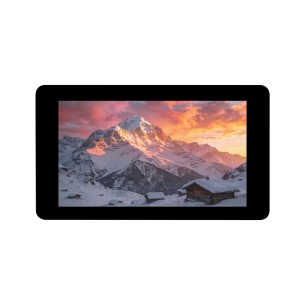
Development board with RP2350 microcontroller and a 7-inch touch LCD display with 800 x 480 resolution and 65K colors, supporting dual-core and dual-architecture operation, with a capacitive touch panel. Waveshare RP2350-Touch-LCD-7
Development board with RP2350 microcontroller and a 7-inch LCD display with 800 x 480 resolution and 65K colors, supporting dual-core and dual-architecture operation, in a version without touch support. Waveshare RP2350-LCD-7
RP2350 1.75" 466×466 with 65K color AMOLED display and capacitive touch panel, equipped with the RP2350A dual-core, dual-architecture microcontroller, 6-axis IMU sensor, RTC, audio codec with microphone, and integrated LC76G GPS module. The board provides SPI, I2C, UART, ADC, PWM, and USB Type-C interfaces, and includes a ceramic GNSS antenna in the set, enabling the development of portable HMI devices and embedded systems with positioning functionality. Waveshare RP2350-Touch-AMOLED-1.75-G
No product available!
RP2350 1.75" 466×466 with 65K color AMOLED display and capacitive touch panel, equipped with the RP2350A dual-core, dual-architecture microcontroller, 6-axis IMU sensor, RTC, audio codec with microphone, and power management system supporting a 3.7 V Li-Ion battery. The version with protective enclosure is designed for portable devices, HMI panels, and interactive embedded systems requiring high-quality image output and touch support. Waveshare RP2350-Touch-AMOLED-1.75-B
No product available!
RP2350 1.75" 466×466 with 65K color AMOLED display and capacitive touch panel, equipped with the RP2350A dual-core, dual-architecture microcontroller, 6-axis IMU sensor, RTC, audio codec with microphone, and power management system supporting a 3.7 V Li-Ion battery. The board provides SPI, I2C, UART, ADC, PWM, and USB Type-C interfaces, enabling the development of portable devices, HMI panels, and interactive embedded systems requiring high-quality display output and touch support. Waveshare RP2350-Touch-AMOLED-1.75
No product available!
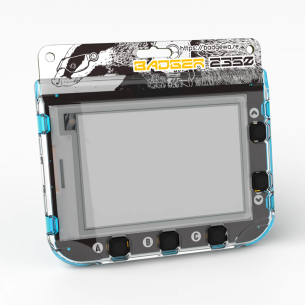
An educational kit with a 2.7-inch e-Paper display with a resolution of 264 x 176 pixels and four grayscale levels, ideal for presenting schedules, QR codes, and IoT messages. The device is based on a dual-core RP2350A microcontroller (2 x Arm Cortex-M33 250 MHz) with 520 KB of SRAM, 16 MB of QSPI Flash, and 8 MB of PSRAM. Connectivity is provided by a Wi-Fi and Bluetooth module (CYW43439). A built-in 1000 mAh LiPo battery, charged via USB-C, enables long, energy-efficient operation, and the RTC allows for the development of cyclic applications. Pimoroni WARE001
No product available!
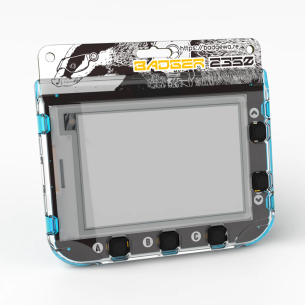
An educational kit with a 2.7-inch e-Paper display with a resolution of 264 x 176 pixels and four grayscale levels, ideal for presenting schedules, QR codes, and IoT messages. The device is based on a dual-core RP2350A microcontroller (2 x Arm Cortex-M33 250 MHz) with 520 KB of SRAM, 16 MB of QSPI Flash, and 8 MB of PSRAM. Connectivity is provided by a Wi-Fi and Bluetooth module (CYW43439). A built-in 1000 mAh LiPo battery, charged via USB-C, enables long, energy-efficient operation, and the RTC allows for the development of cyclic applications. Pimoroni WARE004
No product available!
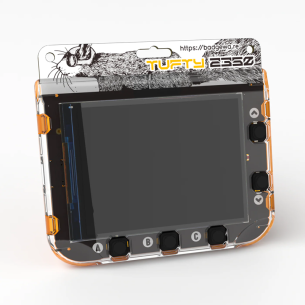
Educational kit with a 2.8" color TFT IPS display with a resolution of 320 × 240 px and adjustable backlight, ideal for game development, data visualization, and IoT projects. The device is based on the RP2350B microcontroller (2 × Arm Cortex-M33 250 MHz) with 520 KB SRAM, 16 MB QSPI Flash, and 8 MB PSRAM, and connectivity is provided by a Wi-Fi and Bluetooth module (CYW43439). A built-in 1000 mAh LiPo battery charged via USB-C guarantees mobile operation without a constant power supply. Five buttons, an I2C Qwiic/STEMMA QT connector, and MicroPython support make the kit a versatile platform for learning programming and STEM experiments. Pimoroni WARE002
No product available!
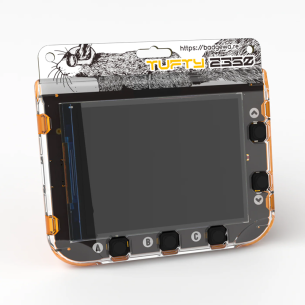
Educational kit with a 2.8" color TFT IPS display with a resolution of 320 × 240 px and adjustable backlight, ideal for game development, data visualization, and IoT projects. The device is based on the RP2350B microcontroller (2 × Arm Cortex-M33 250 MHz) with 520 KB SRAM, 16 MB QSPI Flash, and 8 MB PSRAM, and connectivity is provided by a Wi-Fi and Bluetooth module (CYW43439). A built-in 1000 mAh LiPo battery charged via USB-C guarantees mobile operation without a constant power supply. Five buttons, an I2C Qwiic/STEMMA QT connector, and MicroPython support make the kit a versatile platform for learning programming and STEM experiments. Pimoroni WARE005
No product available!
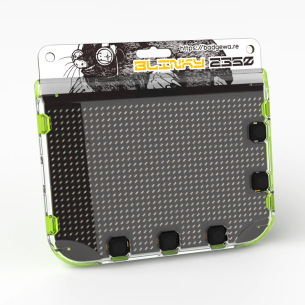
An interactive educational kit with a 39 x 26 LED matrix (872 diodes) capable of displaying animations, text, and pixel graphics. At the heart of the device is a dual-core RP2350A microcontroller (2 x Arm Cortex-M33 250 MHz) with 520 KB SRAM, 16 MB QSPI Flash, and 8 MB PSRAM. Connectivity is provided by a Wi-Fi and Bluetooth module (CYW43439). A built-in 1000 mAh LiPo battery charged via USB-C allows for mobile operation, while additional buttons and a RTC (Real Time Clock) enhance the device\'s functionality. Pimoroni WARE003
No product available!
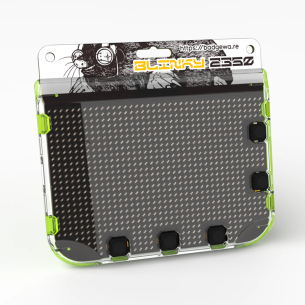
An interactive educational kit with a 39 x 26 LED matrix (872 diodes) capable of displaying animations, text, and pixel graphics. At the heart of the device is a dual-core RP2350A microcontroller (2 x Arm Cortex-M33 250 MHz) with 520 KB SRAM, 16 MB QSPI Flash, and 8 MB PSRAM. Connectivity is provided by a Wi-Fi and Bluetooth module (CYW43439). A built-in 1000 mAh LiPo battery charged via USB-C allows for mobile operation, while additional buttons and a RTC (Real Time Clock) enhance the device\'s functionality. Pimoroni WARE006
No product available!
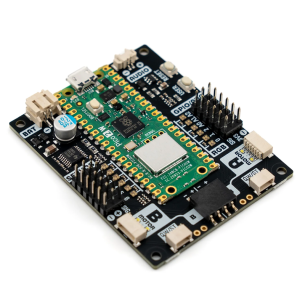
This development board for building robots and mechatronics projects features 2.4 GHz Wi-Fi and Bluetooth 5.2 connectivity. Based on the RP2350 microcontroller (Dual Arm Cortex-M33 up to 150 MHz, 520 KB SRAM, 4 MB QSPI Flash), it allows you to control two DC motors via a DRV8833C H-bridge and support up to six servos. It features 12 addressable RGB (Neopixel) LEDs, ADC inputs, numerous GPIOs, and two Qw/ST headers for connecting sensors. Pimoroni PIM733
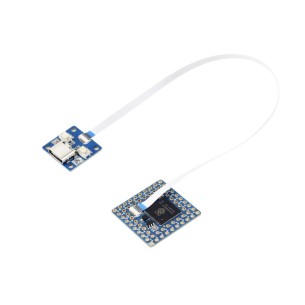
Module with RP2350B microcontroller, clock speed up to 150 MHz, 8 MB PSRAM, 16 MB Flash, 48 GPIO, 2.54 mm pitch, USB adapter and FPC cable included, dimensions 25.40 x 25.40 mm. Waveshare Core2350B2-Kit
No product available!
Pimoroni Pico LiPo 2 PIM775 is an advanced development board with the RP2350B, 16 MB of flash memory and 8 MB of PSRAM, created with battery-powered projects in mind. Thanks to the Qw/ST, SP/CE and JST connectors and the built-in LiPo charging system, it enables quick prototyping of mobile devices and remote IoT systems.