.png)



zł113.01 tax excl.
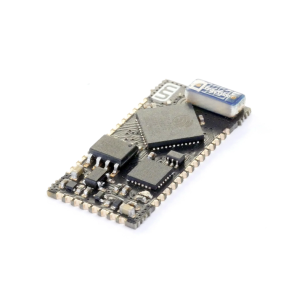
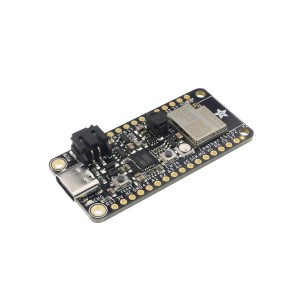
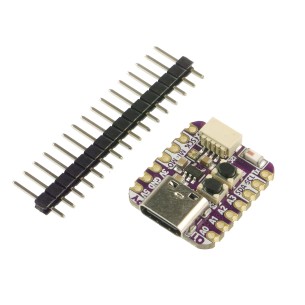
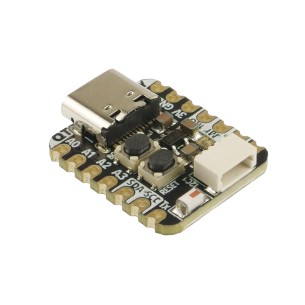
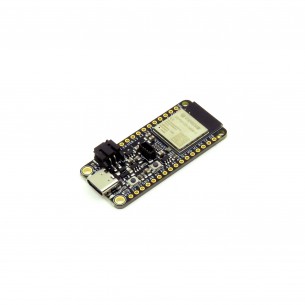
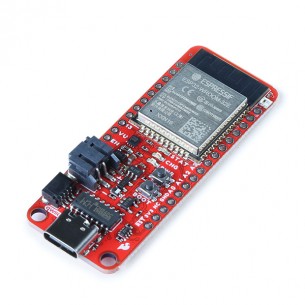
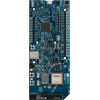
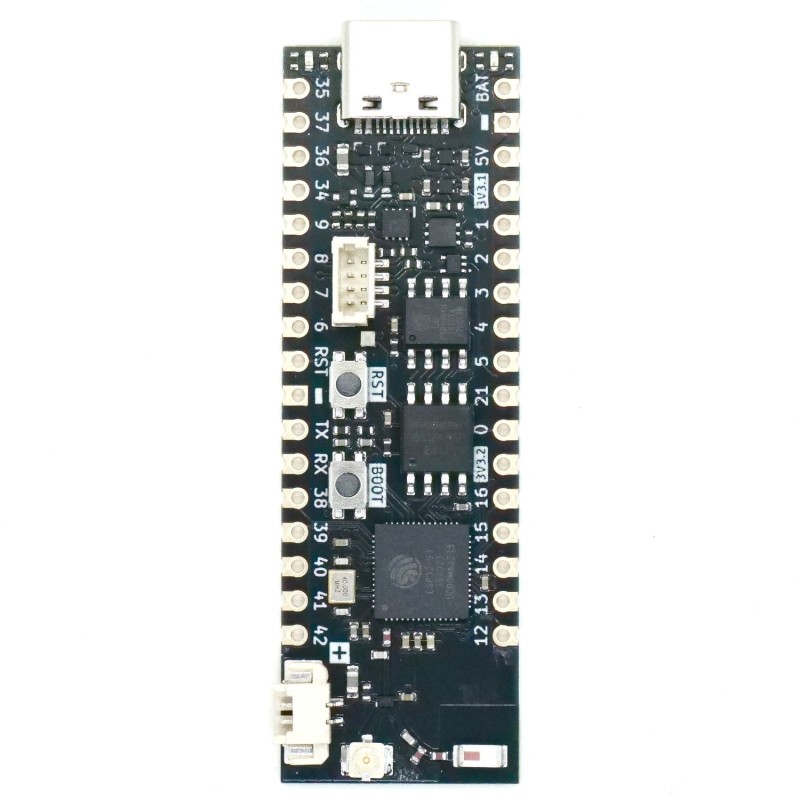
This ESP32-S3 development board is designed for demanding IoT and embedded systems projects. Equipped with a dual-core 240 MHz processor, a RISC-V coprocessor, 16 MB of Flash, and 8 MB of PSRAM, it offers high performance and flexibility. It also includes two 3.3 V regulators, a LiPo charging circuit with battery monitoring, a STEMMA QT connector, and a software antenna switch between the 3D High Gain antenna and u.FL. ProS3[D]
ProS3[D] is a development board based on the ESP32-S3 chip, designed for maximum functionality, performance, and flexibility in IoT, automation, and advanced embedded systems. It is the most feature-rich version of the ProS3 series, offering powerful computing capabilities, expanded memory, reliable power management, and exceptional energy optimization.
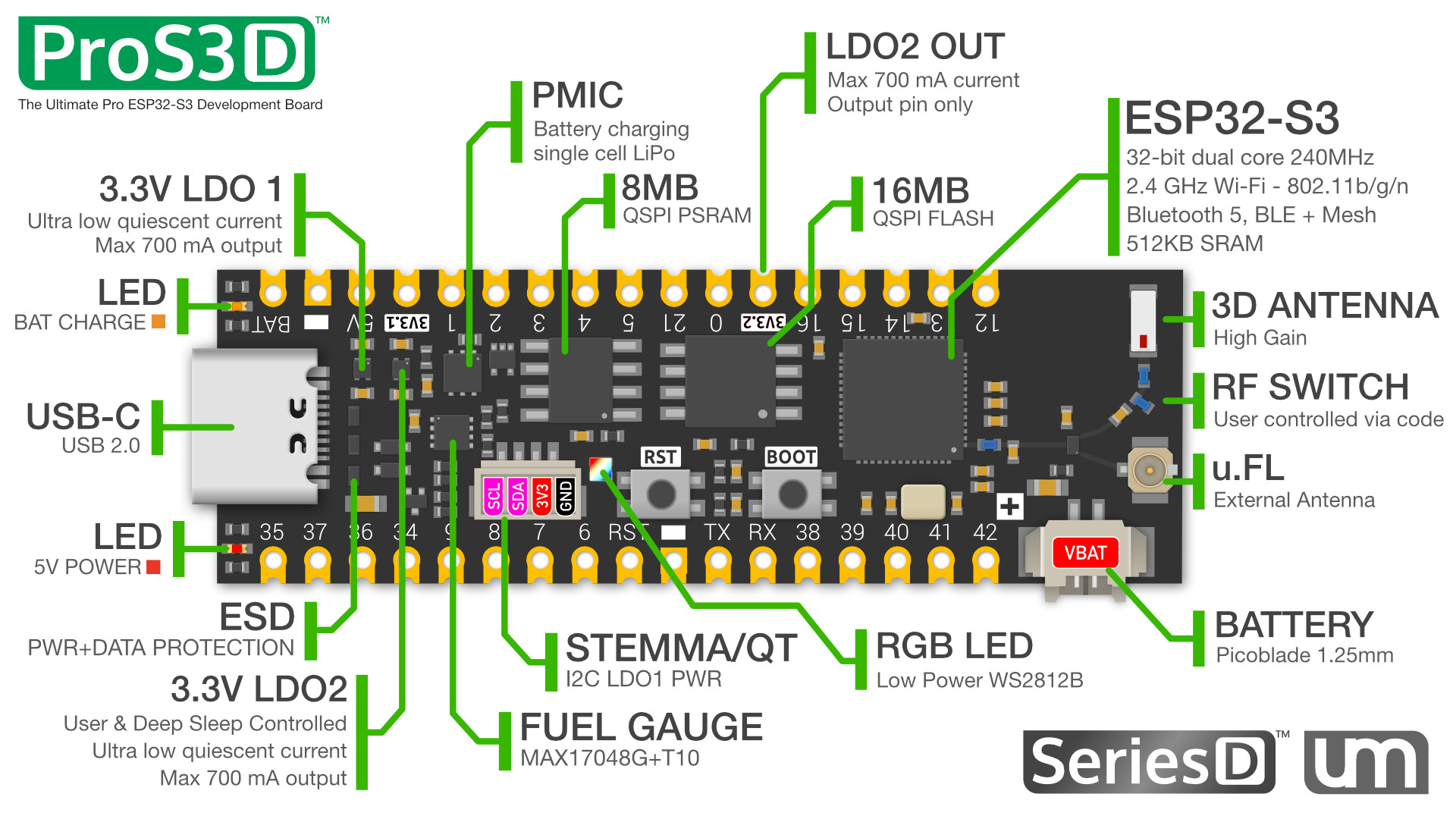
The board combines the advantages of the previous ProS3 and ProS3 uFL models into a single, versatile product featuring both a built-in 3D High Gain antenna and a u.FL connector for an external antenna. Switching between antennas is possible via software control, thanks to the integrated RF switch. It is powered by a dual-core Xtensa LX7 processor (up to 240 MHz) and a RISC-V Ultra Low Power coprocessor, providing an excellent balance between performance and energy efficiency. With 16 MB QSPI Flash memory and 8 MB PSRAM, ProS3[D] can easily handle advanced applications, data visualization, and complex processing tasks. The board includes two 3.3 V / 700 mA voltage regulators — one user-controllable and automatically disabled in deep sleep mode — allowing flexible and efficient power management. The built-in LiPo charging circuit with a PicoBlade connector and an updated I2C Battery Fuel Gauge enable precise energy monitoring. In addition, the board provides a STEMMA QT connector powered by the main LDO1 regulator, allowing quick and solder-free connection of sensors and modules.
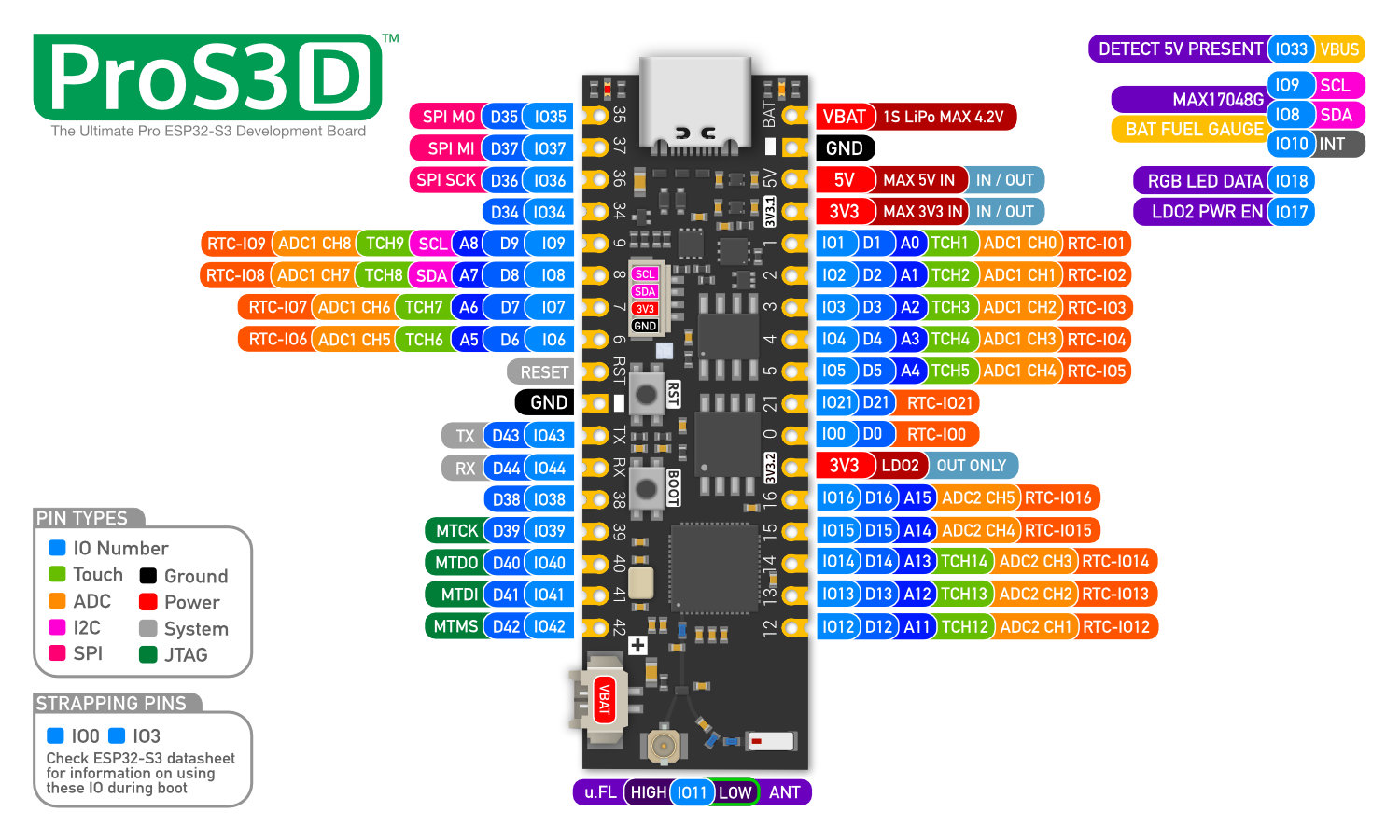
ProS3[D] includes ESD protection on the USB-C port with reverse-voltage protection, improving durability and safety. With 27 GPIO lines (including edge connector and JTAG pins), the board offers extensive expandability and communication with external devices. It maintains full compatibility with TinyPICO and TinyS3[D], making project migration and reuse of existing baseboards effortless. ProS3[D] strikes the perfect balance between compact design and high performance — a versatile, refined solution for professionals who demand full hardware control and top reliability in demanding applications.
Manufacturer
Responsible person
This compact ESP32-based board offers full functionality in a package measuring just 13 x 27 mm. Equipped with a 3.3 V regulator (700 mA), 4 MB of PSRAM, a battery charger, and 27 GPIO pins, it delivers high performance with minimal power consumption. Separate 5 V and 3.3 V power paths and automatic disconnection of unused components increase energy efficiency. The TinyPICO NANO works with the Arduino IDE, MicroPython, and ESP-IDF.
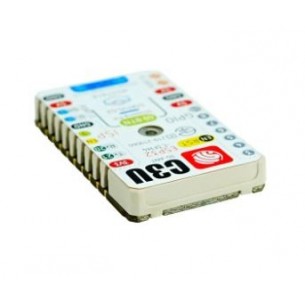
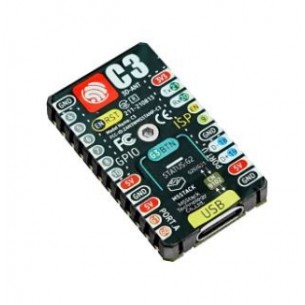
M5Stack series development kit equipped with ESP32-C3. It will work in IoT-related projects, as a STEM educational module or in Smart Home devices. M5Stack K122
M5Stack series development kit equipped with ESP32-C3. It will work in IoT-related projects, as a STEM educational module or in Smart Home devices. Set includes 5 M5Stack C056-B
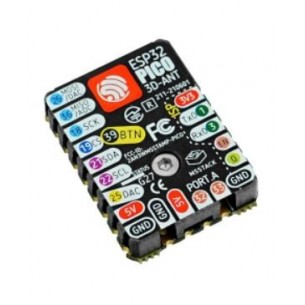
M5Stack series development kit equipped with ESP32-PICO-D4. It will work in IoT-related projects, as a STEM educational module or in Smart Home devices. M5Stack K051-B
Board with WiFi and Bluetooth Espressif ESP32-C3 module. It offers 4MB Flash and 400KB SRAM and a LiPo charging circuit. The set includes an expansion board with a display connector. DFRobot DFR0868
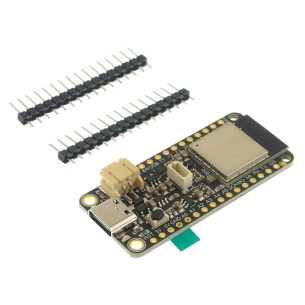
Module with WiFi Espressif ESP32. It offers 8MB Flash, 2MB PSRAM, LiPo charging circuit and RGB LED. It is equipped with a STEMMA QT connector. Adafruit 5438
Tile with WiFi module and Bluetooth Classic + BLE ESP32 Pico. It offers 8 MB of Flash memory and 2 MB of PSRAM and an RGB LED. It is equipped with a STEMMA QT connector. Adafruit 5395
Board with the WiFi Espressif ESP32-S3 module. It offers 8 MB of Flash memory and 512 KB of SRAM and an RGB diode. It is equipped with a STEMMA QT connector. Adafruit 5426
Module with WiFi and BLE Espressif ESP32-S3. It integrates a LiPo charging circuit and an RGB diode. It is equipped with a STEMMA QT connector. Adafruit 5477
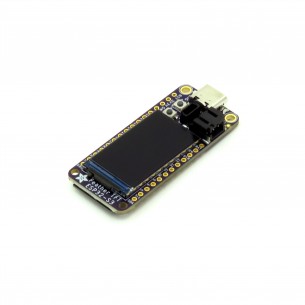
Module with WiFi and BLE Espressif ESP32-S3 system and LCD TFT display. It integrates a LiPo charging circuit and an RGB diode. It is equipped with a STEMMA QT connector. Adafruit 5483
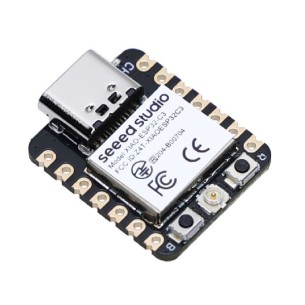
Espressif ESP32-C3 WiFi module board. It offers 4 MB of Flash memory and 400 kB of SRAM. It is equipped with a USB type C connector and a WiFi/BT antenna. Seeed Studio 113991054
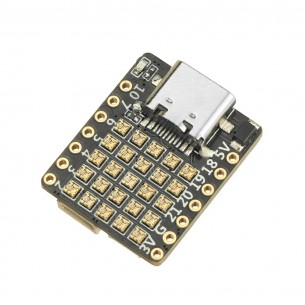
Board with the WiFi Espressif ESP32-C3 module. It offers 4 MB of Flash memory and 400 KB of SRAM and an RGB diode. It is equipped with a matrix of WS2812B programmable diodes
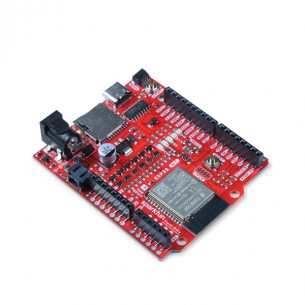
Development board with ESP32 chip with WiFi and Bluetooth communication. Equipped with a microSD card slot, USB Type-C connector for programming and Ardunio Uno Rev3 compatible connectors and Qwiic connector. SparkFun WRL-19177
Module with WiFi and Bluetooth Espressif ESP32 WROOM. It integrates a set of peripherals - capacitive touch sensors, Hall sensors, SD card interface, Ethernet, SPI, UART, I2S and I2C. SparkFun WRL-20168
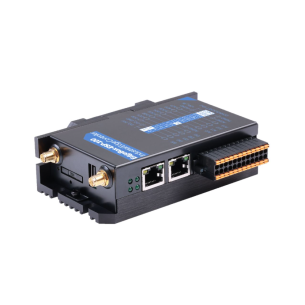
Versatile communication module based on the ESP32 microcontroller, designed for industrial automation and as an IoT gateway for PLCs. It supports fieldbus standards such as CAN and RS485, as well as wireless technologies Wi-Fi, BLE and 4G LTE, which enables integration with industrial networks and the cloud. Thanks to its rugged design and support for programming in ESP-IDF, the EdgeBox-ESP-100 is suitable for remote control and monitoring in harsh industrial environments. Seeed Studio 102991735
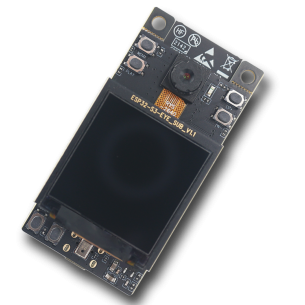
Small AI development board based on ESP32-S3 SoC with integrated WiFi 802.11 b/g/n and BLE transceiver. It has a built-in 2 MP camera, LCD display and microphone. Espressif ESP32-S3-EYE
Espressif ESP32-S2 WiFi chip module. It integrates a TFT LCD display, SPI Flash memory, LiPo charging circuit and RGB LED. It is equipped with a STEMMA QT connector. Adafruit 53
This ESP32-S3 development board is designed for demanding IoT and embedded systems projects. Equipped with a dual-core 240 MHz processor, a RISC-V coprocessor, 16 MB of Flash, and 8 MB of PSRAM, it offers high performance and flexibility. It also includes two 3.3 V regulators, a LiPo charging circuit with battery monitoring, a STEMMA QT connector, and a software antenna switch between the 3D High Gain antenna and u.FL. ProS3[D]