.png)



zł65.41 tax excl.
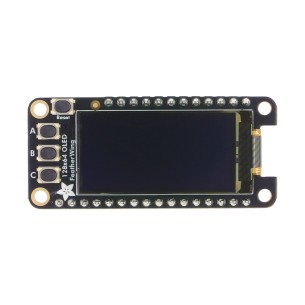
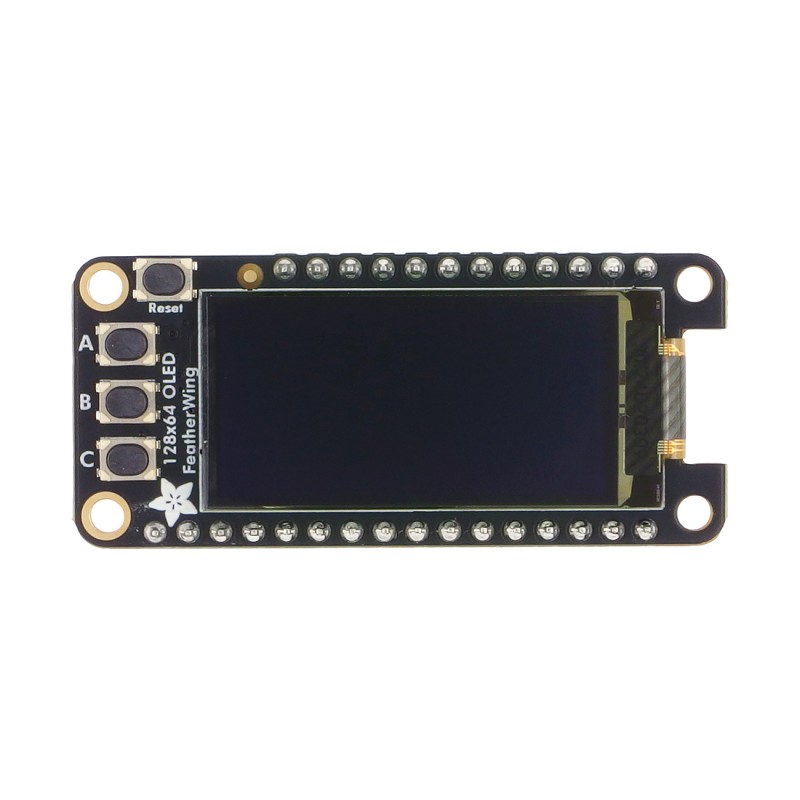
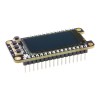
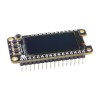
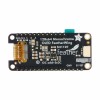
An expansion board for Feather boards, featuring a 1.3-inch 128x64 monochrome OLED display and three user buttons. The board comes fully assembled and communicates via I2C, allowing for easy connection to other STEMMA QT devices. The SH1107 display provides high contrast with low power consumption, and a built-in reset button allows for quick system restarts. Adafruit 6313
FeatherWing OLED is a high-quality add-on for Feather boards that adds a 128x64 monochrome OLED display and three user buttons labeled A, B, and C. The board comes fully assembled, so no soldering is required – simply attach it to a Feather board to start using it. The display has a diagonal of approximately 1.3 inches and consists of 128x64 individual white OLED pixels that emit their own light, meaning it requires no backlight and delivers high contrast images with low power consumption. The FeatherWing also includes a reset button for quick system restarts. Using the STEMMA QT / Qwiic connector, other I2C devices such as sensors or Grove peripherals can be easily connected without soldering.

FeatherWing OLED works with all Feather boards and can be used in parallel with other I2C FeatherWings since it only uses two I2C pins. The display is driven by the SH1107 controller and is supported by both Arduino and CircuitPython libraries. FeatherWing OLED is ideal for projects that require a clear display and simple user interface. It can be used in educational projects, prototypes, interactive gadgets, or anywhere a compact, low-power screen is needed.
Manufacturer
Responsible person
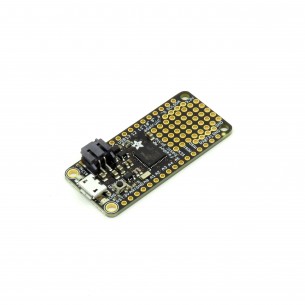
At the Feather M0\'s heart is an ATSAMD21G18 ARM Cortex M0 processor, clocked at 48 MHz and at 3.3V logic. 256K FLASH, 32K RAM, built in USB and battery charging. Adafruit 2772
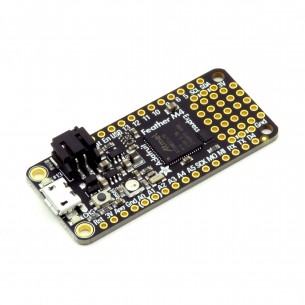
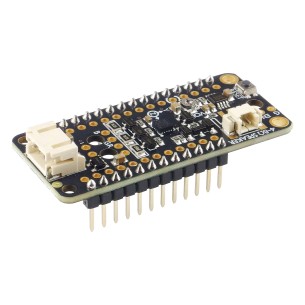
The board is equipped with the ATSAMD51J19 microcontroller with ARM Cortex-M4 core and SPI Flash memory, GPIO pins, connector for connecting the battery with the charging circuit. Adafruit 3857
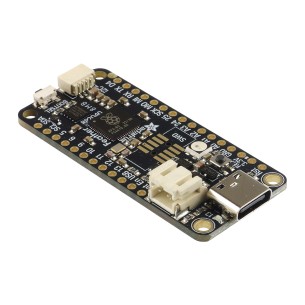
The board with the RP2040 microcontroller equipped with two ARM Cortex-M0+ cores, which work at a frequency of 133 MHz, 256 kB RAM. The board also has 8 MB of QSPI flash memory. The system can be programmed in C/C++ or MicroPython. Adafruit 4884
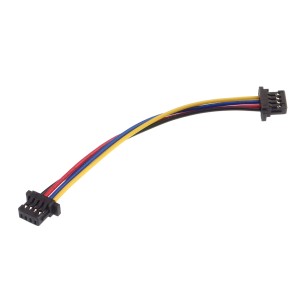
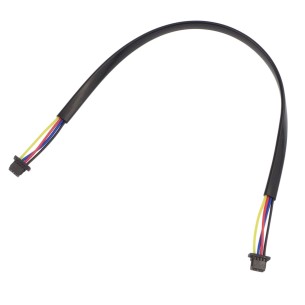
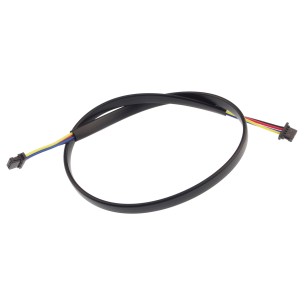
4-wire cable with a length of 50 mm. Both ends with STEMMA QT (Qwiic) plug. Adafruit 4399
4-core cable with a length of 200 mm. Both ends with STEMMA QT (Qwiic) plug. Adafruit 4401
4-core cable with a length of 300 mm. Both ends with STEMMA QT (Qwiic) plug. Adafruit 5384
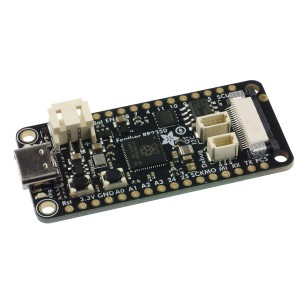
A modern development board in the Feather format, equipped with a dual-core Raspberry Pi RP2350 Cortex M33 microcontroller clocked at 150 MHz and 8 MB of PSRAM, ideal for advanced IoT projects and Micropython/CircuitPython applications. The board offers a wide range of ports, including an HSTX 22-pin connector, USB-C with bootloader, and STEMMA QT, as well as numerous GPIOs and an integrated LiPo battery charger, combining high performance with convenience of use. Adafruit 6130
Gamepad module (game controller) with joystick and buttons. Designed for Feather tiles. Adafruit 3632
Module with a current and voltage sensor dedicated to Feather boards. Can measure voltage up to 26 V and current up to 3.2 A. Based on INA219 sensor, I2C communication. Adafruit 3650
Extension module dedicated to matrix displays with HUB75 interface. Designed for Feather RP2040, M0 and M4 series tiles. Adafruit 3036
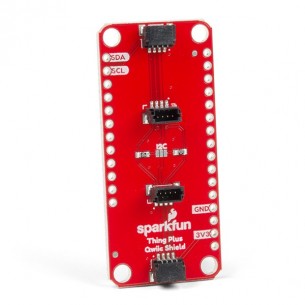
The Qwiic connector overlay provides an easy-to-install way to add Qwiic connectors to Thing Plus and Feather boards. Communication takes place via the I2C interface. Sparkfun DEV-16790
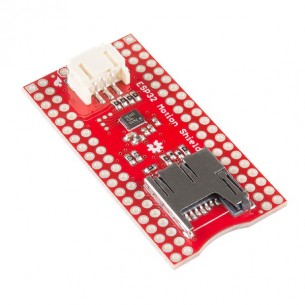
Module with 9-axis IMU LSM9DS1 system dedicated to ESP Thing board. Equipped with a connector for connecting GPS and a microSD slot. SparkFun DEV-14430
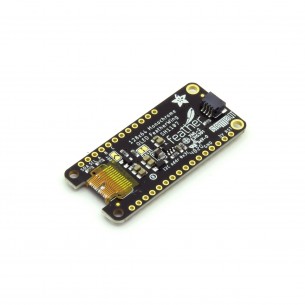
OLED display with a diagonal of 1.3" and a resolution of 128x64 pixels. Designed for use with Feather series plates. Adafruit 4650
The expansion module (shield) is designed for Feather nRF52840 boards. It enables easy connection of 16x32, 32x32 and 64x32 matrix displays. Requires self-assembly. Adafruit 4702
Data logger dedicated to Thing Plus tiles. It allows you to save data on a microSD card with the possibility of reading through the USB port. Supports cards up to 32 GB. SparkFun DEV-19217
CAN controller module for Feather boards. It features an MCP2515 CAN controller and a TJA1051 transceiver and allows data transfer at speeds of up to 1Mb/s. Adafruit 5709
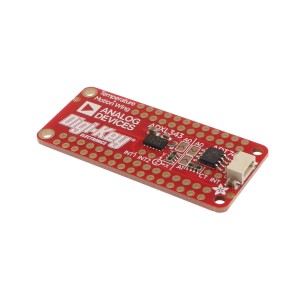
Module with 3-axis accelerometer ADXL343 and precise temperature sensor ADT7410 dedicated to Feather series boards. Equipped with a STEMMA QT connector, it communicates via the I2C interface. Adafruit 4147
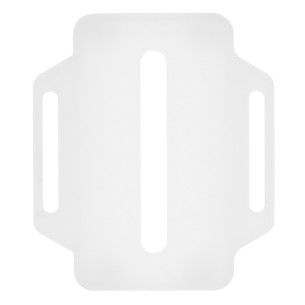
The compact enclosure for the Adafruit Feather RP2040 with DVI output is printed using SLA technology in semi-transparent plastic, providing protection and visibility of the LED indicators. It allows easy access to all ports and buttons, and the snap-in design eliminates the need for screws or glue. Adafruit 6241
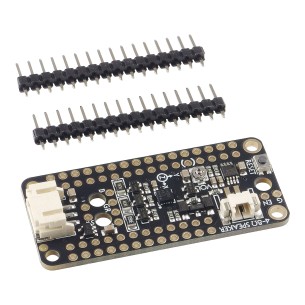
This expansion board is designed for light and sound, cosplay, and interactive prop projects. It features a ready-made NeoPixel port with a level converter, 3W RGB LED drivers, and a Class D audio amplifier for driving 8Ω or 4Ω speakers. The built-in LIS3DH accelerometer allows for motion, impact, and tilt detection, ideal for dynamic effects. It works with a wide range of Feather boards, allowing you to quickly create advanced projects in a compact format. Adafruit 3988
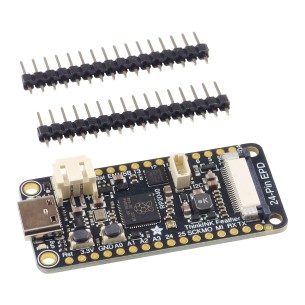
This compact development board allows direct connection to 24-pin e-paper displays, ideal for energy-efficient visual projects. Equipped with a 133MHz RP2040 microcontroller, 264KB SRAM, and 8MB Flash, it offers smooth display caching and support for a wide range of peripherals. It features a dedicated SPI display interface, a STEMMA QT connector, a Li-Po charger, USB-C, and a comprehensive GPIO set with PWM, ADC, and I2C, SPI, and UART communication. Adafruit 5727
An expansion board for Feather boards, featuring a 1.3-inch 128x64 monochrome OLED display and three user buttons. The board comes fully assembled and communicates via I2C, allowing for easy connection to other STEMMA QT devices. The SH1107 display provides high contrast with low power consumption, and a built-in reset button allows for quick system restarts. Adafruit 6313
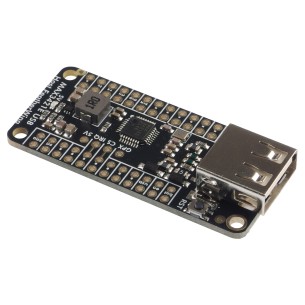
FeatherWing expansion module adding USB Host functionality to Feather boards via a USB-A connector, based on the MAX3421E controller with SPI communication and an integrated 5V 1A boost converter for powering USB devices. Adafruit 5858
This expansion board is designed for light and sound, cosplay, and interactive prop projects. It features a ready-made NeoPixel port with a level converter, 3W RGB LED drivers, and a Class D audio amplifier for driving 8Ω or 4Ω speakers. The built-in LIS3DH accelerometer allows for motion, impact, and tilt detection, ideal for dynamic effects. It works with a wide range of Feather boards, allowing you to quickly create advanced projects in a compact format. Adafruit 4145
An expansion board for Feather boards, featuring a 1.3-inch 128x64 monochrome OLED display and three user buttons. The board comes fully assembled and communicates via I2C, allowing for easy connection to other STEMMA QT devices. The SH1107 display provides high contrast with low power consumption, and a built-in reset button allows for quick system restarts. Adafruit 6313