.png)


![FeatherS3[D] - development board with ESP32-S3 module](https://kamami.pl/124612-large_default/feathers3-d-development-board-with-esp32-s3-module.jpg)
![FeatherS3[D] - development board with ESP32-S3 module](https://kamami.pl/124612-small_default/feathers3-d-development-board-with-esp32-s3-module.jpg)

zł99.33 tax excl.
The FeatherS3[D] is a development board based on the ESP32-S3 in the popular Feather form factor, combining the advantages of the previous FeatherS3 and FeatherS3 uFL models. Equipped with a dual-core Xtensa LX7 240MHz processor, a RISC-V coprocessor, 16MB Flash, and 8MB PSRAM, it delivers high performance and the ability to implement complex projects. The board supports 2.4GHz Wi-Fi, Bluetooth 5.0 + Mesh, two 3.3V regulators, a LiPo battery charging system with health monitoring, and an RGB LED.
FeatherS3[D] is a development board based on the ESP32-S3, offering maximum functionality in the popular Feather form factor. The board combines the advantages of the earlier FeatherS3 and FeatherS3 uFL models, eliminating the need to choose between them while providing full backward compatibility with previous projects.
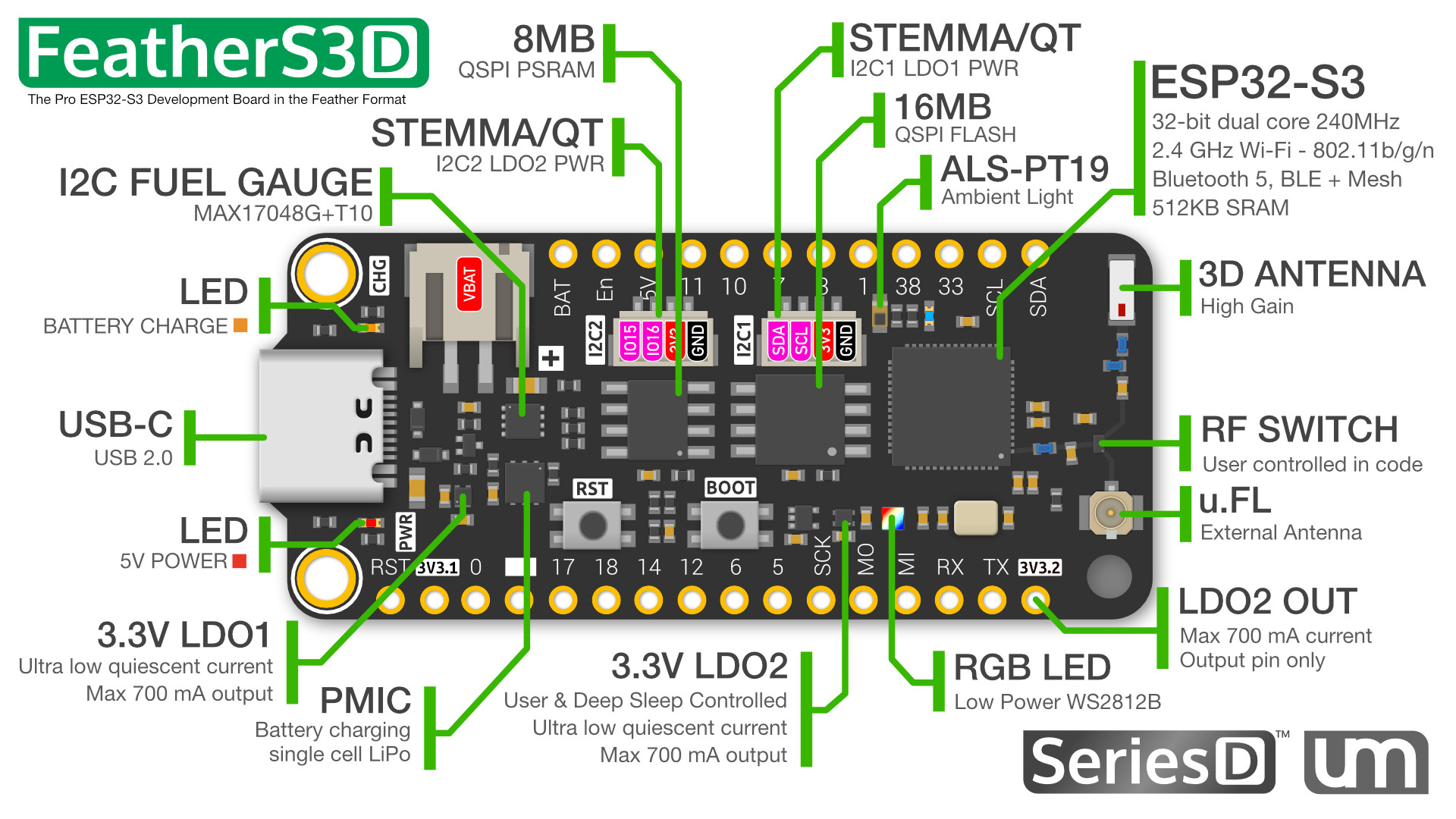
With dual Xtensa LX7 cores (up to 240 MHz) and a RISC-V Ultra Low Power coprocessor, FeatherS3[D] delivers high performance with minimal energy consumption. The board supports Wi-Fi 2.4 GHz (802.11b/g/n) and Bluetooth 5.0 + Mesh, enabling stable communication in IoT networks and wireless applications. Featuring 16 MB QSPI Flash and 8 MB PSRAM, it can handle complex projects requiring significant data storage and buffering. FeatherS3[D] is equipped with two 3.3 V / 700 mA voltage regulators, with the second (LDO2) user-controlled and automatically disabled in deep sleep mode to save energy. The board also includes a LiPo battery charging system, an updated I2C Battery Fuel Gauge, and 5V sense pins for intelligent power management.
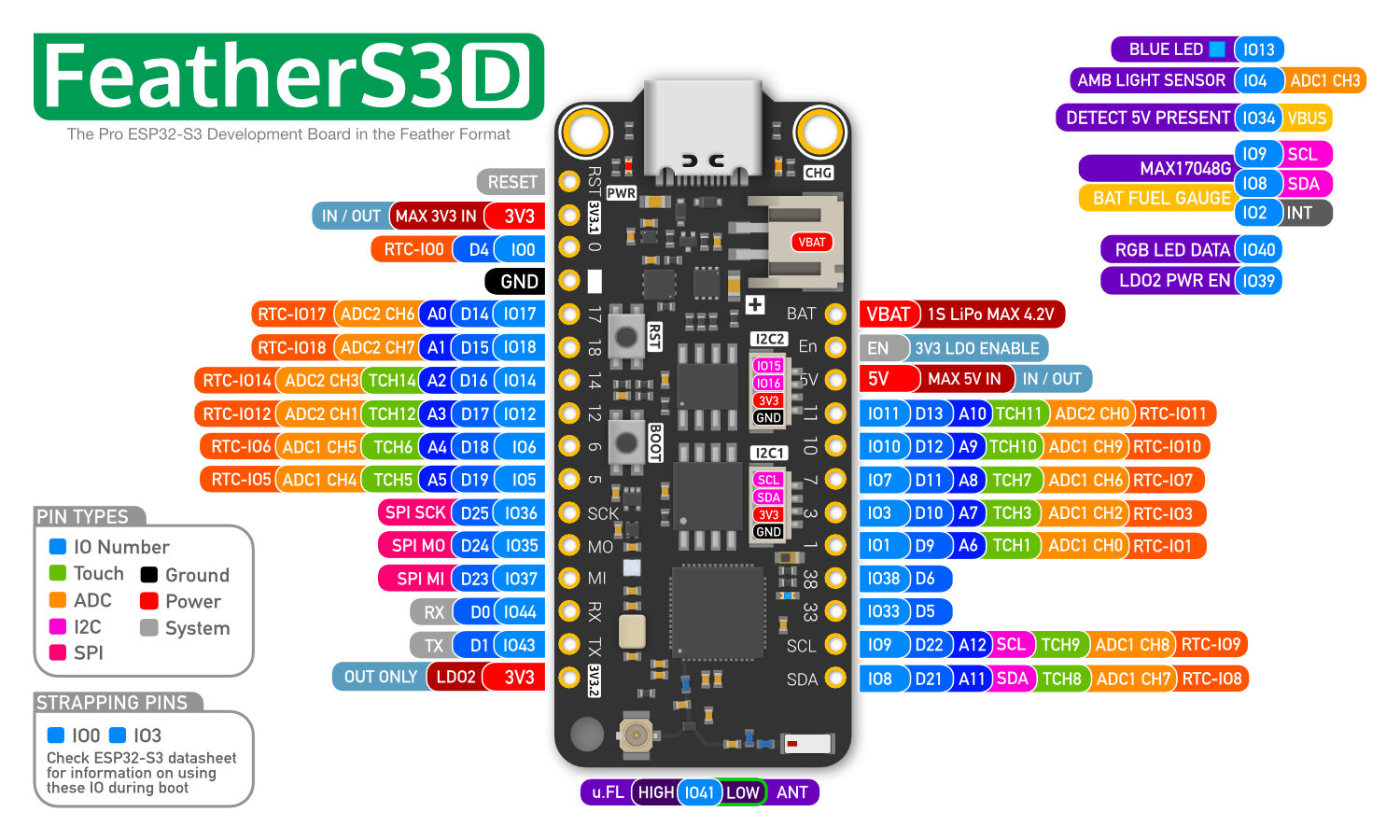
The board features an RGB LED powered from LDO2 for visual status indication. FeatherS3[D] provides two STEMMA QT connectors, each with unique IO pins, allowing configuration of two independent I2C buses or alternative use as UART or other interfaces. It includes a USB-C connector with a fully protected port for easy programming and debugging. With a built-in 3D High Gain antenna and u.FL connector, antennas can be switched programmatically via the integrated RF switch. The board has 21 GPIO pins, offering extensive connectivity for sensors and external modules. FeatherS3[D] maintains full compatibility with the Feather ecosystem, allowing easy connection of add-ons, modules, and FeatherWings, providing a compact design without compromising functionality.
Manufacturer
Responsible person
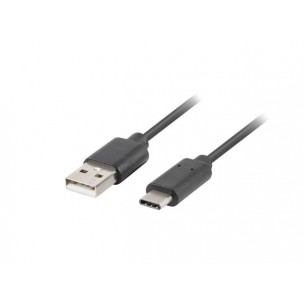
Cable with USB typ A and USB typ C connectors, cable length 0.5 m. LANBERG
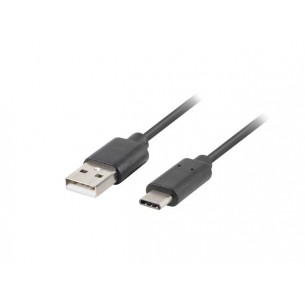
Cable with USB typ A and USB typ C connectors, cable length 1 m. LANBERG CA-USBO-10CC-0010-BK
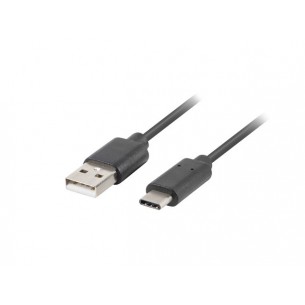
Cable with USB typ A and USB typ C connectors, cable length 1,8 m. LANBERG CA-USBO-10CC-0018-BK
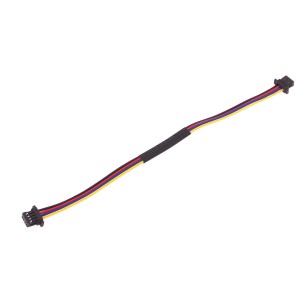
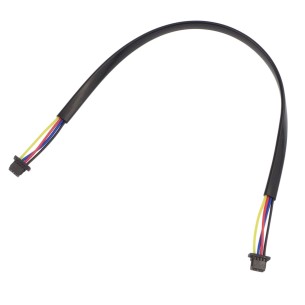
4-wire cable with a length of 100 mm. Both ends with STEMMA QT (Qwiic) plug. Adafruit 4210
4-core cable with a length of 200 mm. Both ends with STEMMA QT (Qwiic) plug. Adafruit 4401
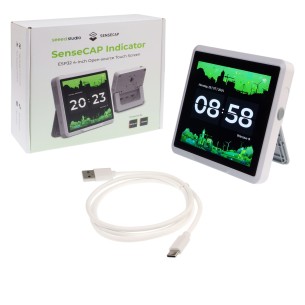
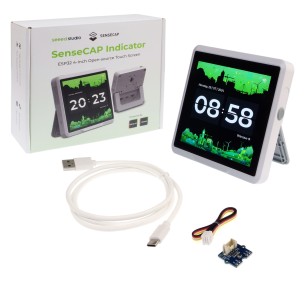
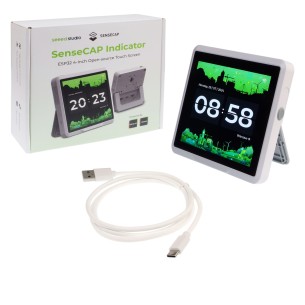
Module with a 4-inch touch display that uses two MCU systems (ESP32-S3 and RP2040) and supports Wi-Fi and BLE communication. The board is equipped with USB Type C, I2C (Grove) and analog inputs interfaces and can easily connect to other peripheral devices. Seeed Studio 114993068
Module with a 4-inch touch display that uses two MCU systems (ESP32-S3 and RP2040) and supports Wi-Fi and BLE communication. The board is equipped with USB Type C, I2C (Grove) and analog inputs interfaces and can easily connect to other peripheral devices. Seeed Studio 114993069
Module with a 4-inch touch display that uses two MCU systems (ESP32-S3 and RP2040) and supports Wi-Fi, BLE and LoRa communication. The board is equipped with USB Type C, I2C (Grove) and analog inputs interfaces and can easily connect to other peripheral devices. Seeed Studio 114993070
No product available!
Module with a 4-inch touch display that uses two MCU systems (ESP32-S3 and RP2040) and supports Wi-Fi, BLE and LoRa communication. The board is equipped with USB Type C, I2C (Grove) and analog inputs interfaces and can easily connect to other peripheral devices using a rich set of GPIOs. Seeed Studio 114993071
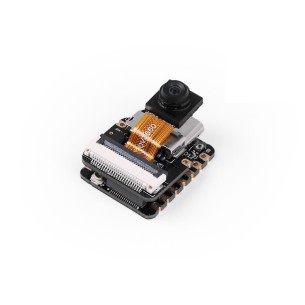
Board with WiFi and BLE Espressif ESP32-S3 module and OV3660 camera and digital microphone. It offers 8 MB Flash memory and 8 MB PSRAM. It is equipped with a USB type C connector and a WiFi/BT antenna. Seeed Studio 113991115
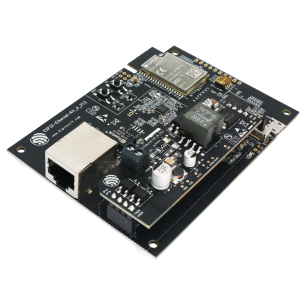
An Ethernet-Wi-Fi development board that allows you to connect Ethernet devices via Wi-Fi. It consists of two development boards: Ethernet (A) and PoE (B). The Ethernet (A) includes the ESP32-WROVER-E Bluetooth/Wi-Fi module and IP101GRI, and the PoE module (B) provides the power over Ethernet function.
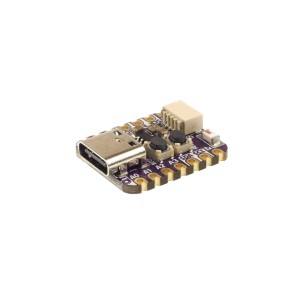
Espressif ESP32-C3 WiFi module board. It offers 4 MB of Flash memory and 400 kB of SRAM, as well as an RGB diode. It is equipped with a STEMMA QT connector. Adafruit 5700
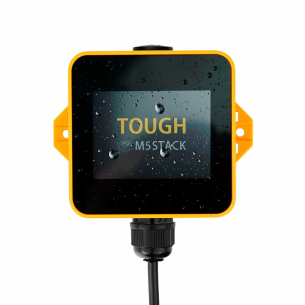
Waterproof controller with ESP32 module in an industrial-grade housing designed for demanding applications. It uses the Espressif ESP32 chip with the Xtensa® 32-bit LX6 core and a built-in Wi-Fi module. It is equipped with a 2-inch IPS display with a touch panel. M5stack K034
A set for testing ambient temperature and humidity as well as air quality. It is a combination of the M5Stack Basic host module, the SHT30 temperature and humidity sensor and the PMSA003 digital universal particle concentration sensor. M5Stack K023-b
Development kit from the M5Stack series equipped with the ESP32-S3 module. It will work well in projects related to IoT or in "wearable" devices. M5 Stack C124
No product available!
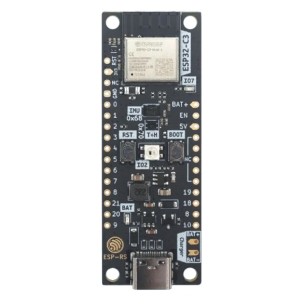
Development board based on the ESP32-C3-MINI-1 module. It offers the ability to connect via WiFi, Bluetooth version 5 and Bluetooth Mesh. It is equipped with sensors, such as the SHTC3 temperature and humidity sensor or the IMU 6 DoF ICM-42670-P sensor. Espressif Systems ESP32-C3-DevKit-RUST-1
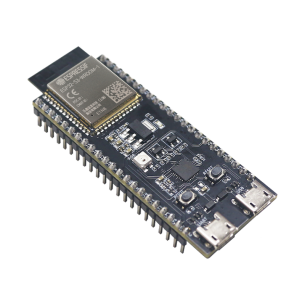
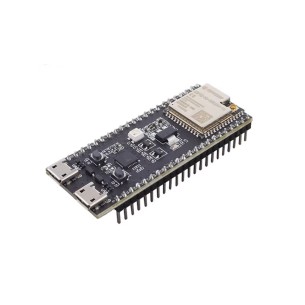
Development board with Espressif ESP32-S3-WROOM-1 module. The module has built-in 8 MB Flash memory and 8 MB PSRAM and offers WiFi and Bluetooth LE wireless communication. Espressif Systems ESP32-S3-DevKitC-1-N8R8
Development board with ESP32-S3-WROOM-1U module, featuring Wi-Fi 2.4 GHz, Bluetooth LE, 8 MB Flash, 8 MB PSRAM and an IPEX connector for an external antenna. Espressif ESP32-S3-DevKitC-1U-N8R8
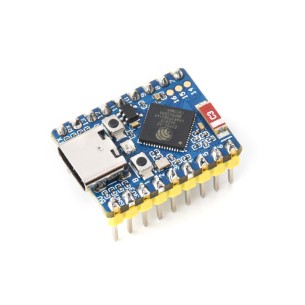
Espressif ESP32-S3 WiFi module board with 32-bit dual-core Xtensa 32-bit LX7 processor. It offers 4 MB Flash memory and 512 kB SRAM and an RGB LED. It has a built-in ceramic WiFi/BLE antenna. Waveshare ESP32-S3-Zero
No product available!
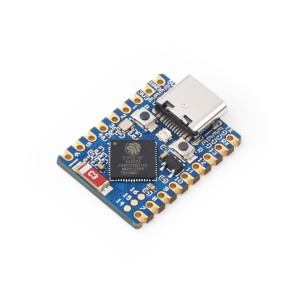
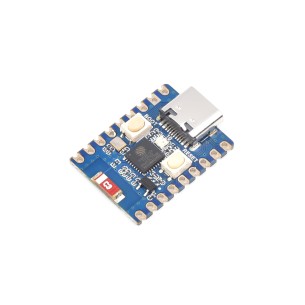
Espressif ESP32-C3FH4 WiFi module board with RISC-V core. It offers 4 MB Flash memory and 400 kB SRAM and an RGB LED. It has a built-in ceramic WiFi/BLE antenna. Waveshare ESP32-C3-Zero
No product available!
Espressif ESP32-S3 WiFi module board with 32-bit dual-core Xtensa 32-bit LX7 processor. It offers 4 MB Flash memory and 512 kB SRAM and an RGB LED. It has a built-in ceramic WiFi/BLE antenna. Waveshare ESP32-S3-Zero-M
No product available!
The FeatherS3[D] is a development board based on the ESP32-S3 in the popular Feather form factor, combining the advantages of the previous FeatherS3 and FeatherS3 uFL models. Equipped with a dual-core Xtensa LX7 240MHz processor, a RISC-V coprocessor, 16MB Flash, and 8MB PSRAM, it delivers high performance and the ability to implement complex projects. The board supports 2.4GHz Wi-Fi, Bluetooth 5.0 + Mesh, two 3.3V regulators, a LiPo battery charging system with health monitoring, and an RGB LED.