.png)



zł101.00 tax excl.
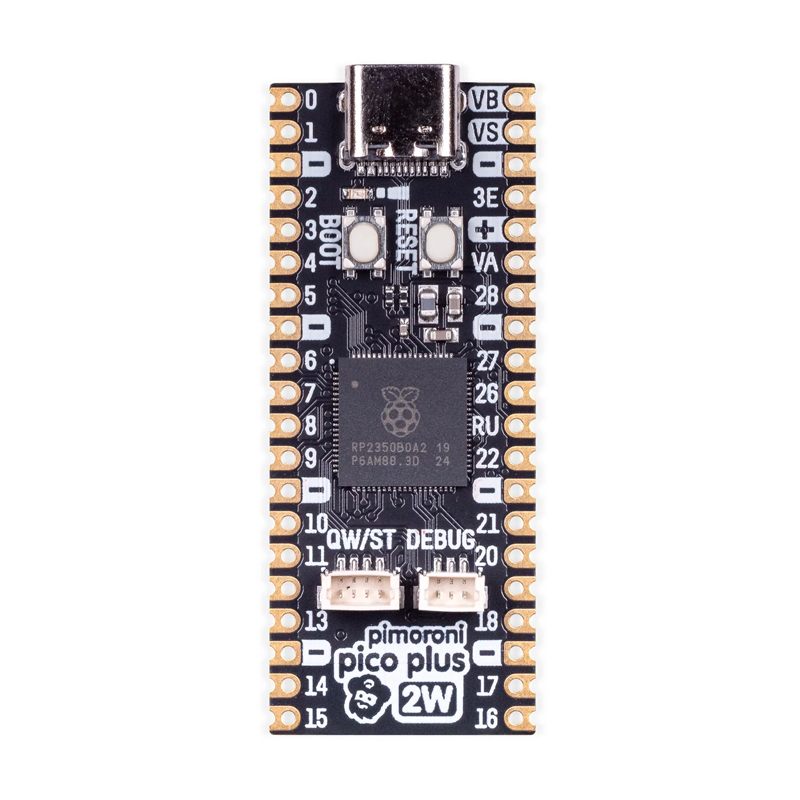
An advanced development board based on the modern RP2350 microcontroller, designed for demanding embedded projects, IoT, and prototyping. It maintains full compatibility with the Raspberry Pi Pico form factor while offering significantly higher performance thanks to a dual-core Arm Cortex-M33 processor and ample Flash and PSRAM. The built-in Raspberry Pi RM2 module provides 2.4 GHz Wi-Fi and Bluetooth connectivity, enabling easy integration with networks and cloud services. A USB-C connector, a Qw/ST interface for I²C modules, RESET and BOOT buttons, and a user LED make the Pico Plus 2W a convenient and versatile tool. Pimoroni PIM726
Pimoroni Pico Plus 2 W is an expanded, high-end development board based on the modern RP2350 chip, designed for demanding embedded, IoT, and prototyping projects. While maintaining full compatibility with the Raspberry Pi Pico form factor, it delivers significantly higher computing power and a rich set of additional features. At its core is a fast, dual-core Arm Cortex-M33 processor, offering high performance with low power consumption. The “W” version is equipped with the Raspberry Pi RM2 module, enabling Wi-Fi 2.4 GHz and Bluetooth wireless connectivity, making it an excellent choice for networked and cloud-connected projects.
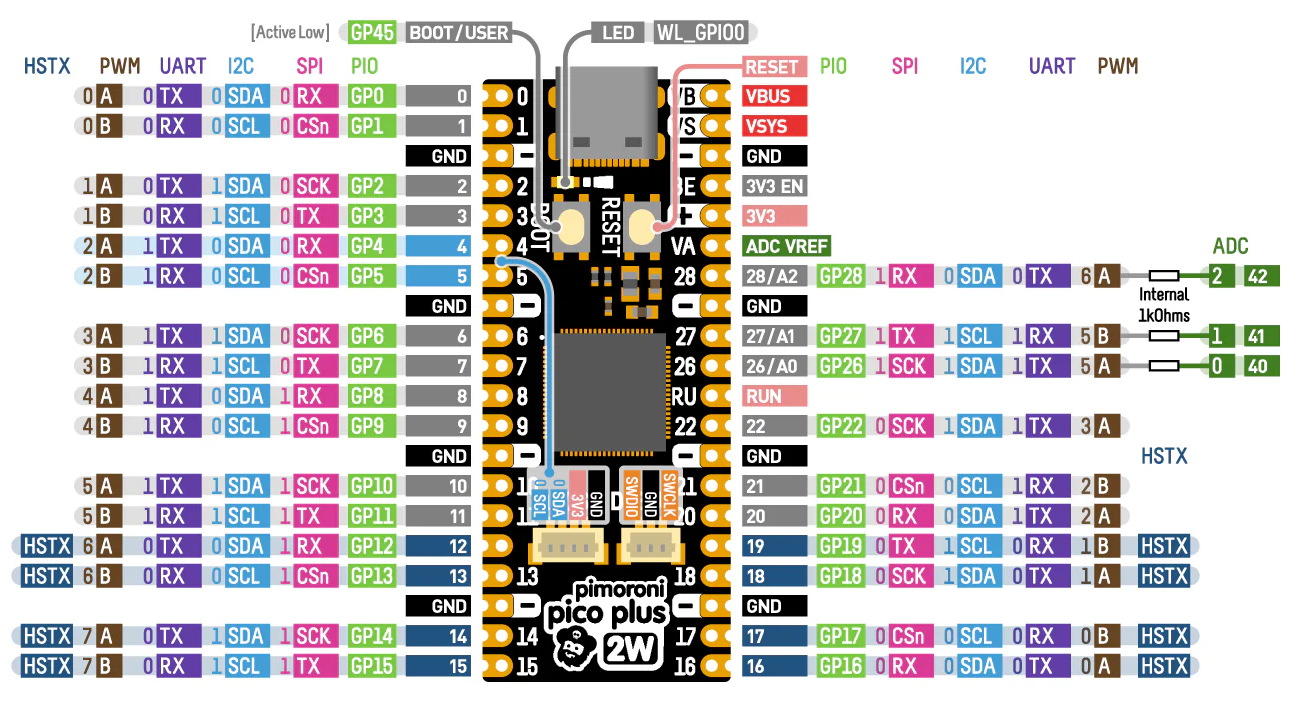
The generous amount of Flash memory and PSRAM allows for more complex applications, data buffering, and working with graphics or audio. Thanks to the USB-C connector, the board is convenient to power and program, while clearly labeled pins make rapid prototyping easier. An additional advantage is the Qw/ST (Qwiic / STEMMA QT) connector, which enables simple connection of I²C sensors and modules. The RESET and BOOT buttons improve usability, and the user LED allows for quick diagnostics. Pico Plus 2 W is well suited for both hobbyists and professionals building advanced control devices, communication systems, or educational projects.
Data sheet
Manufacturer
Responsible person
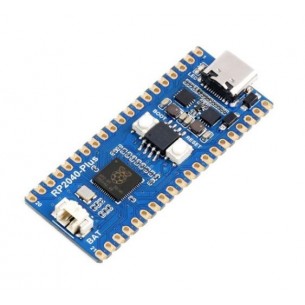
The board with the RP2040 microcontroller equipped with two ARM Cortex-M0+ cores, which work at a frequency of 133 MHz, 264 kB RAM. The board also has 4 MB of QSPI flash memory. The system can be programmed in C/C++ or MicroPython. Waveshare RP2040-Plus
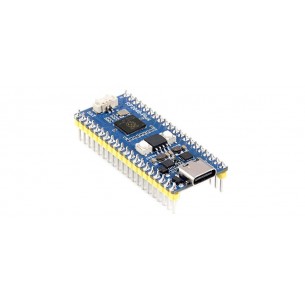
The board with the RP2040 microcontroller equipped with two ARM Cortex-M0+ cores, which work at a frequency of 133 MHz, 264 kB RAM. The board also has 4 MB of QSPI flash memory. The system can be programmed in C/C++ or MicroPython. Waveshare RP2040-Plus-M
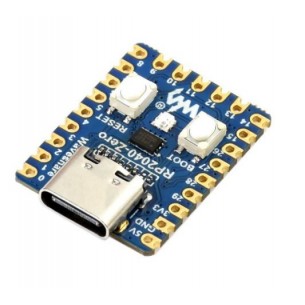
The board with the RP2040 microcontroller equipped with two ARM Cortex-M0+ cores, which work at a frequency of 133 MHz, 264 kB RAM. The board also has 2 MB of QSPI flash memory. The system can be programmed in C/C++ or MicroPython. Waveshare RP2040-Zero
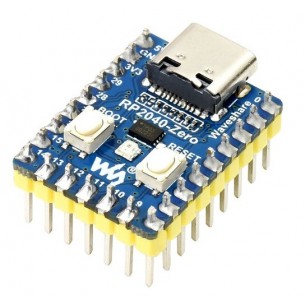
The board with the RP2040 microcontroller equipped with two ARM Cortex-M0+ cores, which work at a frequency of 133 MHz, 264 kB RAM. The board also has 2 MB of QSPI flash memory. The system can be programmed in C/C++ or MicroPython. Waveshare RP2040-Zero-M
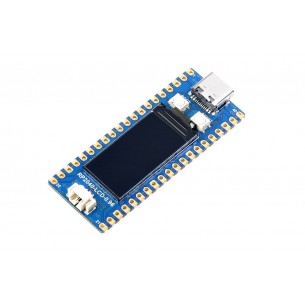
The board with the RP2040 microcontroller equipped with two ARM Cortex-M0+ cores, which work at a frequency of 133 MHz, 264 kB RAM. The board also has 2 MB of QSPI flash memory. The system can be programmed in C/C++ or MicroPython. Waveshare RP2040-LCD-0.96
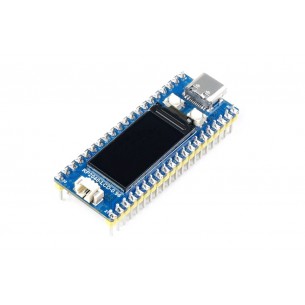
The board with the RP2040 microcontroller equipped with two ARM Cortex-M0+ cores, which work at a frequency of 133 MHz, 264 kB RAM. The board also has 2 MB of QSPI flash memory. The system can be programmed in C/C++ or MicroPython. Waveshare RP2040-LCD-0.96-M
The board with the RP2040 microcontroller equipped with two ARM Cortex-M0 + 133 MHz cores, 264 kB RAM. The board also has 8 MB of QSPI flash memory. The circuit can be programmed in C/C++, CircuitPython or MicroPython. Adafruit 5302
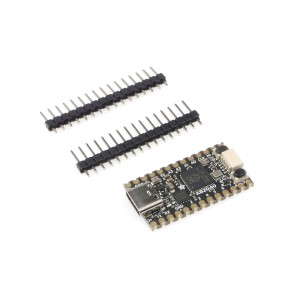
Mini board with RP2040 microcontroller equipped with two ARM Cortex-M0 + 133 MHz cores, 264 kB RAM. The board also has 8 MB of QSPI flash memory. The circuit can be programmed in C/C++, CircuitPython or MicroPython. Pimoroni SP011
No product available!
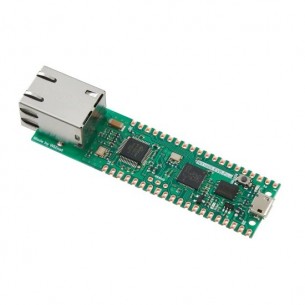
Board with RP2040 microcontroller and W5100S network chip. The module is equipped with an Ethernet connector. WIZnet W5100S-EVB-Pico
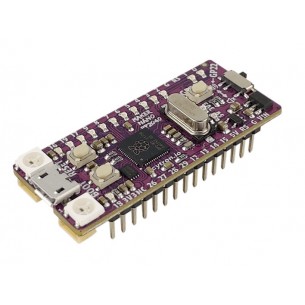
Development board equipped with RP2040 microcontroller, RGB LED diodes, buzzer and Qwiic/STEMMA QT connectors. Pin spacing compatible with Arduino Nano. Cytron MAKER-NANO-RP2040
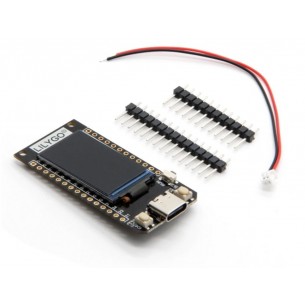
The board with the RP2040 microcontroller equipped with two ARM Cortex-M0+ cores. The board also has 4 MB of QSPI flash memory. 1.14" LCD module. TTGO T-Display RP2040
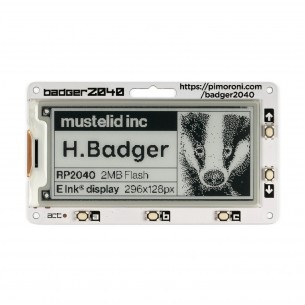
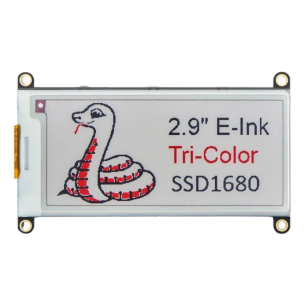
Module with ePaper 2.9" display and RP2040 microcontroller. Equipped with QW/ST connector. Pimoroni PIM607
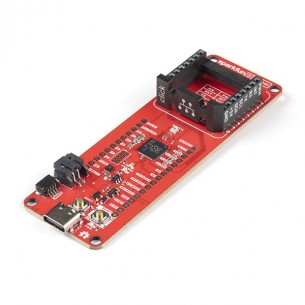
Development board with RP2040 microcontroller. Equipped with a microBUS connector, it can work with Qwiic expansion boards. SprakFun DEV-18721
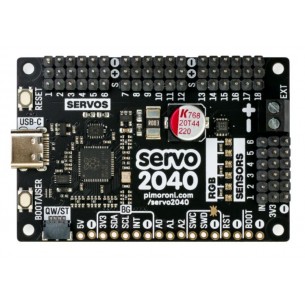
Servo driver based on the Raspberry Pi RP2040 microcontroller. It allows you to control up to 18 servos, has 6 analog inputs and a QW/ST connector for connecting additional sensors. Pimoroni PIM613
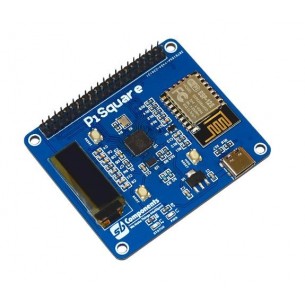
Development board with RP2040 and ESP-12E microcontroller. Equipped with 0.91" OLED display. SB Components 24186
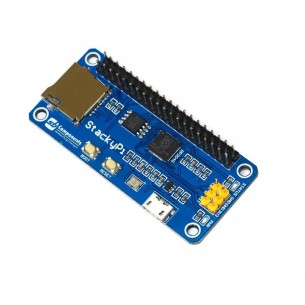
The board with the RP2040 microcontroller, which provides a set of 2x20-pin connectors to which you can connect the HATs of the Raspberry Pi. SB Components 24032
An advanced development board based on the modern RP2350 microcontroller, designed for demanding embedded projects, IoT, and prototyping. It maintains full compatibility with the Raspberry Pi Pico form factor while offering significantly higher performance thanks to a dual-core Arm Cortex-M33 processor and ample Flash and PSRAM. The built-in Raspberry Pi RM2 module provides 2.4 GHz Wi-Fi and Bluetooth connectivity, enabling easy integration with networks and cloud services. A USB-C connector, a Qw/ST interface for I²C modules, RESET and BOOT buttons, and a user LED make the Pico Plus 2W a convenient and versatile tool. Pimoroni PIM726