.png)



zł3.66 tax excl.
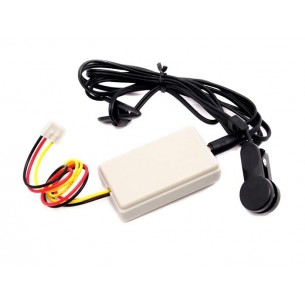
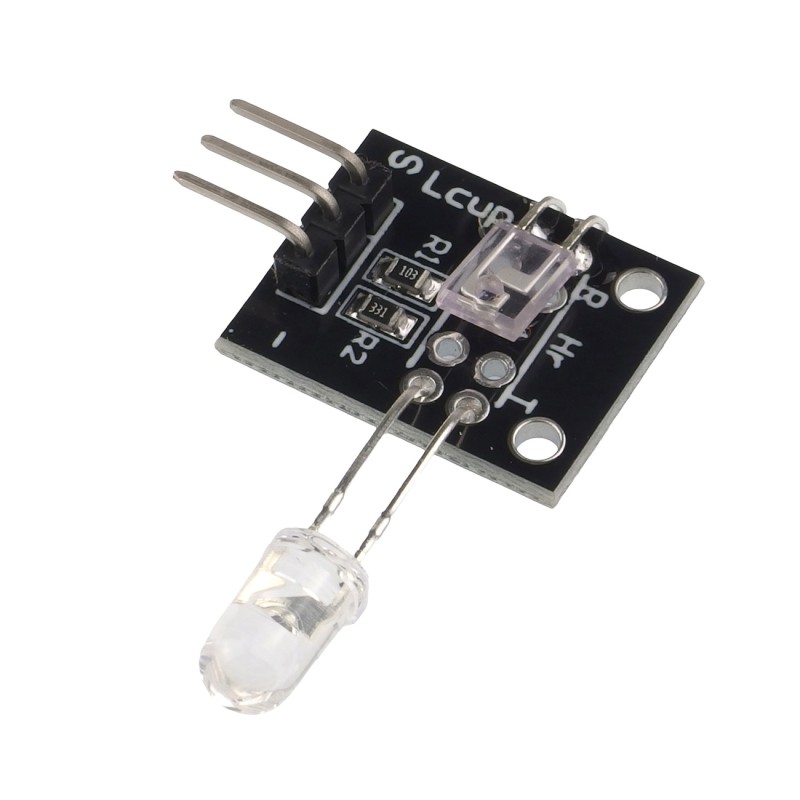
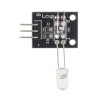
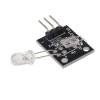
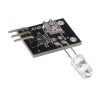
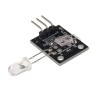
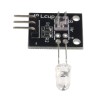
Iduino SE049 is a simple and functional heart rate sensor, ideal for educational and hobbyist projects in the fields of electronics and bioengineering. Thanks to its compatibility with Arduino and intuitive operation, it allows for the creation of custom measurement devices such as pulse meters or smart health-monitoring wristbands. It is suitable for mobile and stationary applications as part of a diagnostic or training system.
The Iduino SE049 sensor enables heart rate measurement by analyzing the light reflected from the finger. A built-in phototransistor detects changes in blood flow, while a red LED indicates each detected pulse. With 5 V power supply and an analog output, the sensor can be easily integrated with development boards such as the Arduino UNO to create DIY projects featuring heart rate monitoring. Its compact size allows the sensor to be mounted directly on the finger.
Manufacturer
Responsible person
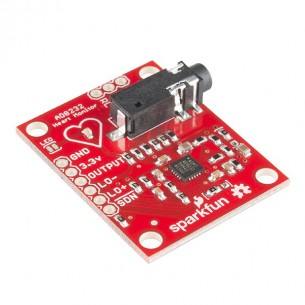
A module with a sensor used to measure the activity of the heart. It allows you to strengthen and extract the heartbeat signals from biomedical electrodes. It has an analogue output and a heartbeat indicator (LED). SparkFun SEN-12650
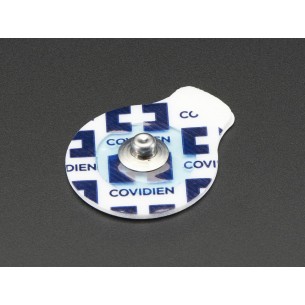
Muscle Sensor Surface EMG Electrodes allow you to control your projects with your muscles. Adafruit 2773
No product available!
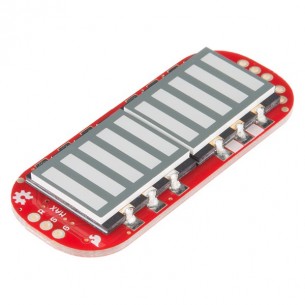
Designed to pair with the MyoWare Muscle Sensor; 10-segment bar graph shows the magnitude of the measured signal. The more muscle activation measured, the higher up the board the lit LEDs will go. DEV-13688
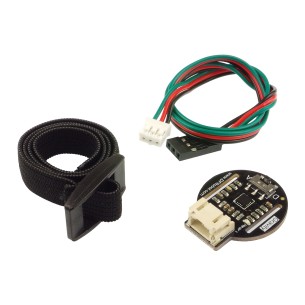
Gravity: Heart Rate Monitor Sensor is a sensor used to measure heart activity. Adapted for easy use with Arduino. SparkFun SEN0213
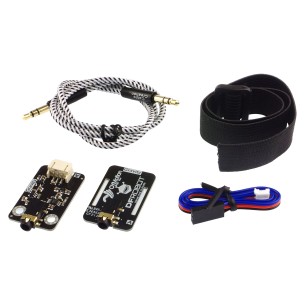
Heart rate measurement module compatible with Arduino and Raspberry Pi (Gravity: Heart Rate Monitor Sensor For Arduino). It uses PPG technique, which in a simple and cheap way is able to measure the changing volume of blood. DFRobot SEN0203
No product available!
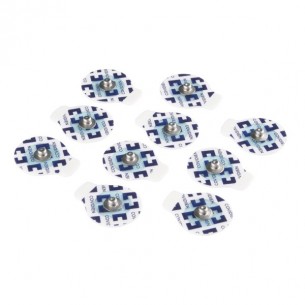
Disposable biomedical electrodes that allow you to perform experimental ECG measurements. DFRobot FIT0510
No product available!
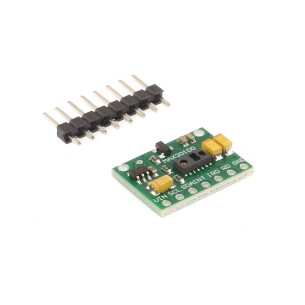
The module with the MAX30100 chip that monitors the oxygen content in the blood and the heart rate. It consists of two LED diodes, a photodetector, optimized optics and low noise analog signal processing. modMAX30100
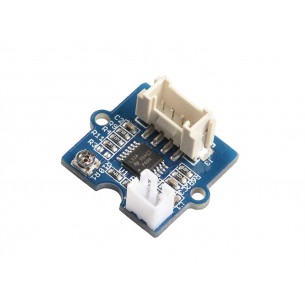
Module with a pulse sensor (heart rate). The board is equipped with a Grove connector and a digital output in the form of pulses. Seeed Studio 101020033
No product available!
A module with an EMG sensor that detects the activity of human muscles and neurons. Generates an analog signal in the range from 0 to 3 V on the output, it does not require the use of a conductive gel. DFRobot SEN0240
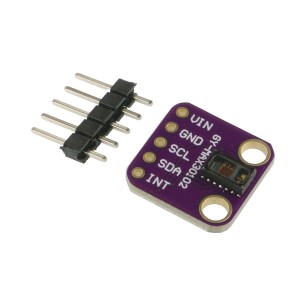
Module with pulse and SpO2 level sensor (oxygen saturation level). The module is based on the MAX30102 chip and communicates via the I2C interface.
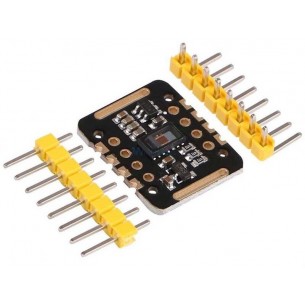
Heart rate monitor module based on the MAX30102 chip. Powered with the voltage from 3.3 to 5V, communication via the I2C interface.
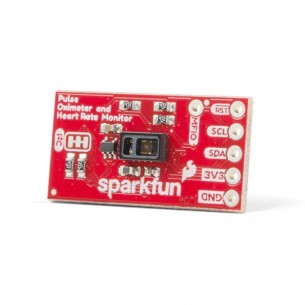
Heart rate monitor module based on the popular MAX30101 and MAX32664. The board is equipped with connectors compliant with the Qwiic standard. SparkFun SEN-15219
Module with GSR skin resistance sensor. It is used to measure skin activity, which reflects the stress response and experienced emotions. The board is equipped with a Grove connector and communicates via an analog interface. Seeed Studio 101020052
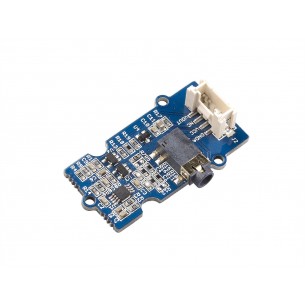
Module with an EMG signal detector. The board is equipped with a Grove connector and has an analog output. Seeed Studio 101020058
Iduino SE049 is a simple and functional heart rate sensor, ideal for educational and hobbyist projects in the fields of electronics and bioengineering. Thanks to its compatibility with Arduino and intuitive operation, it allows for the creation of custom measurement devices such as pulse meters or smart health-monitoring wristbands. It is suitable for mobile and stationary applications as part of a diagnostic or training system.