


zł107.75 tax excl.
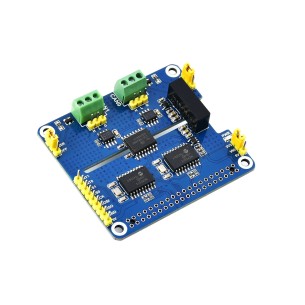
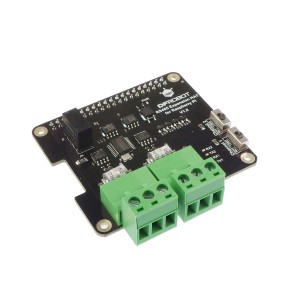
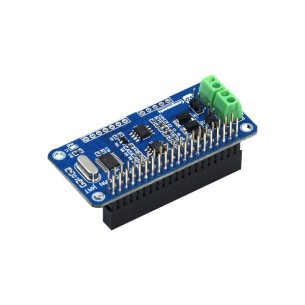
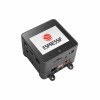
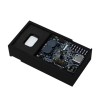
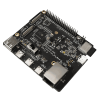
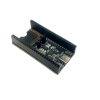
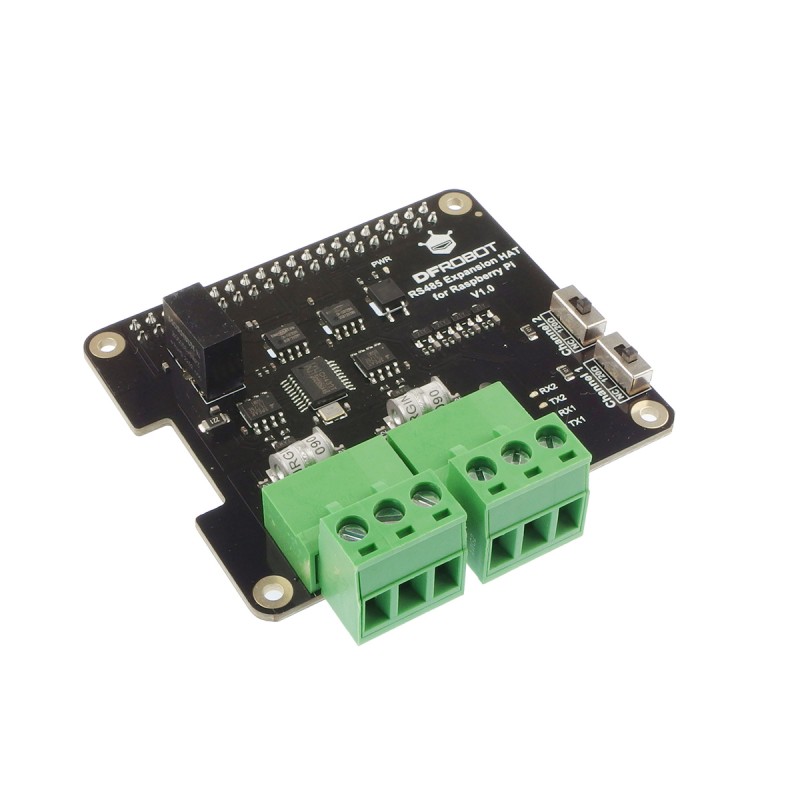
A two-channel RS485 expansion module designed for the Raspberry Pi. It uses the TP75176E transceiver and CH432T chip and offers a stable connection between devices. DFRobot DFR0824
A two-channel RS485 expansion module designed for the Raspberry Pi. It uses the TP75176E transceiver and the CH432T chip. It offers a stable and efficient connection between devices and improves the reliability and robustness of data transmission. It has built-in protection circuits such as lightning and surge protection, TVS diode and power supply isolation to effectively protect the Raspberry Pi development board.
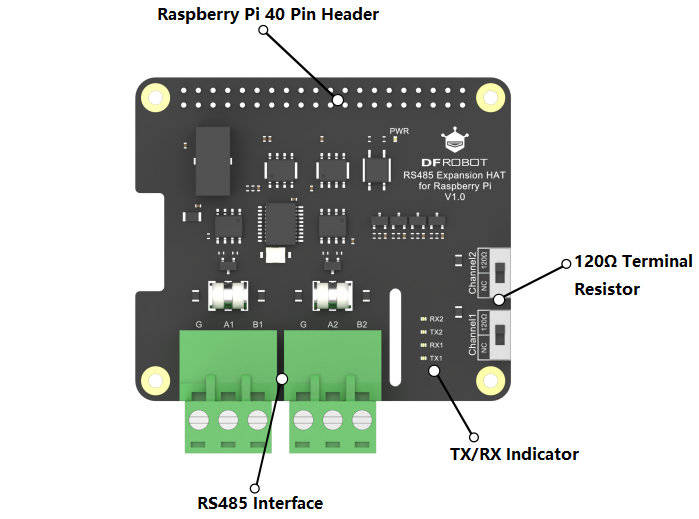
RS485 is a widely used serial communication standard with features such as good noise suppression, long transmission distance and the ability to transmit multiple data. It transmits data using the differential transmission method and requires a pair of twisted pair cables and two termination resistors to eliminate signal reflections during long-distance communication. It is mainly used in industrial applications.
The RS485 module has a type 5.08-3P terminal connector for easy and secure cable connection. It is also compatible with Raspberry Pi 3B+/4B for easy integration into popular microcomputer platforms. Full documentation is available on the product page.
Data sheet
Manufacturer BTC Korporacja sp. z o. o. Lwowska 5 05-120 Legionowo Poland sprzedaz@kamami.pl 22 767 36 20
Responsible person BTC Korporacja sp. z o. o. Lwowska 5 05-120 Legionowo Poland sprzedaz@kamami.pl 22 767 36 20
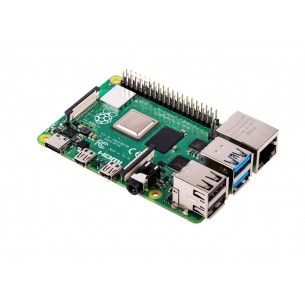
The latest version of the Raspberry Pi series: Raspberry Pi 4 model B with quad-core SoC (Broadcom BCM2711, Cortex-A72) working at 1.8GHz, 1GB RAM LPDDR4, Broadcom VideoCore VI layout.
No product available!
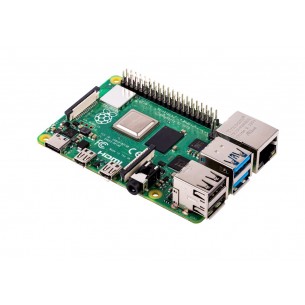
The latest version of the Raspberry Pi series: Raspberry Pi 4 model B with quad-core SoC (Broadcom BCM2711, Cortex-A72) working at 1.8GHz, 2GB RAM LPDDR4, Broadcom VideoCore VI.
No product available!
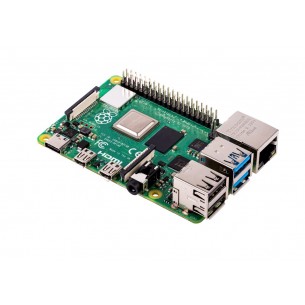
The long-awaited Raspberry Pi 4 model B with the SoC Broadcom BCM2711 (4 x Cortex-A72) running at 1.8 GHz, 3 GB LPDDR4 RAM and the Broadcom VideoCore VI graphics chip
HAT module designed for Raspberry Pi minicomputer. Powala adds two CAN interfaces to the project. Waveshare 2-CH CAN HAT
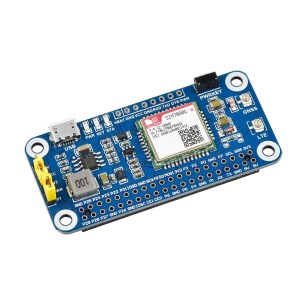
The module from SIM7080G is designed for NB-IoT and Cat-M communications. It also enables the use of GNSS systems for positioning. Waveshare SIM7080G Cat-M/NB-IoT HAT (EN)
No product available!
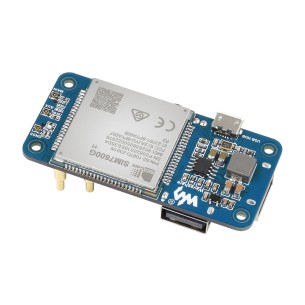
SIMCom 4G SIM7600G-H module kit designed to work with Raspberry Pi minicomputer. It supports 4G, 3G, 2G networks and GNSS positioning. Waveshare SIM7600G-H 4G HAT (B)
No product available!
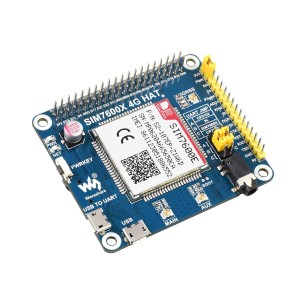
GSM/GNSS expansion module dedicated to Raspberry Pi minicomputers. Allows to equip RPi with LTE Cat-1/3G/2G communication and positioning within GPS, BeiDou, Glonass, GALILEO, QZSS navigation systems. Waveshare SIM7600E LTE Cat-1 HAT
No product available!
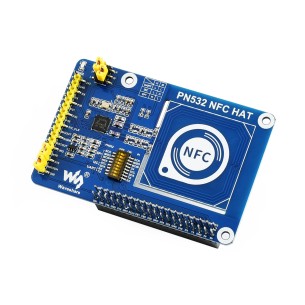
NFC reader module dedicated to the Raspberry Pi. It is based on the PN532 operating in the 13.56 MHz frequency range. Waveshare PN532 NFC HAT
No product available!
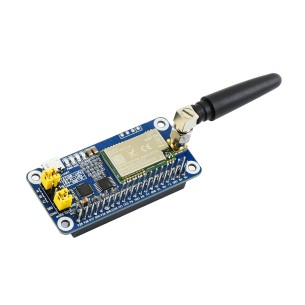
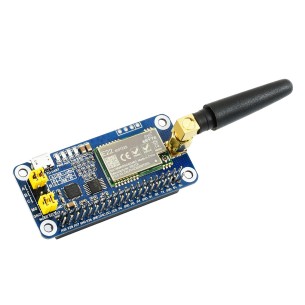
Expansion board with LoRa E22-900T22S module for Raspberry Pi. Allows communication in the 868 MHz frequency band. Waveshare SX1262 868M LoRa HAT
Expansion board with LoRa E22-400T22S module for Raspberry Pi. It supports the LoRaWAN protocol and allows communication in the 433 MHz frequency band. Waveshare SX1268 433M LoRa HAT
No product available!
A two-channel RS485 expansion module designed for the Raspberry Pi. It uses the TP75176E transceiver and CH432T chip and offers a stable connection between devices. DFRobot DFR0824
The EM060K-GL LTE Cat-6 module kit is designed for use with the Raspberry Pi minicomputer. It supports communication over the high-speed LTE-A network and GNSS positioning. Waveshare EM060K-GL LTE Cat-6 HAT
No product available!
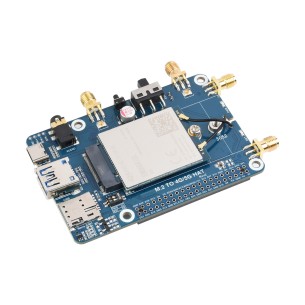
The Quectel 5G RM520N-GL module kit is designed for use with the Raspberry Pi minicomputer. It supports 5G SA or NSA networks and is backwards compatible with 4G and 3G networks. Waveshare RM520N-GL 5G HAT (with case) (EU)
No product available!
Expansion board with LoRa Node SX1262 module and GNSS L76K dedicated for Raspberry Pi. It supports the LoRaWAN protocol and allows communication in the 868 MHz frequency band and enables positioning within the GPS, GLONASS, BDS and QZSS systems. Waveshare SX1262 868/915M LoRaWAN/GNSS HAT
Expansion board with LoRa Node SX1262 module and GNSS L76K dedicated for Raspberry Pi. It supports the LoRaWAN protocol and allows communication in the 433 MHz frequency band and enables positioning within the GPS, GLONASS, BDS and QZSS systems. Waveshare SX1262 433/470M LoRaWAN/GNSS HAT
Expansion board with LoRa Node SX1262 module dedicated for Raspberry Pi. It supports the LoRaWAN protocol and allows communication in the 433 MHz frequency band. Waveshare SX1262 433/470M LoRaWAN HAT
No product available!
Expansion board with LoRa Node SX1262 module dedicated for Raspberry Pi. It supports the LoRaWAN protocol and allows communication in the 868 MHz frequency band. Waveshare SX1262 868/915M LoRaWAN HAT
No product available!
HAT module designed for the Raspberry Pi minicomputer. It allows you to add an RS485 interface and a CAN bus to the project, allowing for wired communication of many devices over long distances. SB Components 21444
The KAmodRPi UART RS485 ISO is an advanced RS485 bus transceiver for the Raspberry Pi, featuring automatic transmission direction control, galvanic isolation, surge protection, and support for up to 128 modules at a transmission speed of up to 500 kbps, powered by 5V with low power consumption
A two-channel RS485 expansion module designed for the Raspberry Pi. It uses the TP75176E transceiver and CH432T chip and offers a stable connection between devices. DFRobot DFR0824