.png)



zł189.91 tax excl.
Adafruit 364
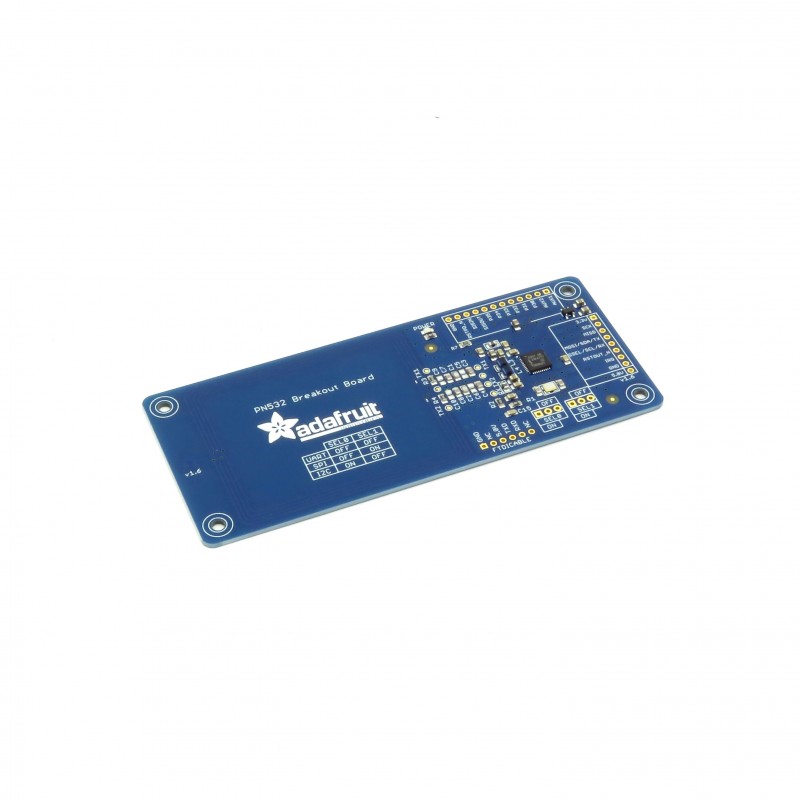
The PN532 is the most popular NFC chip, and is what is embedded in pretty much every phone or device that does NFC. It can pretty much do it all, such as read and write to tags and cards, communicate with phones (say for payment processing), and act like a NFC tag. If you want to do any sort of embedded NFC work, this is the chip youll want to use!
NFC (Near Field Communications) is a way for two devices very close to each other to communicate. Sort of like a very short range bluetooth that doesnt require authentication. It is an extension of RFID, so anything you can do with RFID you can do with NFC. You can do more stuff with NFC as well, such as communicate bi-directionally with cell phones
Because it can read and write tags, you can always just use this for RFID-tag projects. We carry a few different tags that work great with this chip. It can also work with any other NFC/RFID Type 1 thru 4 tag (and of course all the other NXP MiFare type tags)
The PN532 is also very flexible, you can use 3.3V TTL UART at any baud rate, I2C or SPI to communicate with it. This chip is also strongly supported by libnfc, simply plug in an FTDI cable and use the FTDI serial port device to communicate - this lets you do NFC dev using any Linux/Mac/Windows computer! We also include onboard power LED, 3.3V regulator and an FTDI header so you can plug in an FTDI friend or FTDI cable and use with libnfc.
Comes with: the PN532 breakout board including a tuned 13.56MHz stripline antenna, 0.1" header, 2 jumpers/shunts and a 4050 level shifter chip. We also toss in a 13.56MHz 1K card!
Manufacturer
Responsible person
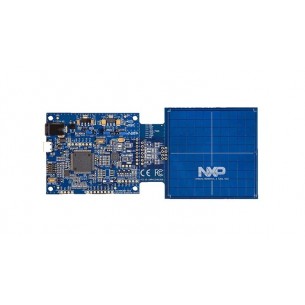
A development kit designed for NFC applications. It includes the CLEV6630B board based on the LPC1769 microcontroller, NFC cards and a set of antennas. NXP OM26630FDK
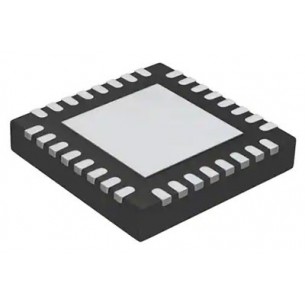
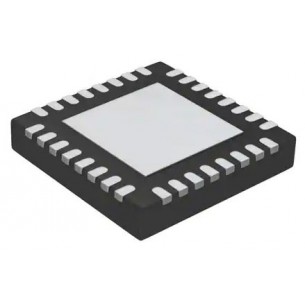
RFID Reader/Transponder IC 13.56MHz ISO 14443 I2C, SPI, UART, -25..85C, VFQFN32, NXP
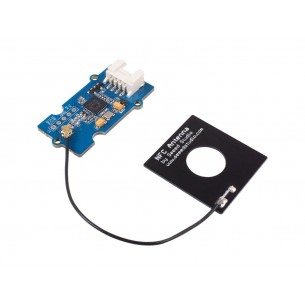
A module with an NFC PN532 transceiver, which supports proximity communication at the frequency of 13.56 MHz. The board is equipped with a Grove connector and communicates via the I2C or UART interface. Seeed Studio 113020006
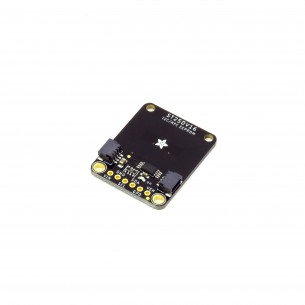
Module with an RFID tag based on the ST25DV16K chip. It can be reprogrammed via the I2C bus. Equipped with STEMMA QT connector and PCB antenna. Adafruit 4701
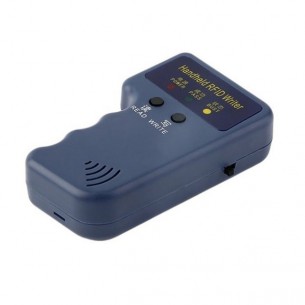
Handheld RFID card reader enabling card duplication. It allows you to read data from one card and write it to the other
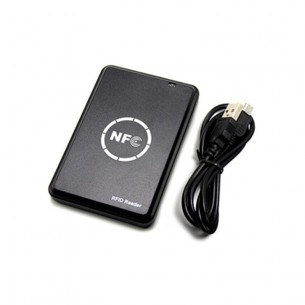
NFC reader with USB interface. It allows you to easily read data from an NFC/RFID card using a computer
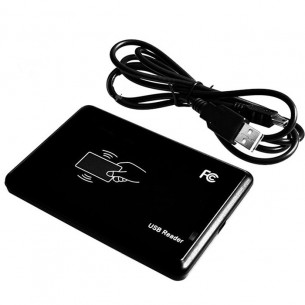
NFC reader with USB interface. It allows you to easily read data from an NFC/RFID card using a computer. JT308
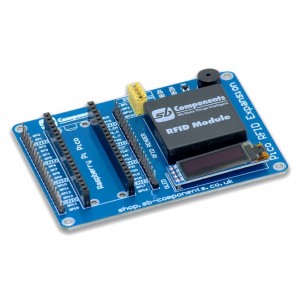
Module with an RFID reader designed to work with the Raspberry Pi Pico. Equipped with an OLED display and a buzzer. SB Components 21192
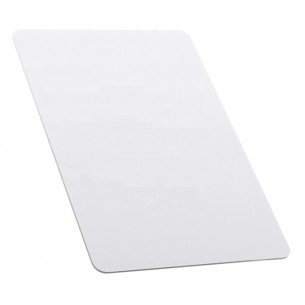
Card with RFID tag for systems operating at 125 KHz. Provides the ability to read and write the ID number
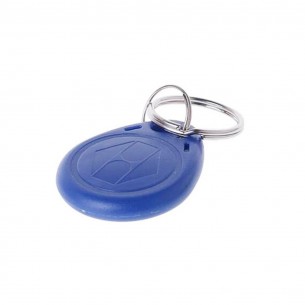
A small key ring with an RFID tag for systems operating at 125 KHz. Provides the ability to read and write a unique ID number
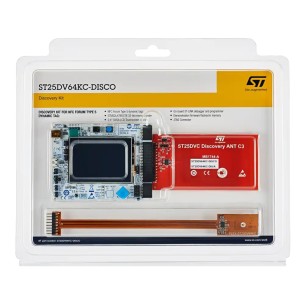
Demo kit for prototyping applications and devices based on NFC ST25DV64KC tags. STMicroelectronics ST25DV64KC-DISCO
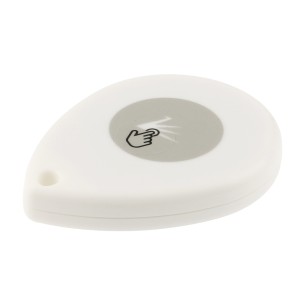
FSC-BP108 iBeacon is a durable and energy-efficient Bluetooth 5.1 tag with IP67 protection, supporting popular beacon formats and enabling remote configuration via a mobile app. It is suitable for localization systems, asset tracking, and proximity-based marketing.
No product available!
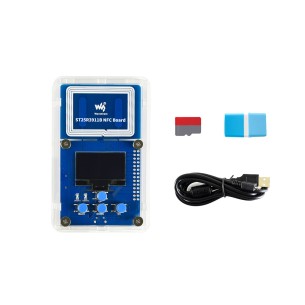
Kit with ST25R3911B-based NFC module and microSD card. Waveshare ST25R3911B NFC Eval Kit
No product available!
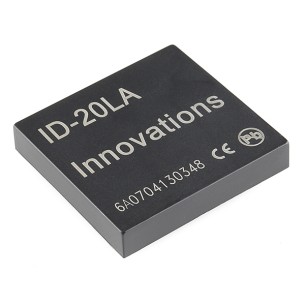
The ID-20LA RFID reader from ID Innovations has an operating frequency of 125 kHz. It has a built-in antenna and pins with 2 mm spacing. Among other things, it is designed to work with the RFID USB Reader module. SparkFun SEN-11828
No product available!
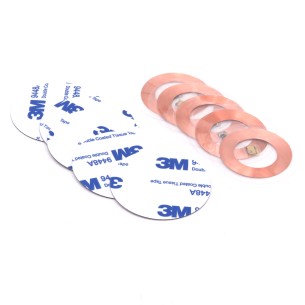
RFID tag for systems operating at 125 KHz. Provides the ability to read and write a unique ID number
No product available!
Adafruit 364