.png)



zł28.49 tax excl.
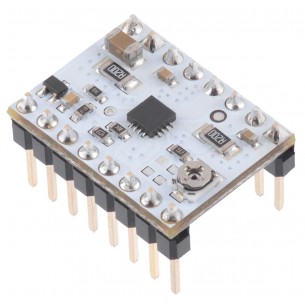
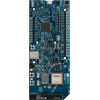
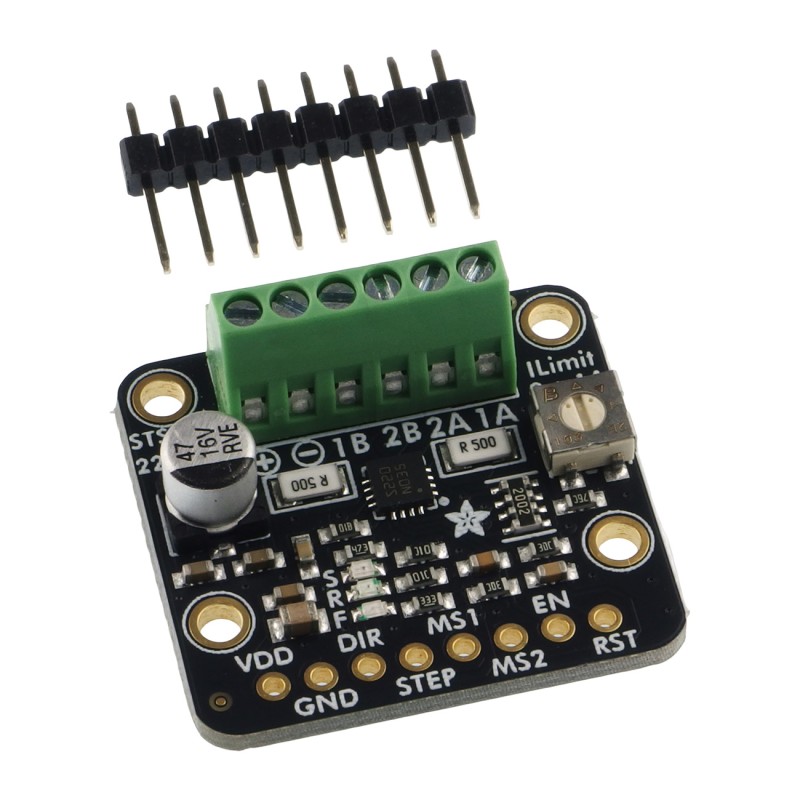
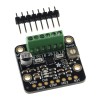
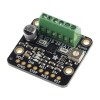
This stepper motor driver offers microsteps down to 1/256th of a step, ensuring exceptional precision and smooth motion. Its simple operation—requiring only two microcontroller pins—and low operating voltage (1.8 to 10V) make it ideal for energy-efficient mobile, robotic, and DIY applications. Integrated connectors, LEDs, and a potentiometer for current adjustment facilitate prototyping and secure integration with popular platforms like Arduino and ESP32. Adafruit 6353
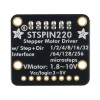
The STSPIN220 is a versatile stepper motor driver ideal for projects such as 3D printers, CNC machines, or robotics, where precision and smooth motion are essential. With built-in microstepping up to 1/256 step, it enables highly accurate motor control. The driver is exceptionally easy to use—only two output pins from the microcontroller (direction and step) are required, with no need for PWM or specialized timers. Additionally, the STSPIN220 operates at a low supply voltage range of 1.8 V to 10 V, making it a perfect choice for small, energy-efficient designs.
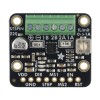
The board features screw terminals for connecting power and motor wires, as well as LEDs that indicate direction and step execution. The built-in potentiometer allows for adjustable current limiting, ensuring safety for both the driver and the motor. The board is ideal for prototyping and is fully compatible with platforms such as Arduino, Raspberry Pi, and ESP32. It also includes four mounting holes, simplifying integration into finished projects. This is a complete, ready-to-use solution for achieving precise stepper motor control in your application.
Data sheet
Manufacturer
Responsible person
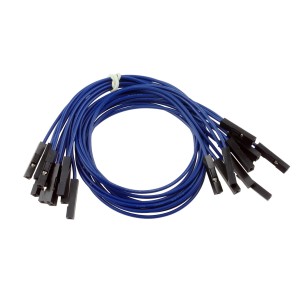
Cables for evaluation boards, set of 10 pcs., blue colour
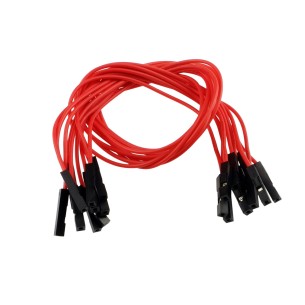
Cables for evaluation boards, set of 10 pcs., red colour
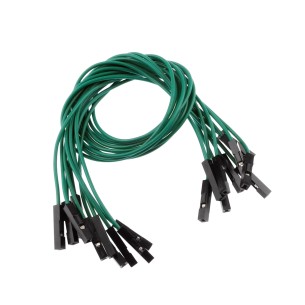
Cables for evaluation boards, set of 10 pcs., green colour
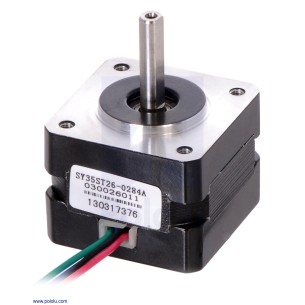
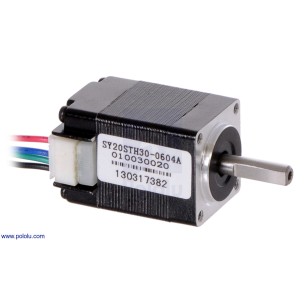
Bipolar stepper motor. It has a resolution of 200 steps/revolution (1.8 ° per step), has a nominal voltage of 7.4 V, and draws a current of 0.28 A per coil. Pololu 1207
Bipolar stepper motor. It has a resolution of 200 steps/revolution (1.8° per step), a rated voltage of 3.9 V, and draws a current of 0.6 A per coil. Pololu 1204
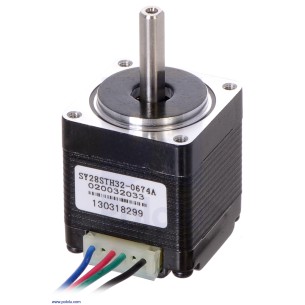
Bipolar stepper motor. It has a resolution of 200 steps/revolution (1.8° per step), rated voltage of 3.8 V, and has a current consumption of 0.67 A per coil. Pololu 1205
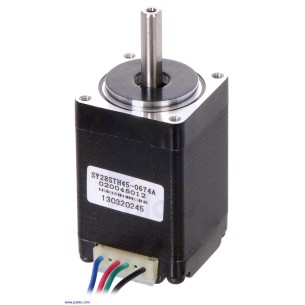
Bipolar stepper motor. It has a resolution of 200 steps/revolution (1.8° per step), a rated voltage of 4.5 V, and draws a current of 0.67 A per coil. Pololu 1206
No product available!
STSPIN220 stepper motor driver module with a low voltage range of 1.8...10V and 1.1A working current. The controller allows you to control the motor motion up to 9 different resolutions (up to 1/256 steps). Pololu 2877
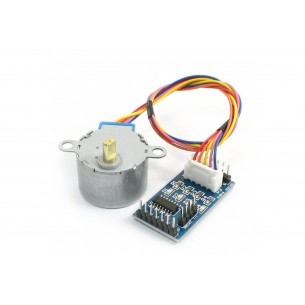
A set consisting of a stepper motor driver module based on the ULN2003 system and a stepper motor powered with 5V voltage.
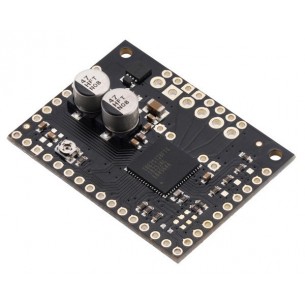
DRV8711 stepper motor driver module powered by 8-50V voltage and 4A operating current. The controller allows you to control the movement of the engine with up to 9 different resolutions. Configuration via SPI interface. Pololu 3730
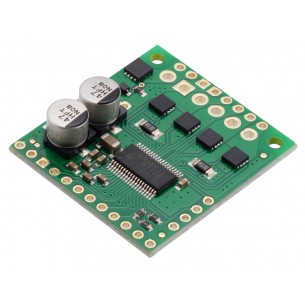
TB67S128FTG stepper motor driver module powered by 6.5-44V voltage and 2.1A operating current. The controller allows you to control the movement of the engine with up to 8 different resolutions (up to 1/128 step). Pololu 2998
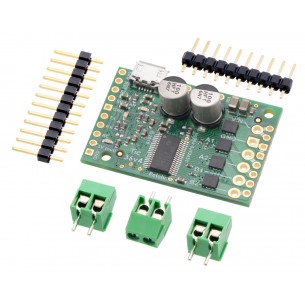
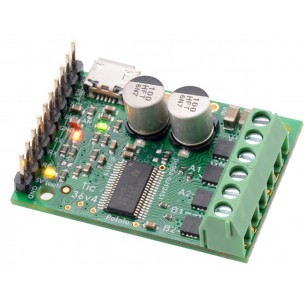
The Tic 36v4 USB Multi-Interface High-Power Stepper Motor Controller makes basic control of a stepper motor easy. Pololu 3141
The Tic 36v4 USB Multi-Interface High-Power Stepper Motor Controller makes basic control of a stepper motor easy. Pololu 3140
No product available!
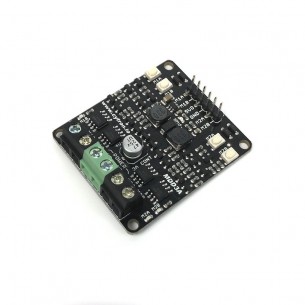
Two-channel driver of direct current (DC) motors with an operating voltage from 4 to 16 V and a maximum continuous current of 3 A. It can be controlled by a PWM signal or by means of built-in buttons. Cytron MDD3A
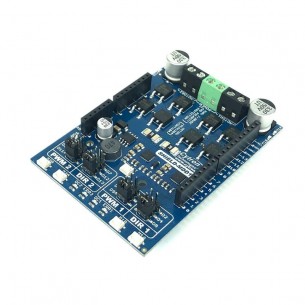
Shield with dual-channel DC motor driver for Arduino. It has an operating voltage from 7 to 30 V and a continuous current of up to 10 A. It can be controlled by a PWM signal or by means of built-in buttons. Cytron SHIELD-MDD10
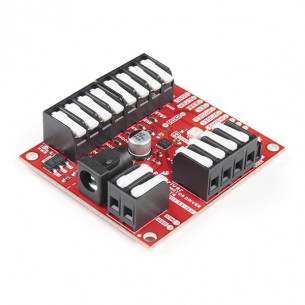
Module with bipolar stepper motor driver TC78H670FTG. It allows you to control the motor with an accuracy of 1/128 of a step with a voltage from 3.6 to 16 V and a current of up to 2 A. SparkFun ROB-16836
No product available!
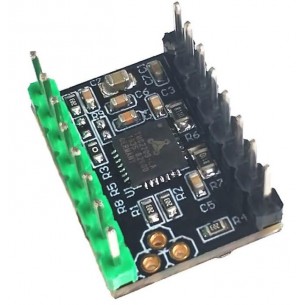
Module with the TMC2209 bipolar stepper motor driver. It enables control with a supply voltage ranging from 4.75 to 29 V and a current of up to 2.8 A
No product available!
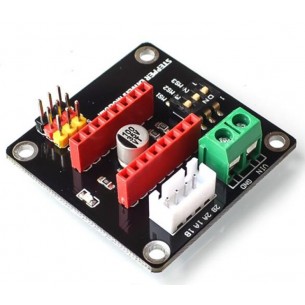
Compact expansion module compatible with DRV8825 and A4988 stepper motor drivers. It allows you to connect the module with the controller and convenient connection of other system components
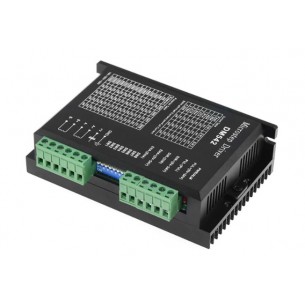
Stepper motor driver that can work with a voltage in the range from 20 to 50 V and a maximum current of 4.2 A. It allows you to configure the microstep in the range from 2 to 128. DM542
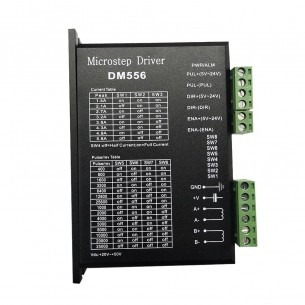
Stepper motor driver that can work with a voltage in the range from 20 to 50 V and a maximum current of 5.6 A. It allows you to configure the microstep in the range from 2 to 128. DM556
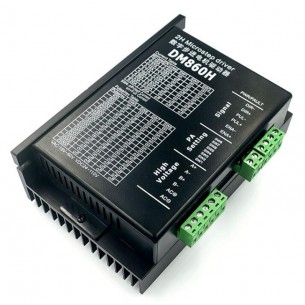
Stepper motor driver that can operate with a voltage in the range from 24 to 110 VDC or from 18 to 80 VAC and a maximum current of 7.2 A. It allows for microstep configuration in the range from 2 to 256. DM860H
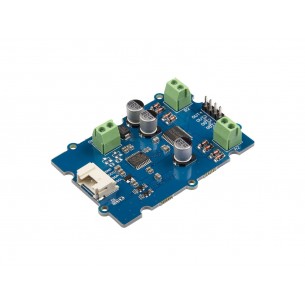
Module with TB6612FNG DC motors dual driver. The board is equipped with a Grove connector and communicates via the I2C interface. Seeed Studio 108020103
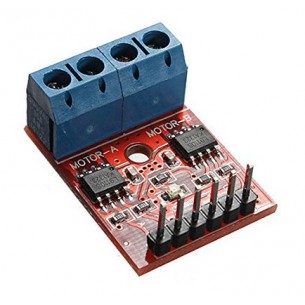
Two-channel DC motor driver powered with the voltage from 2.5 to 12 V with a maximum continuous current of 0.8 A per channel. It can control a bipolar stepper motor
This stepper motor driver offers microsteps down to 1/256th of a step, ensuring exceptional precision and smooth motion. Its simple operation—requiring only two microcontroller pins—and low operating voltage (1.8 to 10V) make it ideal for energy-efficient mobile, robotic, and DIY applications. Integrated connectors, LEDs, and a potentiometer for current adjustment facilitate prototyping and secure integration with popular platforms like Arduino and ESP32. Adafruit 6353