.png)




zł286.24 tax excl.
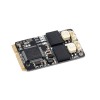
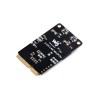
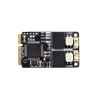
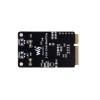
The 2-CH CAN MiniPCIe card is a versatile tool for integrating and analyzing CAN bus networks in industrial PCs, development boards, and embedded systems. With isolated channels, broad protocol compatibility, and support for multiple development platforms and operating systems, it is ideal for applications such as automation, automotive systems, CAN network testing, and software development.
The 2-CH CAN MiniPCIe card expands industrial computers, development boards, and laptops with two isolated CAN bus channels. Its compact MiniPCIe form factor connects to the host via USB 2.0 and supports CAN 2.0A/2.0B protocols compliant with ISO11898-1/2. Thanks to the included USB to MiniPCIe adapter, the card can also be used via a USB port—ideal for Raspberry Pi, Jetson Nano, or standard PCs.
The card supports buffering and retransmission, CAN communication analysis and decoding, and galvanic isolation for the MiniPCIe, CAN1, and CAN2 interfaces. Compatible with both Windows and Linux systems, and multiple development environments, it is ideal for industrial, educational, and research projects involving CAN bus networks.
Data sheet
Manufacturer
Responsible person
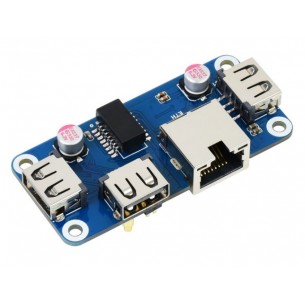
A 3-port HUB module with a USB 2.0 interface with an RJ45 connector, designed to work with the Raspberry Pi minicomputer. Waveshare ETH/USB HUB HAT (B)
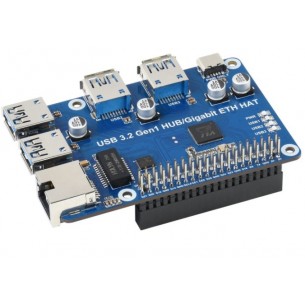
A 3-port HUB module with a USB 3.2 Gen1 interface with an RJ45 connector designed to work with the Raspberry Pi minicomputer. Waveshare USB 3.2 Gen1 HUB Gigabit ETH HAT
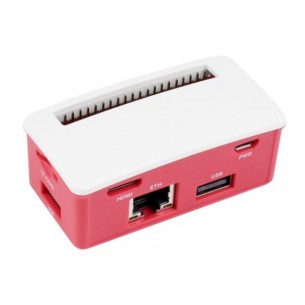
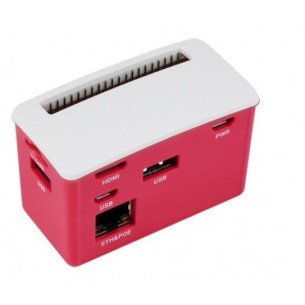
3-port HUB module with USB 2.0 interface and RJ45 connector. Designed for Raspberry Pi Zero. Housing included. Waveshare ETH-USB-HUB-BOX
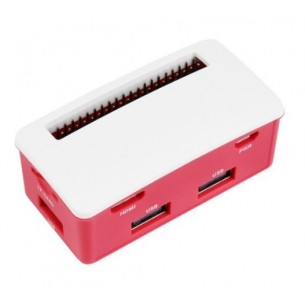
4-port HUB module with USB 2.0 interface. Designed for Raspberry Pi Zero. Case included. Waveshare USB-HUB-BOX
3-port HUB module with USB 2.0 interface with RJ45 connector with PoE function. Designed for Raspberry Pi Zero. Case included. Waveshare PoE-ETH-USB-HUB-BOX
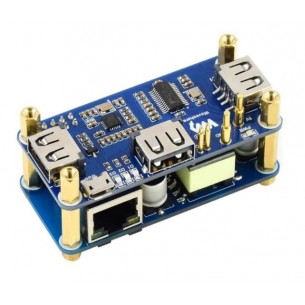
3-port HUB module with USB 2.0 interface and RJ45 connector with PoE function. Designed for Raspberry Pi Zero. Waveshare PoE/ETH/USB HUB HAT
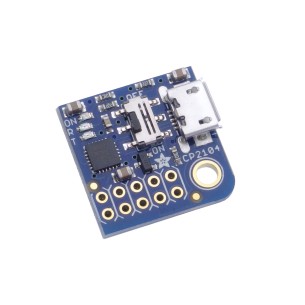
The module with the converter USB-UART CP2104 dedicated for minicomputers Raspberry Pi. Adafruit 3589
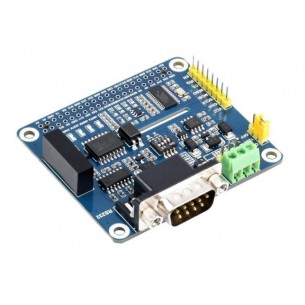
Module with RS232 and RS485 interface dedicated to Raspberry Pi minicomputer. Communication takes place via the SPI interface. Waveshare RS485 RS232 HAT
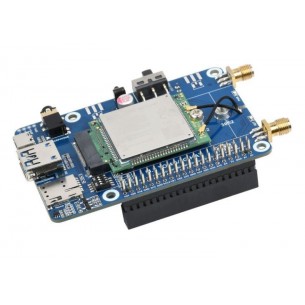
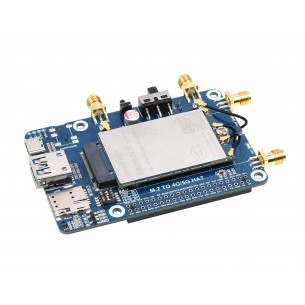
Set with the SIMCom 4G module SIM7600G-H designed to work with the Raspberry Pi minicomputer. It supports 4G, 3G, 2G networks and GNSS positioning. Waveshare SIM7600G-H-M2 4G HAT
No product available!
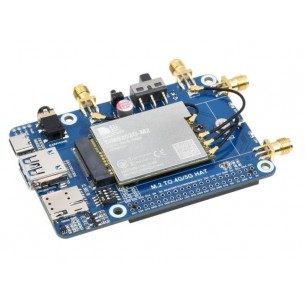
Set with SIMCom 5G SIM8202G-M2 module designed to work with the Raspberry Pi minicomputer. It supports 5G SA or NSA networks and is backwards compatible with 4G and 3G networks. Waveshare SIM8202G-M2 5G HAT (B)
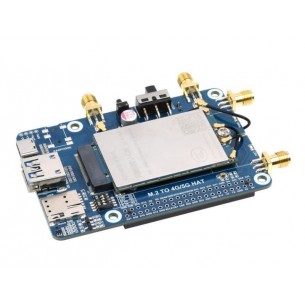
The set with the RM500U-CNV module is designed to work with the Raspberry Pi minicomputer. It supports 5G, 4G and 3G networks. Waveshare RM500U-CN 5G HAT
No product available!
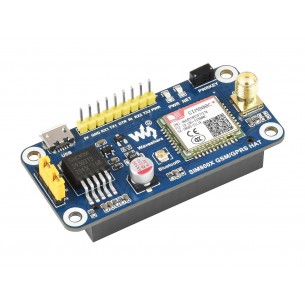
Communication module with the SIM800C system designed for Raspberry Pi minicomputers. Adds support for GSM/GPRS networks. Waveshare SIM800C GSM/GPRS HAT
The set with the RM500Q-GL module is designed to work with the Raspberry Pi minicomputer. It supports 5G, 4G and 3G networks and supports GNSS positioning. Waveshare RM500Q-GL 5G HAT (with case) (EU)
No product available!
The set with the RM500Q-GL module is designed to work with the Raspberry Pi minicomputer. It supports 5G, 4G and 3G networks and supports GNSS positioning. Waveshare RM500Q-GL 5G HAT (EU)
No product available!
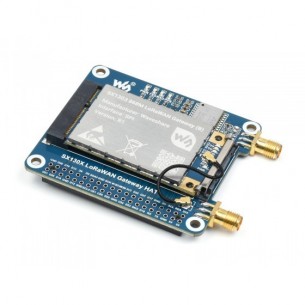
Expansion board with LoRaWAN SX1303 and GNSS L76B dedicated to the Raspberry Pi. The kit includes the 868M antenna, GPS and cables. Waveshare SX1303 868M LoRaWAN Gateway HAT
No product available!
Expansion board with LoRaWAN SX1302 and GNSS L76B dedicated to the Raspberry Pi. The kit includes the 868M antenna, GPS and cables. Waveshare SX1302 868M LoRaWAN Gateway HAT
The 2-CH CAN MiniPCIe card is a versatile tool for integrating and analyzing CAN bus networks in industrial PCs, development boards, and embedded systems. With isolated channels, broad protocol compatibility, and support for multiple development platforms and operating systems, it is ideal for applications such as automation, automotive systems, CAN network testing, and software development.