.png)



zł43.64 tax excl.
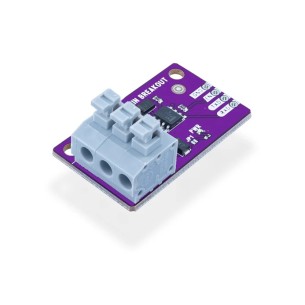
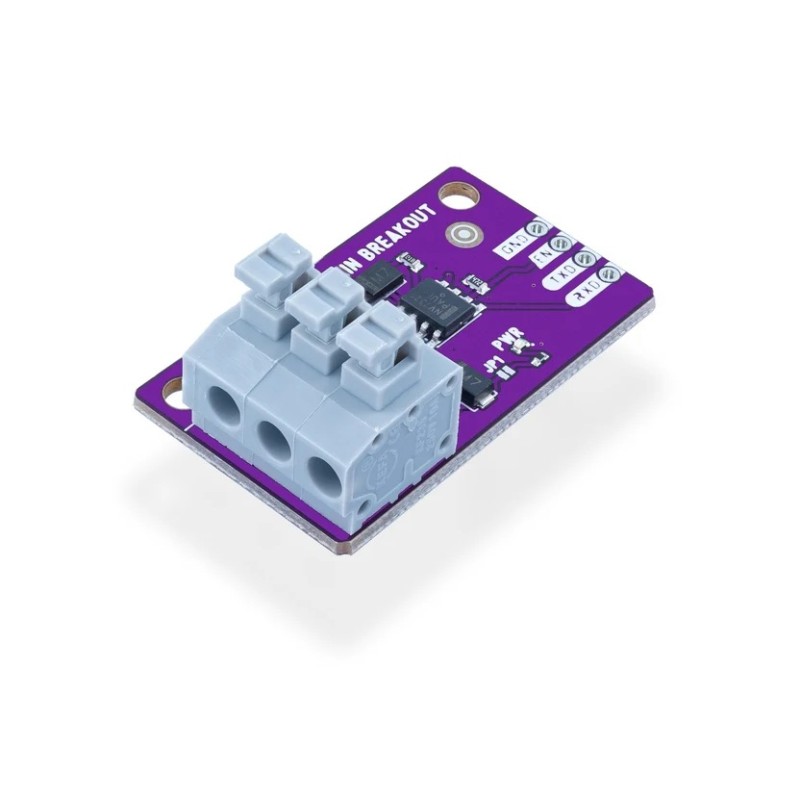
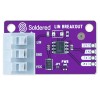
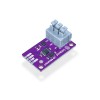
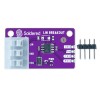
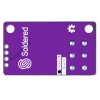
LIN transceiver module based on the NCV7329 IC for connecting a microcontroller as a slave node to a single-wire LIN bus. It supports data rates from 1 to 20kbps and Normal, Standby, and Sleep operating modes. TXD, RXD, and EN pins provide data transmission and operating mode control. Soldered 333027
The device LIN Transceiver NCV7329 SLAVE Breakout by Soldered uses the NCV7329 transceiver from onsemi for communication between a microcontroller and a single-wire LIN (Local Interconnect Network) bus. The SLAVE version is designed to operate as a subordinate node in a LIN network. The board can be used in automotive electronics, automation systems, and other devices employing LIN communication.
The NCV7329 provides the physical communication layer between the digital signals of a microcontroller and the LIN bus line. The TXD pin carries data from the microcontroller to the transceiver, while RXD provides data received from the bus. The LIN pin provides the connection to the single-wire communication bus. The supported data rate ranges from 1 to 20kbps.
The transceiver supports Normal, Standby, and Sleep operating modes. The EN input controls the operating state, while low-power modes reduce current consumption during periods of inactivity. The NCV7329 provides thermal protection, undervoltage protection, and protection against transients on the LIN bus line.
The hardware documentation specifies a board supply voltage range of 5–18V. Available pins include VCC, GND, LIN, EN, TXD, and RXD. Module dimensions are 21.3 × 22.6 × 12.3mm, while the 3.2mm mounting holes allow the use of M3 screws.
LIN transceiver module based on the NCV7329 IC for connecting a microcontroller to a single-wire LIN bus in a MASTER configuration. It supports data rates from 1 to 20kbps, up to 16 devices on a single network, and Normal, Standby, and Sleep operating modes. TXD, RXD, and EN pins provide data transmission and operating mode control. Soldered 333026
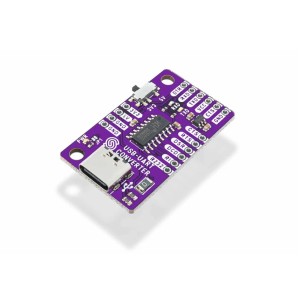
USB-UART converter based on the CH340 IC with a USB-C connector for communication between a computer and devices equipped with a UART serial interface. A switch selects 3.3V or 5V on the VCC pin, while PWR, RXD, and TXD LEDs indicate power and data activity. Hardware flow control pins provide additional serial communication options. Soldered 333028
No product available!
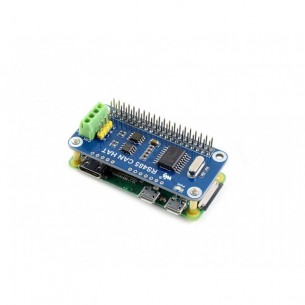
RS485 CAN HAT is an extension designed for the Raspberry Pi mini-computer in the form of a HAT overlay. Adds RS485 and CAN interfaces for the Raspberry Pi plate. Interface signals are derived as screw and goldpin connectors. RS485 CAN HAT
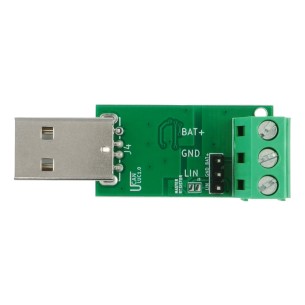
USB - LIN bus converter module. It allows you to connect devices to your computer via the LIN bus. LIN USB CONVERTER (LUC)
No product available!
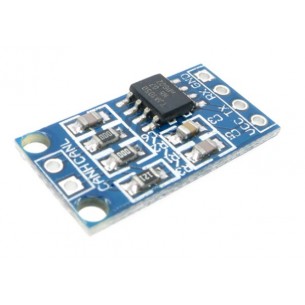
UART-CAN converter module based on the TJA1050 transceiver system. It allows for communication, for example, of a microcontroller via the CAN bus
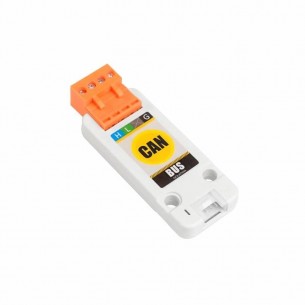
The CAN transmitter and receiver module is intended for M5Stack sets. It is based on an isolated CA-IS3050G transceiver system, which can provide differential data reception and transmission. M5Stack U085
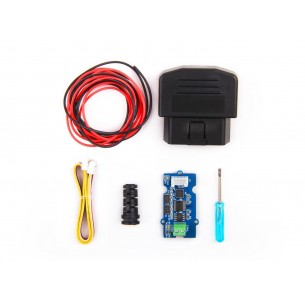
A set of necessary tools needed to perform vehicle diagnostics. It consists of a CAN Bus module, an OBD II connector and the necessary wires. Seeed Studio 114991438
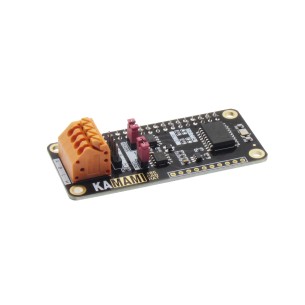
KAmodRPI RS485 CAN HAT is a shield for the Raspberry Pi computer that extends its interfaces with RS485 and CAN. Bus signals are led out to goldpin connectors and terminal blocks.
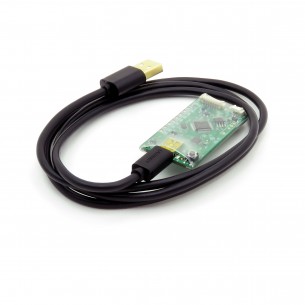
TTL/CAN-USB converter dedicated to distance sensors TF03, TF02 and TFmini with TTL/CAN interface. Comes with a miniUSB cable. Benewake TTL/CAN to USB converter
No product available!
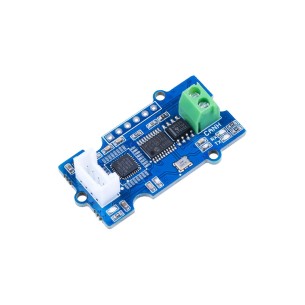
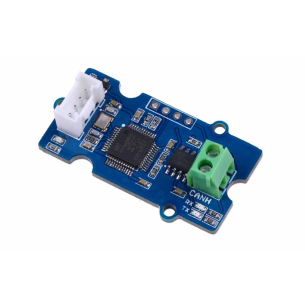
I2C-CAN converter using the MCP2551 and MCP2515 systems and the ATmega168PA microcontroller. The module uses the I2C bus and the Grove connector for communication. Seeed Studio 113020111
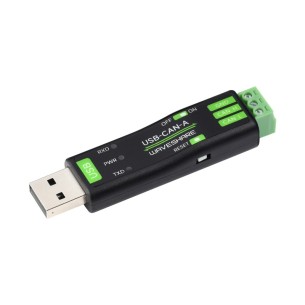
USB-CAN adapter with support for CAN2.0A and CAN2.0B standards. It can work with Windows and Linux systems, including Raspberry Pi and Jetson Nano minicomputers. Waveshare USB-CAN-A
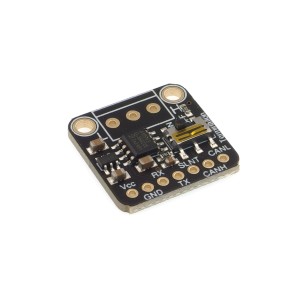
CAN transceiver module based on the TJA1051T/3 chip. Allows you to connect a board with native CAN support (the transceiver will convert 3V signals into differential CAN signals) to a network of devices. Adafruit 5708
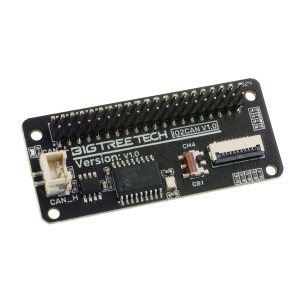
Expansion module designed for Raspberry Pi or BIGTREETECH CB1. It allows you to add a CAN interface and use minicomputers for control in industrial or automotive applications. BIGTREETECH IO2CAN V1.0
Communication module with CAN-UART converter and USB 1.0 interface. It supports CAN 2.0 protocol and supports SLCAN. It is operated using AT commands. DFRobot TEL0150
Converter with a built-in microcontroller (MCU) and a CAN transceiver system. It can work with devices with an operating voltage of 3.3 V via goldpin connectors with a pitch of 2.54 mm. The converter facilitates the design and prototyping of devices based on the CAN bus. Waveshare WS-TTL-CAN
No product available!
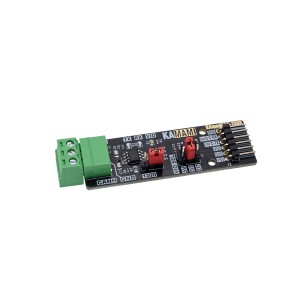
KAmod CAN-TXRX is a CAN bus transceiver with the MCP2542FD system, compatible with the CAN 2.0 and CAN FD standards, enabling sending and reading data with the serial interface voltage level adjustable in the range of 1.7...5 V, equipped with protections and LEDs signaling action
The module is based on the GD32E103 microcontroller, supporting CAN FD at up to 5 Mbps, making it ideal for automotive and automation applications. With AT command support, Grove connector and compatibility with XIAO RP2040 boards, the module offers easy integration in IoT projects such as monitoring or automation. Seeed Studio 114992978
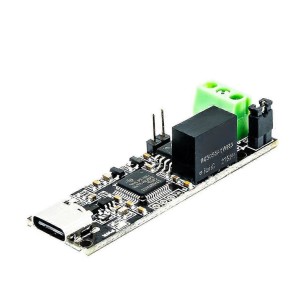
CANable V2.0 PRO is a USB-C to CAN adapter with galvanic isolation. It supports CAN 2.0 and CAN FD, ensuring reliable communication and broad compatibility. MKS CANable V2.0 PRO
No product available!
LIN transceiver module based on the NCV7329 IC for connecting a microcontroller as a slave node to a single-wire LIN bus. It supports data rates from 1 to 20kbps and Normal, Standby, and Sleep operating modes. TXD, RXD, and EN pins provide data transmission and operating mode control. Soldered 333027