

zł19.43 tax excl.
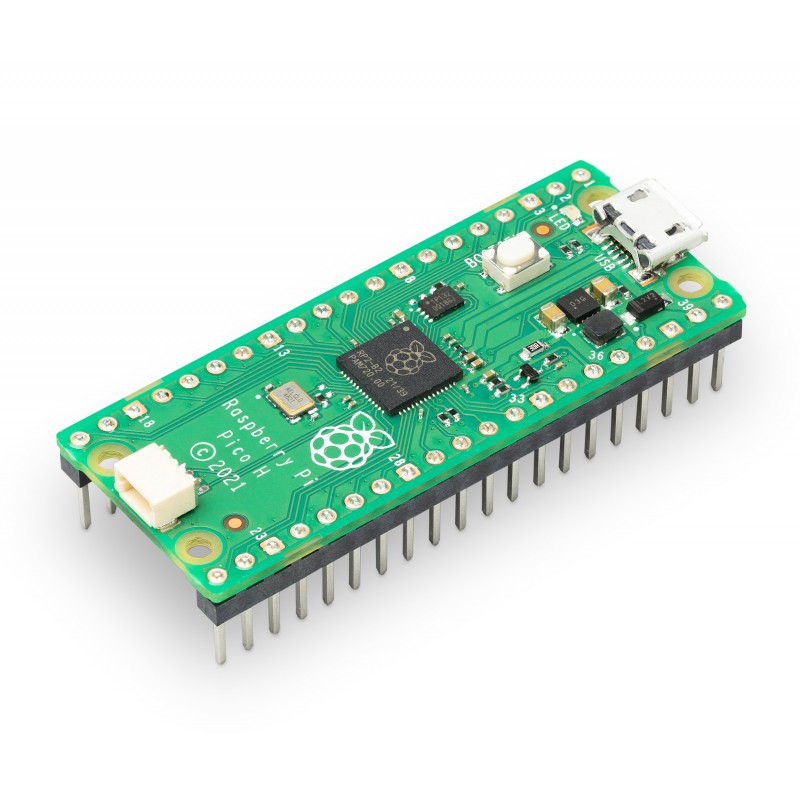
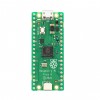
Module with the RP2040 microcontroller with two ARM Cortex-M0 + cores operating at 133 MHz, 256 kB RAM and 30 GPIO. The board also has 2 MB of external QSPI flash memory. Module can be programmed in C/C++ or microPython. Version with soldered connectors. Raspberry Pi SC0917
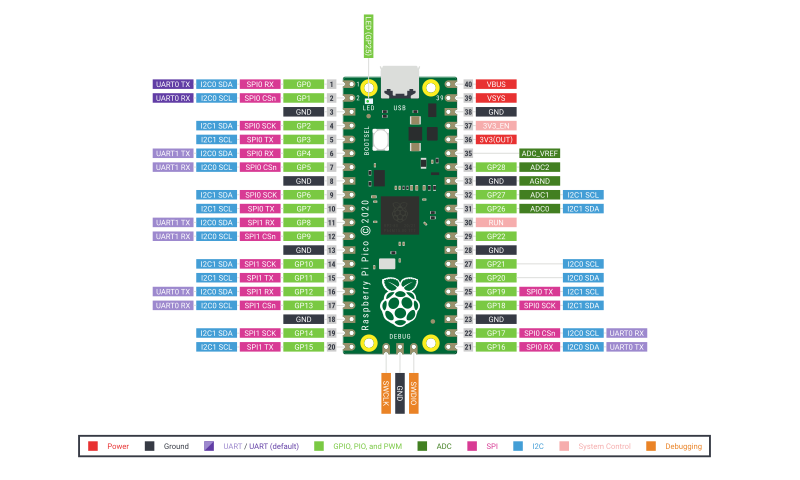
The Raspberry Pi Pico is the first board to feature a microcontroller designed by the Raspberry Pi foundation. The chip that is the heart of this board has been equipped with two ARM Cortex M0+ cores operating at a frequency of 133 MHz, 256 KB of RAM and 30 GPIO ports. The microcontroller itself is not equipped with flash memory, but on the board there is an external memory with a capacity of 2 MB connected via the QSPI interface. The platform supports the popular MicroPython and C/C++ programming languages. Programs can be uploaded to memory via the USB interface in mass storage mode or by using an external programmer that supports the SWD interface.

Kamami is the official distributor of Raspberry Pi minicomputers and dedicated accessories.
MicroPython is a special version of the Python 3 programming language, prepared to run directly on embedded systems such as the Raspberry Pi Pico. The version prepared especially for the RP2040 microcontroller, supports REPL, an interactive shell that allows you to execute scripts, typing into the console and viewing the results of the program in it. Thanks to this technology, it is also possible to save the program in flash memory.
To facilitate the programming of the RP2040 microcontroller in C / C ++, the Raspberry Pi Foundation has prepared an official SDK toolkit that can be integrated with popular IDEs such as Visual Studio Code or Eclipse. The entire environment configuration process is described in the Getting started with Raspberry Pi Pico document.

The Raspberry Pi Pico can be programmed via the USB interface, it can be done in two ways.
The first is the USB mass storage mode, to program the board in this way, press and hold the BOOTSEL button, and then connect the board to the computer with a USB cable. The device will be recognized as mass memory to which you can upload the program in the same way as copying files to a pendrive. After uploading the program, the microcontroller will automatically reset and start the uploaded program. This method is suitable for uploading programs written in C / C ++ or for uploading the MicroPython interpreter.
The second way works only with programs written in MicroPython and requires prior loading of the interpreter using the first method. This method consists in saving the program layout transferred with REPL in the memory.
When programming in C/C++, there is often a need to repeatedly test the program. Loading a program via USB requires repeating the procedure every time, disconnecting the board from the computer, pressing the button and connecting the board, and then finding the compiled program and copying it to memory. The whole thing takes quite a long time, but fortunately it can be simplified using an external programmer with SWD interface. Programming via SWD is much faster, you only need to connect the programmer once with a 3-pin connector and power supply e.g. via USB and you can upload programs directly from the IDE. In addition, you can debug the program in this way and efficiently find any errors in the code by running it line by line.
The Raspberry Pi Pico is designed to be programmed directly with the Raspberry Pi 4B or 400. The manufacturer has prepared detailed instructions for setting up programming environments and ready-made configuration scripts. Pico can be programmed from the Raspberry minicomputer both via USB and via SWD. The big advantage of this solution is no need to use an external SWD programmer. Pico ports can be connected to RPI ports. To ensure a stable connection, you should connect Pico directly to the minicomputer, the use of the contact plate may introduce interference.
To use the full potential of programming environments, it is recommended to use minicomputers with min. 4 GB of RAM.
The Raspberry Pi Foundation has prepared the Picoprobe application that allows you to change RPI Pico into an SWD programmer and a USB - UART converter. Thanks to this, you can program the RP2040 without the need for an SWD programmer, using only the second board with the RP2040 microcontroller.
Data sheet
Manufacturer BTC Korporacja sp. z o. o. Lwowska 5 05-120 Legionowo Poland sprzedaz@kamami.pl 22 767 36 20
Responsible person BTC Korporacja sp. z o. o. Lwowska 5 05-120 Legionowo Poland sprzedaz@kamami.pl 22 767 36 20
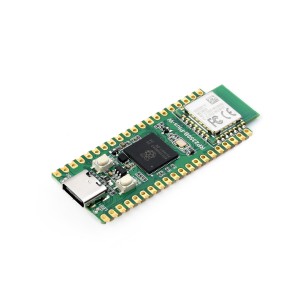
RP2350B-Plus-W is an advanced development board with an RP2350B microcontroller and wireless Wi-Fi/Bluetooth communication, enabling selection between ARM and RISC-V architectures. Intended for educational applications, IoT device prototyping, and projects requiring versatile communication and processing capabilities.
No product available!
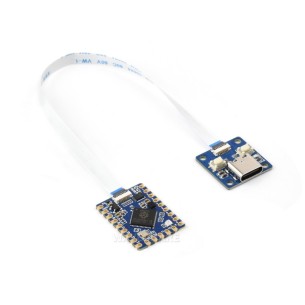
RP2350-Tiny-Kit is a versatile development kit for embedded and educational projects. With a flexible interface, rich set of peripherals, and support for popular development environments, it enables rapid prototyping and easy integration into larger systems. The version with a USB Type-C adapter provides convenient access for programming and powering the module.
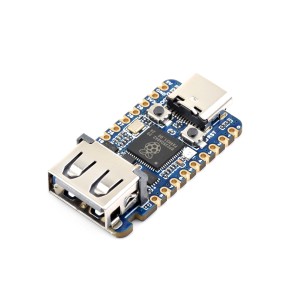
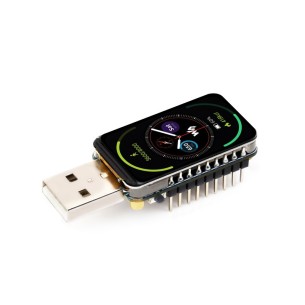
RP2350-USB-A is a versatile development board based on the modern RP2350A microcontroller with a unique dual-core architecture: Arm Cortex-M33 + RISC-V. Thanks to the USB Type-A port supported via PIO, a wide range of interfaces, and a compact form factor, the board is ideal for prototyping peripheral devices, learning programming, and integrating into custom projects as an SMD module.
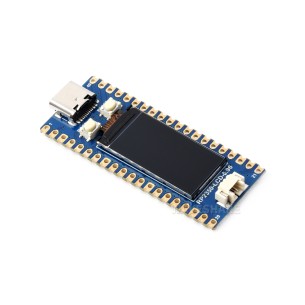
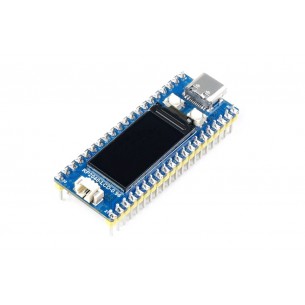
RP2350-LCD-0.96 offers a low-cost and flexible solution for creating projects involving information display, battery-powered operation, and full GPIO control. Ideal for portable devices, user interfaces, and educational applications.
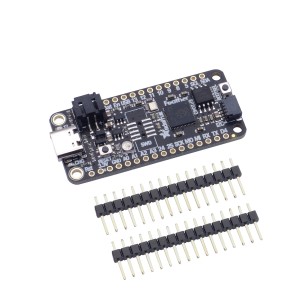
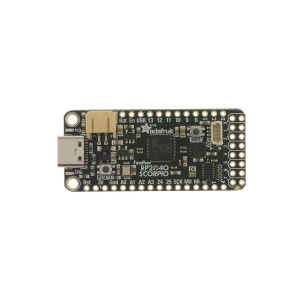
The board with the RP2040 microcontroller equipped with two ARM Cortex-M0+ cores, which work at a frequency of 133 MHz, 256 kB RAM. The board also has 8 MB of QSPI flash memory. The system can be programmed in C/C++ or MicroPython. Adafruit 4884
RP2350-LCD-1.47-B-M is an advanced yet compact development board designed to work with the RP2350A microcontroller. The integrated LCD display, USB Type-A port, TF card slot, and pre-soldered headers facilitate quick setup and easy integration into various projects. The dual architecture (ARM and RISC-V) provides great flexibility for learning and testing embedded applications, control systems, and IoT devices.
The board with the RP2040 microcontroller equipped with two ARM Cortex-M0+ cores, which work at a frequency of 133 MHz, 264 kB RAM. The board also has 2 MB of QSPI flash memory. The system can be programmed in C/C++ or MicroPython. Waveshare RP2040-LCD-0.96-M
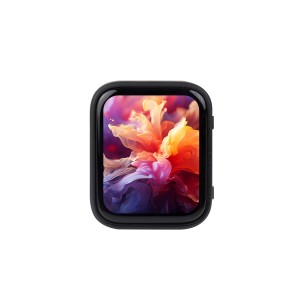
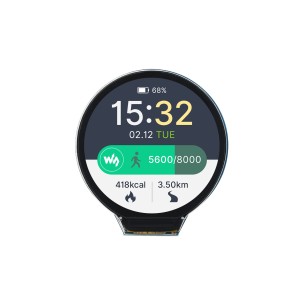
A 1.28" circular IPS LCD display module with touch panel. It has a resolution of 240x240 px and is controlled by an RP2040 microcontroller. It is equipped with an accelerometer and a gyroscope. Waveshare RP2040-Touch-LCD-1.28
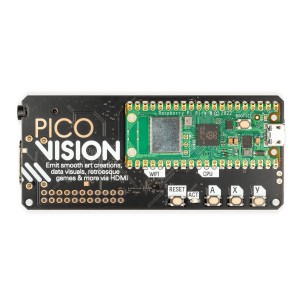
Versatile digital video module. It uses two RP2040 chips (one in the form of a Raspberry Pi Pico W board and the other as a separate RP2040 microcontroller) and is equipped with an HDMI output connector. Pimoroni PIM674
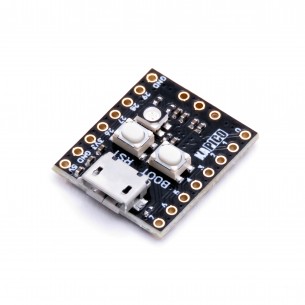
The board with the RP2040 microcontroller equipped with two ARM Cortex-M0 + cores operating at a frequency of 133 MHz, 264 kB RAM. There is as much as 16 MB of QSPI flash memory on the board. The system can be programmed in C / C ++ or microPython. KApico RP2040
RP2350-Touch-AMOLED-1.8 with battery is an advanced development board with an AMOLED display, touch support, motion sensors, audio, and a wide range of interfaces. Designed for mobile and embedded applications, it enables the creation of compact interactive devices with full open-source support.
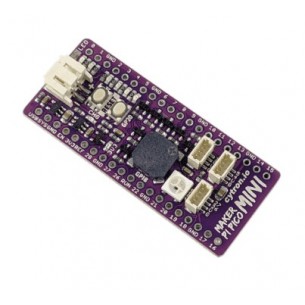
Base board with soldered Raspberry Pi Pico W module. Equipped with numerous connectors, buzzer, buttons and LEDs. Cytron MAKER-PI-PICO-MINI-W
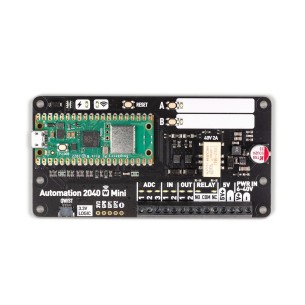
Expansion module with a Raspberry Pi Pico W board equipped with WiFi communication. The module has a built-in relay, buffer inputs, sink outputs and analog inputs. Perfect for controlling fans, pumps, solenoid valves, large motors, electronic locks or LED lighting. Pimoroni PIM652
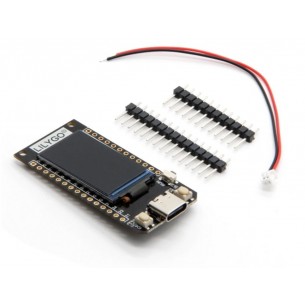
The board with the RP2040 microcontroller equipped with two ARM Cortex-M0+ cores. The board also has 4 MB of QSPI flash memory. 1.14" LCD module. TTGO T-Display RP2040
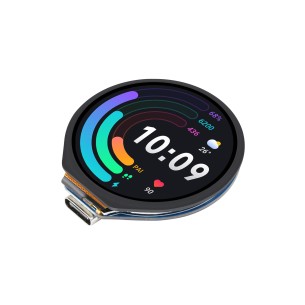
RP2350-LCD-1.28 is an advanced, compact development module with a color LCD display and a rich set of interfaces, designed for embedded projects that require efficient graphics handling and communication. Thanks to its dual processor architectures and programmable peripheral resources, the module is suitable for use in smart devices, HMI systems, and next-generation IoT solutions.
NeoPixel 8-channel RGB LED driver. It features an RP2040 microcontroller with two ARM Cortex-M0+ cores, 264 kB of RAM and 8 MB of external Flash memory. Adafruit 5650
Module with the RP2040 microcontroller with two ARM Cortex-M0 + cores operating at 133 MHz, 256 kB RAM and 30 GPIO. The board also has 2 MB of external QSPI flash memory. Module can be programmed in C/C++ or microPython. Version with soldered connectors. Raspberry Pi SC0917